
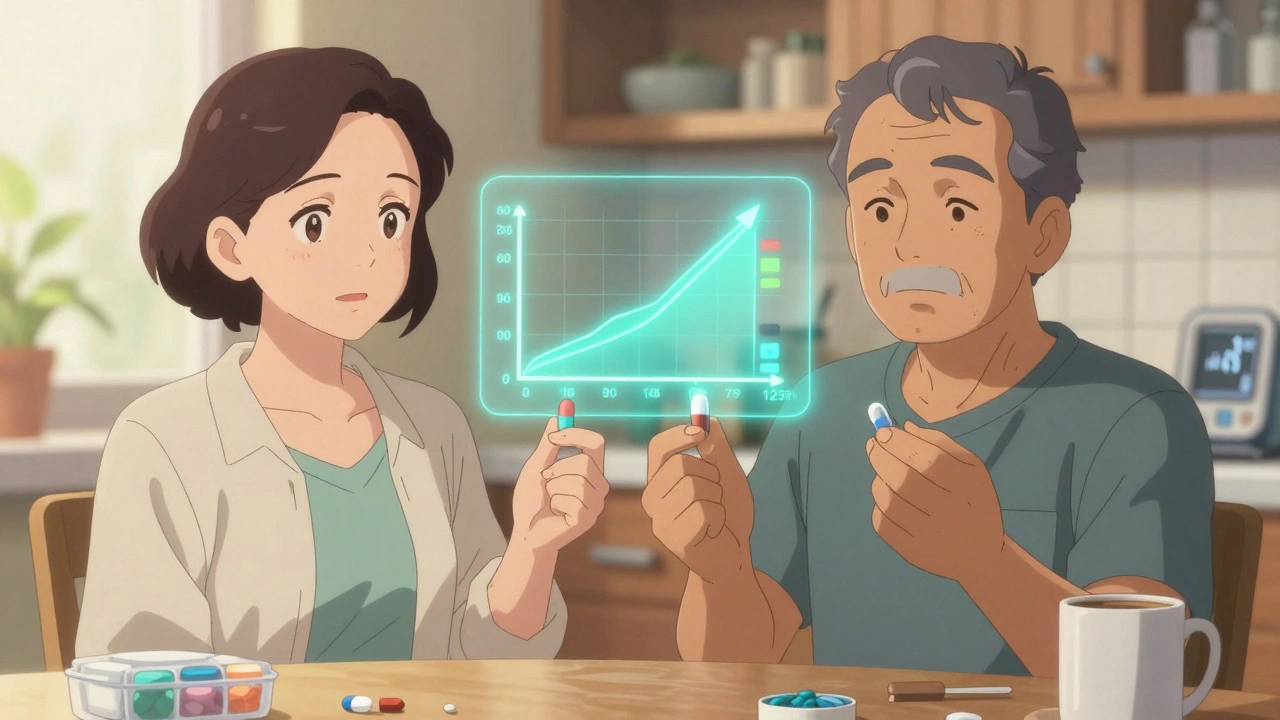
When you’ve been taking a medication every day for years-whether it’s for high blood pressure, diabetes, or thyroid issues-it’s natural to feel uneasy when your pharmacy hands you a different pill. Same size. Same color. Same name. But a different brand. And a lot cheaper. That’s the moment many people with chronic conditions face: switching from a brand-name drug to its generic version.
It’s not just about saving money. For millions of Americans managing long-term illnesses, generics are the reason they can afford to stay alive. The average cost of brand-name Lipitor? Over $378 for a month’s supply. The generic version? Less than a dollar. That’s not a typo. And yet, even with that kind of savings, nearly one in four patients still worry the generic won’t work as well. Here’s the truth: for most people, it does. But not always. And knowing when it matters-and how to make the switch safely-is critical.
What Counts as a Maintenance Medication?
Maintenance medications aren’t for quick fixes. They’re the daily pills, patches, or inhalers you take for conditions that don’t go away: diabetes, high cholesterol, asthma, depression, arthritis, thyroid disease, heart failure, and more. These aren’t occasional meds. You take them every day, sometimes multiple times a day, for years. That’s why the pharmacy benefit managers and insurers classify them separately. They’re the backbone of chronic disease management.
Common examples include atorvastatin (for cholesterol), metformin (for diabetes), levothyroxine (for hypothyroidism), lisinopril (for blood pressure), and sertraline (for depression). These drugs are often prescribed in 90-day supplies to reduce refill trips and lower costs. And guess what? Over 85% of these prescriptions are filled with generics now. That’s not because doctors are pushing them-it’s because the system is built that way. Insurance plans require generics unless there’s a documented medical reason not to use them.
Why Generics Are Just as Effective (Most of the Time)
The FDA doesn’t approve generics lightly. Every generic must prove it delivers the exact same amount of active ingredient into your bloodstream at the same rate as the brand-name drug. That’s called bioequivalence. The standard? The generic’s concentration in your blood must be within 80% to 125% of the brand’s. That’s not a wide margin-it’s tight. And it’s enforced with real lab testing, not theory.
For most drugs, this means zero difference in how you feel. A 2022 study in the American Journal of Managed Care found patients on generics had 12-15% better adherence than those on brand-name drugs. Why? Because they could actually afford to take them. And better adherence meant 23% fewer hospital visits for complications like heart attacks, strokes, or diabetic emergencies.
Think of it like this: if you buy a generic AA battery, it still powers your remote. The brand might last a little longer or have fancier packaging, but the voltage is the same. Same with generics. The active ingredient-the part that actually treats your condition-is identical. The difference? The fillers, dyes, and coatings. Those are the inactive ingredients. And while they don’t affect how the drug works, they can sometimes cause minor reactions.
When Generics Can Cause Problems
Not all medications are created equal when it comes to switching. Some drugs have what’s called a narrow therapeutic index. That means the difference between a dose that works and one that’s too high-or too low-is tiny. For these, even small changes in how the body absorbs the drug can cause trouble.
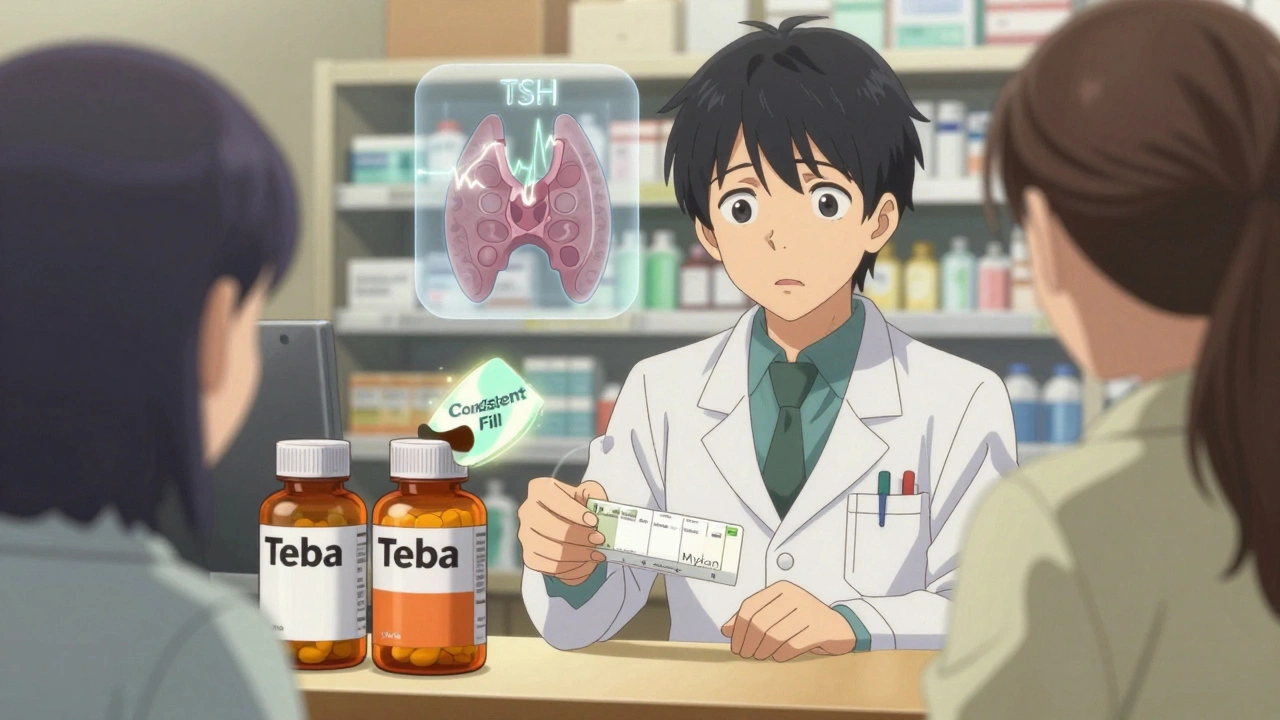
Drugs like levothyroxine (for thyroid), warfarin (for blood thinning), and phenytoin (for seizures) fall into this category. Studies show that 5-8% of patients switching between different generic versions of levothyroxine experience fluctuations in their TSH levels. That doesn’t mean the generic doesn’t work. It means switching between manufacturers-say, from Teva to Mylan to Sandoz-can cause slight changes in absorption. For someone carefully balanced on a specific dose, that’s enough to feel off: fatigue, weight gain, heart palpitations.
Same with warfarin. A 2021 study in the Journal of Managed Care & Specialty Pharmacy found that 1-3% of patients needed to stay on brand-name Coumadin because generic versions caused unstable INR levels. That’s not common. But for those patients, it’s life-changing.
And then there’s the psychological factor. A 2023 survey by the National Alliance on Mental Illness found 34% of patients taking antidepressants believed generics were less effective-even though clinical trials show no difference. That’s not irrational. It’s human. If you’ve been on a brand for years and suddenly feel “different,” your brain links it to the pill change. Often, it’s not the drug. It’s the stress of change.
What to Do When You Switch
Don’t panic. Don’t stop. But do pay attention.
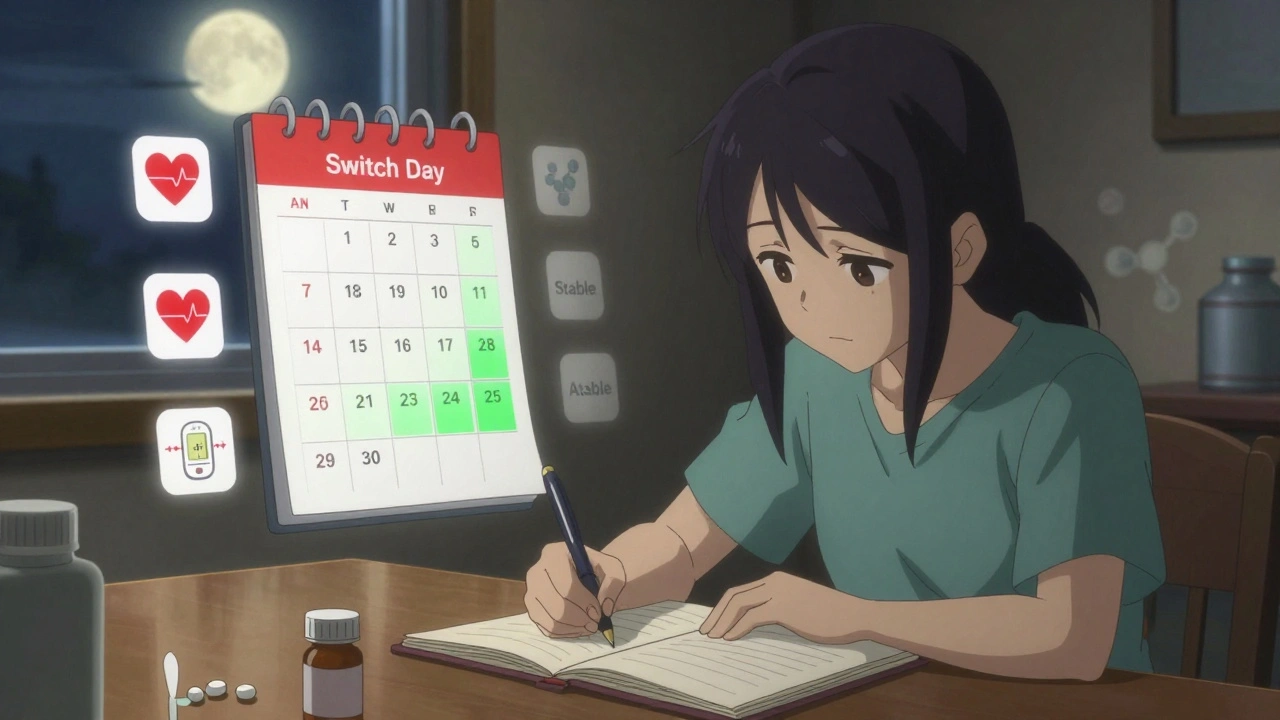
Here’s a simple 30-day plan:
- Track your symptoms. Use a notebook or the FDA’s free Medication Tracker app. Note energy levels, mood, sleep, pain, heart rate, or any new side effects. Write down the date and what you took.
- Stick with one generic manufacturer. If your first generic is from Teva, try to keep getting Teva. Don’t let the pharmacy switch you to another brand without telling you. Ask: “Is this the same maker as last time?”
- Check your labs. If you’re on thyroid meds, blood thinners, or seizure drugs, ask your doctor to recheck your levels 4-6 weeks after switching. For diabetes or blood pressure, monitor your readings at home and log them.
- Don’t assume it’s the drug. If you feel worse, it could be stress, sleep, diet, or another medication. Don’t jump to conclusions.
Most people adjust within a month. A Drugs.com survey of 2,450 patients found 41% noticed no difference. 32% said they felt better-because they could finally afford their meds. Only 8% stopped taking the generic because they thought it wasn’t working. For most, the benefits far outweigh the risks.
How to Fight for the Right Medication
Insurance companies push generics. That’s their job. But you have rights. If you feel the generic isn’t working, talk to your doctor. They can write a letter for prior authorization to keep you on the brand. But be ready: only about 14% of these requests get approved for maintenance drugs.
What gets you approved? Documentation. Not just “I feel bad.” You need:
- Lab results showing instability (like TSH or INR swings)
- Proof you tried at least two different generics and had issues with both
- A note from your doctor explaining why the brand is medically necessary
For levothyroxine, the American Thyroid Association recommends staying on the same product-brand or generic-once you’re stable. If you’ve been on one for years and feel great, don’t switch unless you have to. And if you do switch, monitor closely.
For insulin, the Inflation Reduction Act capped out-of-pocket costs at $35 per month for Medicare patients in 2023. That’s made biosimilars like Semglee more accessible. But even with that, some patients still prefer the original brand. If you’re one of them, talk to your doctor. There are options.
What Pharmacists Can Do for You
Your pharmacist knows more about your meds than you think. They see every refill, every switch, every complaint. Ask them:
- “Is this the same manufacturer as before?”
- “Are there any known issues with this generic version?”
- “Can you hold this prescription for me if I want to stick with one brand?”
Many pharmacies now offer “consistent fill” programs. That means they’ll try to give you the same generic maker every time. It’s not automatic-you have to ask. But it’s worth it if you’re on a narrow therapeutic index drug.
Also, ask about inactive ingredients. Some people are sensitive to dyes like FD&C Red No. 40 or fillers like lactose. If you’ve had reactions before, mention it. Pharmacists can check the ingredient list and sometimes find a version without the trigger.
Real Stories, Real Results
On Reddit, a thread titled “Switched from Synthroid to generic and felt awful” had over 140 comments. Most people who felt worse had switched manufacturers multiple times. Those who stayed on one generic-say, Teva for six months-reported stability. One woman wrote: “I switched to generic levothyroxine from my brand. First month, I was exhausted. Second month, I started feeling better. Third month, I was back to normal. My TSH was perfect. Turns out, I just needed time.”
Another patient with type 2 diabetes switched from Jardiance to its generic version. “I was scared,” he said. “But my A1C didn’t budge. And I saved $200 a month.”
On the flip side, a man with multiple sclerosis switched from a brand-name disease-modifying drug to a generic. His symptoms worsened. His neurologist said it was likely disease progression, not the medication. But he switched back anyway-because peace of mind mattered.
There’s no one-size-fits-all. But the data is clear: for the vast majority, generics are safe, effective, and life-changing.
What’s Next for Generic Medications?
The FDA approved 79 new generic maintenance drugs in the first half of 2023 alone-including the first generics for Jardiance and Entresto. More are coming. Eliquis, one of the most expensive blood thinners, will lose patent protection in 2026. That’s going to drop prices dramatically.
But there’s a warning. The number of manufacturers for some generics has dropped from 15 to 8 in the last decade. Fewer makers means less competition-and risk of shortages. The Government Accountability Office flagged this in 2022. If one factory has a problem, it can ripple across the country.
That’s why sticking with one generic maker matters. It’s not just about consistency. It’s about supply chain safety.
The future of chronic care is affordable. Generics are the engine of that. But they’re not magic. They require awareness. Monitoring. Communication. And sometimes, a firm conversation with your doctor.
You’re not being difficult for asking. You’re being smart.
Are generic maintenance medications really as effective as brand-name ones?
Yes, for most people. The FDA requires generics to deliver the same active ingredient at the same rate and strength as the brand-name drug. Bioequivalence testing ensures blood levels stay within 80-125% of the brand’s. Studies show no difference in outcomes for 90% of patients. The only difference is the inactive ingredients-fillers and dyes-which rarely affect how the drug works.
Can switching to a generic cause side effects?
Sometimes, but not because the active ingredient changed. Side effects usually come from differences in inactive ingredients like dyes, fillers, or coatings. These can trigger sensitivities in rare cases-like lactose intolerance or dye allergies. Most side effects are mild and fade within weeks. If you notice new symptoms after switching, track them and talk to your pharmacist or doctor.
Which chronic condition drugs should I avoid switching from brand to generic?
Drugs with a narrow therapeutic index need extra caution. These include levothyroxine (for thyroid), warfarin (for blood thinning), phenytoin (for seizures), and some epilepsy and heart rhythm drugs. Small changes in absorption can affect your health. If you’re stable on a brand or specific generic, your doctor may recommend staying on it. Always monitor lab levels after switching.
Why does my pharmacy keep changing the generic I get?
Pharmacies often switch generics to get the lowest price from their supplier. One manufacturer might offer a better deal this month. But if you’re on a sensitive medication, ask your pharmacist to stick with one brand. Many offer “consistent fill” programs-you just have to request it. You can also ask your doctor to write “Dispense as Written” on the prescription.
How long does it take to adjust to a new generic medication?
Most people adjust within 1-3 months. Your body needs time to adapt to even minor changes in how the drug is absorbed. If you feel off after switching, give it 4-6 weeks before assuming it’s the medication. Track your symptoms and check lab values if applicable. If problems persist, talk to your doctor about switching back or trying a different generic manufacturer.
Can I get my brand-name medication covered by insurance if I prefer it?
Yes, but it’s hard. Insurance requires prior authorization, and approval rates for maintenance drugs are only around 14%. You’ll need proof that generics caused problems-like lab results showing instability or documented side effects. A letter from your doctor explaining medical necessity helps. For expensive drugs like insulin, new laws cap your cost at $35/month, making brand-name less necessary.
If you’re managing a chronic condition, your medication is part of your daily rhythm. Switching to a generic shouldn’t break that rhythm. With the right approach-tracking, communication, and patience-you can save money without sacrificing health. The system is designed to push generics. But you still have the power to make it work for you.




Comments (13)