
What You Need to Know Before You Go
If you take prescription meds and you’re planning a trip overseas, you’re not alone. Around 41% of travelers run into medication problems abroad-whether it’s a pharmacy refusing to fill a foreign prescription, a customs officer confiscating your pills, or your insulin getting ruined in a hot suitcase. The good news? Most of these issues are preventable. You don’t need to panic. You just need to plan ahead.
Bring the Right Paperwork
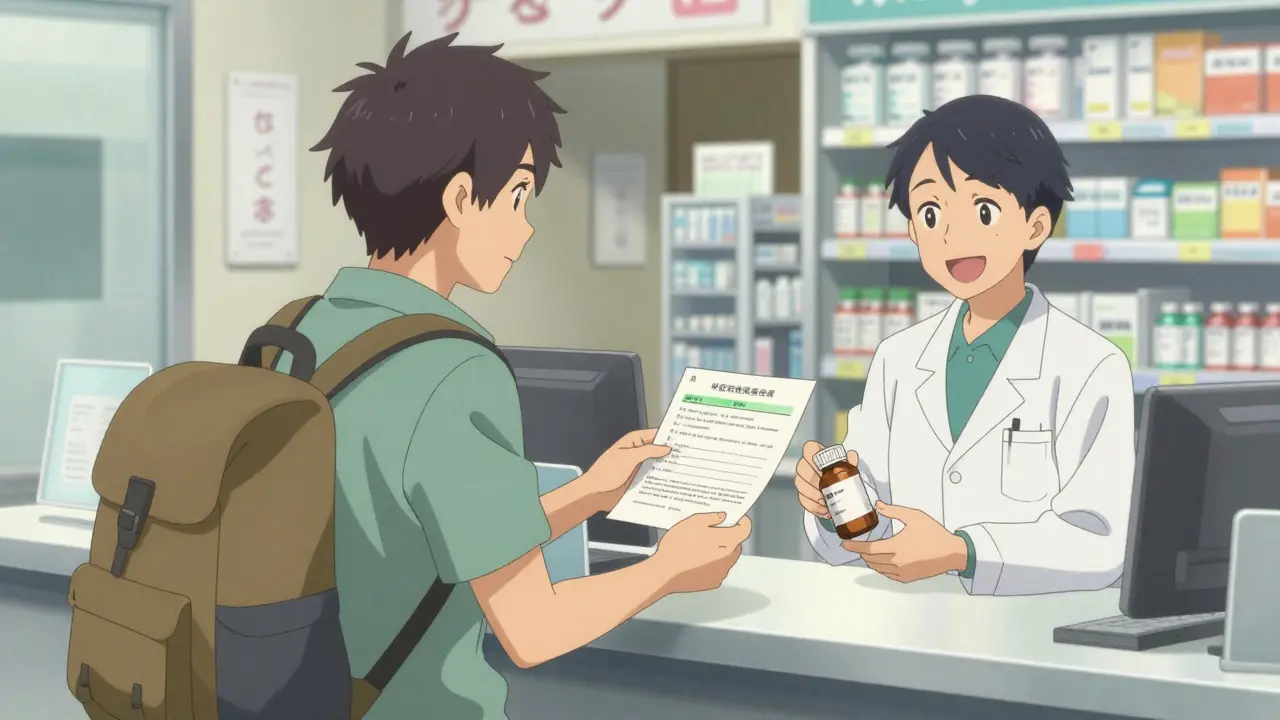
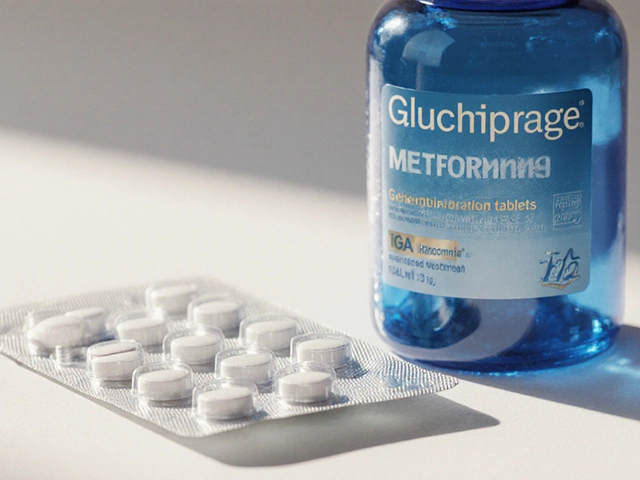
Never pack your meds without the original prescription bottle. That’s not just a suggestion-it’s law in 89% of Schengen countries and enforced at airports from Tokyo to Toronto. The bottle must show your full name, the doctor’s name, the drug name, and the dosage. If your bottle is labeled with a brand name like Lexapro but the pharmacy abroad only knows it as escitalopram, you’re asking for trouble. Always ask your pharmacist to write the generic name on a separate slip or add it to your prescription printout.
Even better? Get a letter from your doctor. Not just any note-something printed on official letterhead, signed, and dated. Include your diagnosis, the medication names (generic and brand), dosage, and why you need it. Translate it into the local language if you can. A 2022 Johns Hopkins study found this cuts down on medication seizures by 73%. In Thailand, Japan, or Mexico, a simple translated letter can save you hours-or even a trip to the police station.
How Much Should You Pack?
Don’t just pack enough for your trip. Pack extra. The International Society of Travel Medicine recommends carrying at least 10 days’ worth beyond your planned return date. Why? Flight delays, lost luggage, and border closures happen. One traveler in Bali got stuck for three weeks after a volcano eruption. Her seizure meds ran out on day 12. She ended up in the ER.
Also, check your destination’s rules. Most countries limit you to a 30-day supply-even if your prescription covers 90 days. The U.S. State Department says 63% of nations enforce this. If you’re going to the UK, France, or Germany, you’re usually fine with a 30-day supply. But in Japan, you can’t bring in any controlled substances without special permission. And in the UAE, even some common painkillers like codeine are illegal without a permit.
Storage Matters More Than You Think
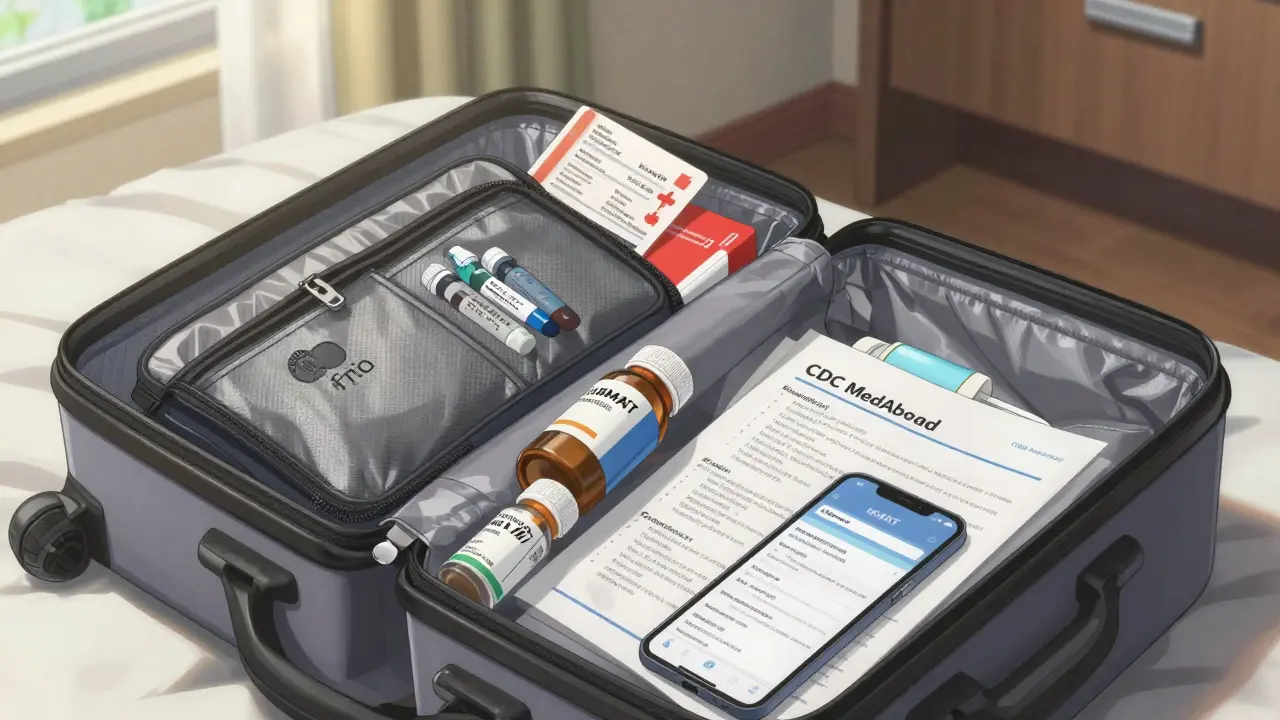
Insulin, epinephrine, and some antibiotics need to stay cold. The International Air Transport Association says insulin must be kept between 2°C and 8°C (36°F-46°F). A hot car, a warm hotel room, or a checked bag in the cargo hold can ruin your meds in hours.
Use a small insulated cooler with a reusable ice pack. Bring it as a carry-on. TSA and most international airports allow it. Just tell security you’re carrying medication-they’ve seen it before. Some travelers use medical-grade cooling wallets (like those from Frio or MedKits) that work without ice. They’re pricier, but worth it if you’re flying long-haul or going somewhere hot.
Time Zones and Your Meds
Jumping from New York to Tokyo? Your body’s clock is out of sync. So are your meds. If you take insulin, blood thinners, or seizure meds, timing matters. The CDC says 47% of travelers mess up their schedules because of time changes.
For once-a-day pills? Stick to your home time zone for the first 2-3 days. Take your pill at 8 a.m. your home time, even if it’s 10 p.m. local time. Then slowly shift to local time. For insulin? Split your dose during the transition. If you normally take 10 units at night, take 5 at your usual time and 5 when you land. Ask your doctor for a plan before you go.
Where to Find Pharmacies Abroad
Don’t rely on Walgreens or CVS. They’re only in 12 countries. Instead, use local chains. In the UK, look for Boots. In France, it’s Pharmacie. In Germany, it’s Apotheke. These are everywhere-even in small towns.
Need help fast? Use IAMAT’s free physician directory. It lists over 1,200 vetted doctors and pharmacies in 110 countries. Many speak English and understand U.S. prescriptions. You can search by country on their website before you leave.
Another option: the new CDC MedAbroad tool. It gives you country-by-country rules on what meds you can bring, where to fill prescriptions, and which ones are banned. It covers 195 countries. Bookmark it before you fly.
Watch Out for Fake Pills
One in three medications bought in open markets in Southeast Asia are fake, according to the WHO. That’s not a rumor. In Cambodia, Thailand, and parts of Mexico, counterfeit versions of antibiotics, diabetes meds, and even Viagra are common. They might look real. They might even have the right name. But they’re useless-or worse, toxic.
Only buy from licensed pharmacies. Look for signs that say “Pharmacie,” “Apotheke,” or “Farmacia.” Avoid street vendors, hotel gift shops, or pharmacies with no visible license. If the price is way lower than what you’d pay at home, it’s a red flag.
What to Do If You Lose Your Meds
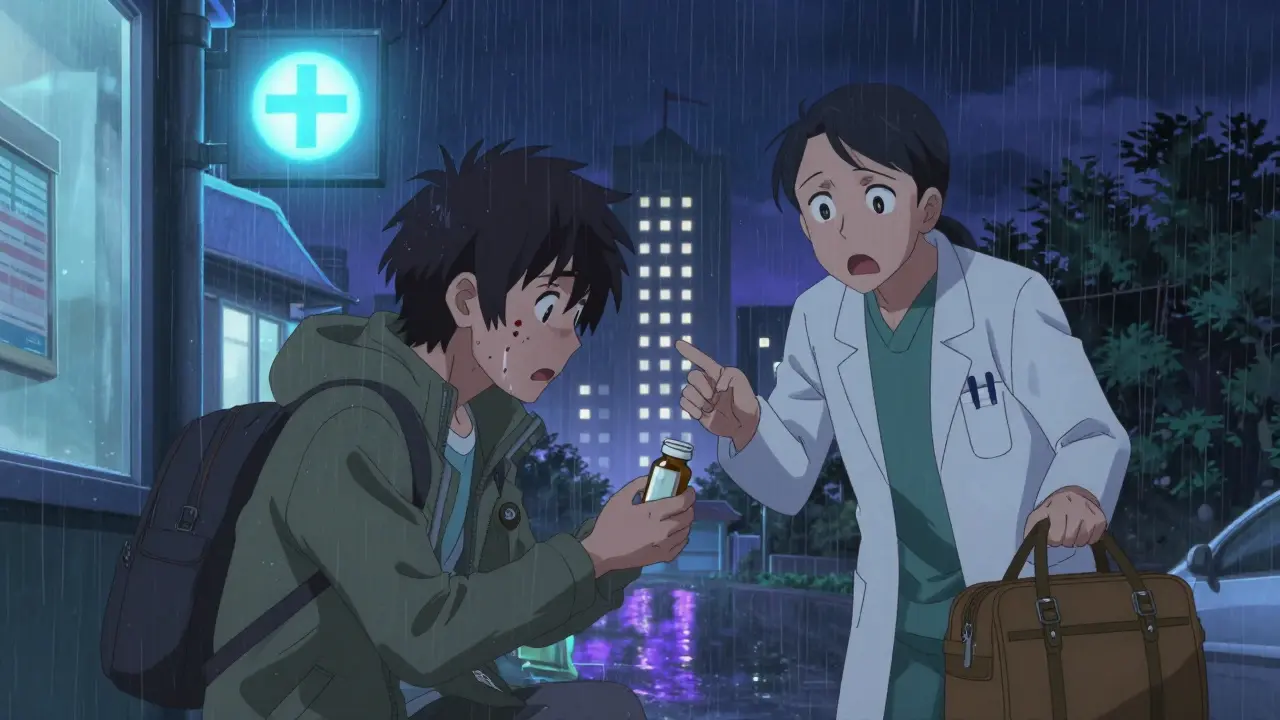
If your bag gets stolen or your meds spoil, don’t wait. Go to a hospital or embassy right away. In most European countries, you can walk into a pharmacy and get a 72-hour emergency supply for common conditions-no prescription needed. In France, that’s protected by law. In the UK, you can get an NHS prescription for £9.65 (as of 2023).
For Americans? You’re out of luck with Medicare. But some travel insurance plans cover emergency meds. World Nomads, for example, pays up to $2,000 if you need to buy replacement meds abroad. Check your policy before you go.
Special Cases: Controlled Substances and Mental Health Meds
If you take ADHD meds like Adderall, opioids like oxycodone, or even strong antidepressants, you’re in a gray zone. Thirty-one countries tightened rules on these drugs between 2022 and 2023. Canada and Australia allow them with proper documentation. Japan and the UAE ban them outright. The U.S. State Department says 22% more travelers got into trouble with these meds in 2022 than in 2021.
Call the embassy of your destination country before you fly. Ask: “Can I bring [medication name] with a valid prescription?” Get the answer in writing. Print it. Carry it with you. If you’re unsure, leave it at home and ask your doctor for alternatives.
Travel Insurance and What It Covers
Most standard travel insurance won’t cover your regular meds. But emergency replacements? That’s different. Policies like World Nomads, Allianz, and SafetyWing will pay for new prescriptions if yours are lost, stolen, or damaged. They won’t cover refills for forgotten pills, though. So don’t rely on insurance to save you-you still need to pack extra.
And remember: Medicare and most U.S. private plans don’t cover anything overseas. Even Medicare Advantage. That means if you need a new inhaler in Paris, you pay full price. Plan for that cost.
Final Checklist Before You Leave
- Get prescriptions refilled at least 2 weeks before departure
- Keep all meds in original bottles with labels
- Carry a doctor’s letter with generic drug names and translations
- Pack 10+ extra days’ supply
- Use a cooling wallet for insulin or temperature-sensitive drugs
- Download the CDC MedAbroad app or bookmark the website
- Save IAMAT’s contact info and local embassy number
- Check your travel insurance for emergency med coverage
- Call the destination country’s embassy to confirm medication rules
What to Do If You’re Turned Away at a Pharmacy
It happens. You show up with your bottle and letter, and the pharmacist says no. Stay calm. Ask to speak to the manager. If they still refuse, go to the nearest hospital emergency room. Most have a pharmacy on-site and can help. Or call your country’s embassy. They’re trained to handle this. Don’t try to buy from a street vendor. Don’t skip your dose. And never share meds with someone else-even if they have the same condition.
Can I bring my prescription meds in my carry-on?
Yes, always. Keep all medications in your carry-on bag. Checked luggage can get lost, delayed, or exposed to extreme temperatures. TSA and most international airports allow prescription meds in carry-ons, even liquids over 3.4 oz, as long as they’re declared. Bring your prescription label or doctor’s note to avoid delays.
What if my medication isn’t available in the country I’m visiting?
Some drugs have different names or formulations abroad. For example, you might find “Lisinopril” instead of “Zestril.” Ask the pharmacist for the generic name. If it’s not available at all, visit a local clinic or hospital. Many countries can prescribe an equivalent medication. Use IAMAT’s directory to find English-speaking doctors who can help.
Do I need a translation of my prescription?
Not always, but it helps a lot. Pharmacists in non-English-speaking countries often can’t read U.S. prescriptions. A simple translated note with the generic drug name, dosage, and reason for use reduces confusion and speeds up service. Free translation tools like Google Translate can help, but ask your doctor to print a certified version if possible.
Can I get my meds filled at a local pharmacy without a local prescription?
In most European countries, yes-for a limited supply (usually 3-5 days). In the UK, you can get an NHS prescription for £9.65. In France, pharmacies can give emergency meds for common conditions without a prescription. In Asia and Latin America, it’s less common. Always bring your original prescription and doctor’s letter to increase your chances.
Are over-the-counter meds from home allowed?
Some are, some aren’t. Even common OTC drugs like pseudoephedrine (in cold pills) or melatonin are restricted in places like Japan, the UAE, and Australia. Check the CDC MedAbroad tool or call the embassy. Better yet, bring what you need from home and avoid buying local OTC meds unless you’re sure they’re safe.



Comments (15)