
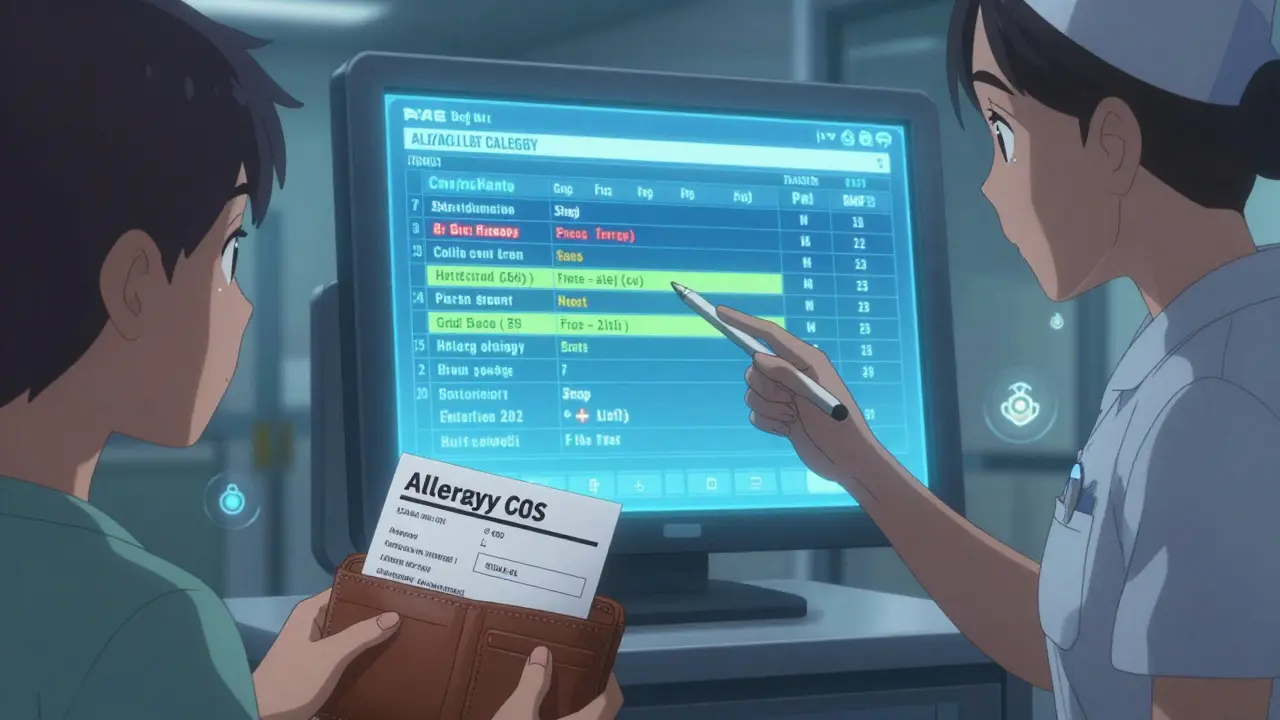
Getting the right medicine can save your life. But if your drug allergy isn’t clearly written down in your medical records, it could put you in serious danger. Every year, thousands of people end up in hospitals because of allergic reactions to medications that weren’t properly documented. This isn’t just about being careful-it’s about making sure your history is clear, specific, and visible to every doctor, nurse, and pharmacist who treats you.
Why Your Drug Allergy Info Must Be Exact
Many people say they’re "allergic to penicillin" or "sulfa drugs," but that’s not enough. A reaction to one drug doesn’t mean you’re allergic to the whole class. For example, if you had a rash after taking ampicillin, that doesn’t automatically mean you can’t take azithromycin or ciprofloxacin. The problem? Most medical records still list vague terms like "penicillin allergy" without saying what actually happened.Here’s what you need to include:
- The exact generic name of the drug (e.g., "amoxicillin," not "antibiotic").
- The symptoms you experienced (rash, swelling, trouble breathing, vomiting, dizziness).
- The severity (mild rash vs. anaphylaxis).
- The timing-how long after taking the drug did the reaction start?
A 2018 study at Massachusetts General Hospital found that after a 10-minute structured interview, 61% of patients had their allergy records changed. Over 200 vague entries were replaced with specific, accurate descriptions. That’s not a small fix-it’s life-saving.
What Happens If It’s Not Documented Right
Inaccurate or missing allergy info is one of the top causes of medication errors. A 2019 study in the Journal of the American Medical Informatics Association found that poor allergy documentation contributes to 6.5% of all medication mistakes. That might sound small, but in a hospital setting, that adds up to thousands of preventable reactions every year.Doctors avoid prescribing drugs they think you’re allergic to-even if you’re not. Research shows that 90-95% of people who claim a penicillin allergy aren’t actually allergic when tested. But because the record says "penicillin allergy," they’re given broader-spectrum antibiotics instead. Those drugs are more expensive, can cause more side effects, and may lead to antibiotic resistance.
And here’s the scary part: if you have a real, life-threatening allergy and it’s not clearly noted, a doctor might accidentally prescribe it. The Institute of Medicine estimated that proper allergy documentation could prevent 7,000 deaths annually in the U.S. alone.
How EHRs Are Designed to Help (and Where They Fall Short)
Most clinics and hospitals now use Electronic Health Records (EHRs) like Epic, Cerner, or Meditech. These systems are built to flag allergies-but only if the data is entered correctly.By law, EHRs must:
- Allow you to record an allergy with the drug name, symptoms, and severity.
- Include an explicit "No Known Drug Allergies" entry-even if you’ve never had a reaction.
- Make the allergy list visible at the top of your chart during every visit.
But here’s the catch: if a nurse just types "allergic to penicillin" into a free-text box, the system might not recognize it as a true allergy. The software needs structured data: dropdown menus, checkboxes, and required fields. That’s why some EHRs now require you to pick from a list of symptoms and severity levels. If you don’t fill them in, the system won’t let you save the entry.
Studies show that when EHRs are set up right-with alerts and mandatory fields-medication errors drop by up to 89%. But if the allergy info is vague or missing, those alerts don’t work. You’re relying on a human to notice a tiny note buried in your file. That’s not safe.
What You Can Do: A Simple Checklist
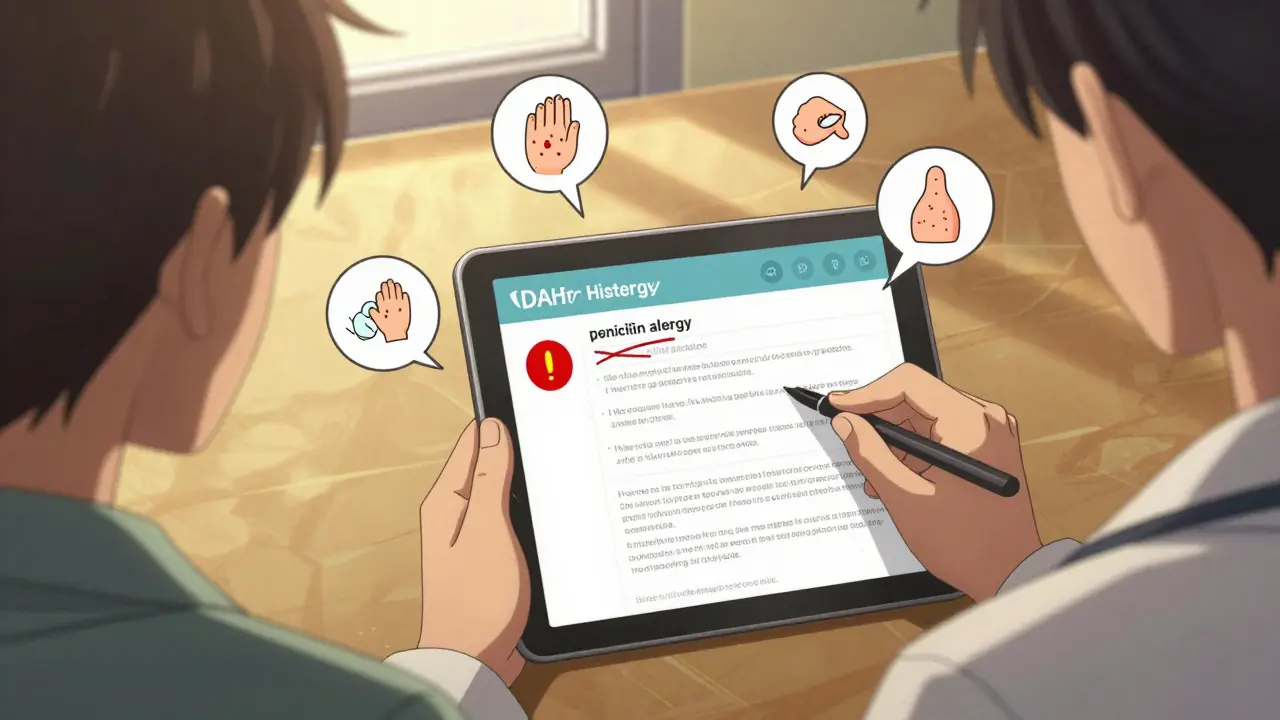
You don’t have to wait for your doctor to ask. Take control. Here’s how:- Review your current records. Ask for a copy of your allergy list from your GP or hospital. Don’t assume it’s right.
- Be specific. Instead of "I’m allergic to ibuprofen," say: "After taking 400mg of ibuprofen in 2021, I broke out in hives and my throat swelled up within 30 minutes. I needed an epinephrine injection."
- Update it every time. Even if you haven’t had a reaction in years, mention it at every appointment. If you’ve been tested and found not to be allergic, make sure that’s documented too.
- Carry a card. Keep a printed note in your wallet: "Allergic to [drug name]. Reaction: [symptoms]. Date: [year]."
- Ask about testing. If you think you might have been mislabeled (especially with penicillin), ask your doctor about an allergy test. It’s simple, safe, and can open up better treatment options.
What Your Doctor Should Be Doing
Good providers don’t just write down what you say. They ask follow-up questions:- "When did this happen?"
- "What did it feel like?"
- "Did you go to the hospital?"
- "Was it ever tested?"
Tools like the Drug Allergy History Tool (DAHT) help doctors do this right. It’s a short questionnaire that guides patients through their history, and it’s been shown to capture more accurate info than standard medical notes. If your provider doesn’t use something like this, ask why.
Also, make sure your allergies are reviewed at every hospital admission-even if you’ve been there before. A 2023 study found that nearly 1 in 5 patients had outdated or incorrect allergy info on file after being admitted.

The Bigger Picture: Why This Matters Beyond Your Own Care
Your allergy record doesn’t just protect you. It helps the whole system. When your data is accurate:- Hospitals avoid unnecessary antibiotic use.
- Pharmacists can catch dangerous interactions.
- Emergency responders know what to avoid.
- Future research can identify real allergy patterns.
Regulators like CMS and The Joint Commission don’t just require this for paperwork-they require it because lives depend on it. Facilities that fail to document allergies properly risk losing Medicare funding. That’s how serious this is.
And it’s getting better. By 2025, EHRs will be required to let patients view and edit their own allergy lists directly. That means you’ll be able to update your history from your phone, and it’ll sync across every doctor you see.
Final Thought: Don’t Assume It’s Already Done
You wouldn’t drive a car without checking the brakes. Your medical record is your health’s brake system. If your allergy info is vague, outdated, or missing, you’re not just at risk-you’re flying blind.Take five minutes today. Look up your records. Clarify your history. Tell your doctor exactly what happened. That small step could prevent a trip to the ER-or worse.
What if I think I’m allergic to a drug but never had a confirmed reaction?
Many people believe they’re allergic based on a mild rash or stomach upset from years ago. But true drug allergies involve the immune system and often include symptoms like swelling, trouble breathing, or anaphylaxis. If you’re unsure, ask your doctor about an allergy test. For penicillin, skin tests and oral challenges are safe and accurate. Up to 95% of people who think they’re allergic turn out not to be.
Can I remove a drug allergy from my record?
Yes-if you’ve been tested and cleared, or if the original reaction wasn’t an allergy. For example, if you had nausea after taking a drug, that’s an intolerance, not an allergy. Talk to your doctor. They can update your record with a note like: "Previously labeled penicillin allergy. Re-evaluated in 2024. No evidence of true allergy. Tolerated amoxicillin without issue."
Do I need to report every minor reaction?
Yes-even if it seems minor. A rash, itching, or mild nausea can be early signs of a real allergy. What seems harmless now could become life-threatening later. Documenting it helps your doctor spot patterns and avoid dangerous combinations down the road.
What if I don’t know the generic name of the drug?
Bring the pill bottle or packaging to your appointment. Generic names are usually printed on the label. If you can’t find it, your pharmacist can help. Never say "I’m allergic to the blue pill." Always name the drug. Brand names like "Advil" or "Tylenol" aren’t enough-they don’t tell doctors what active ingredient caused the reaction.
How often should I check my allergy record?
At least once a year, and always before surgery or hospital admission. Allergies can change over time. You might outgrow one, or develop a new one. Your record should reflect your current health, not what you said five years ago.





Comments (8)