
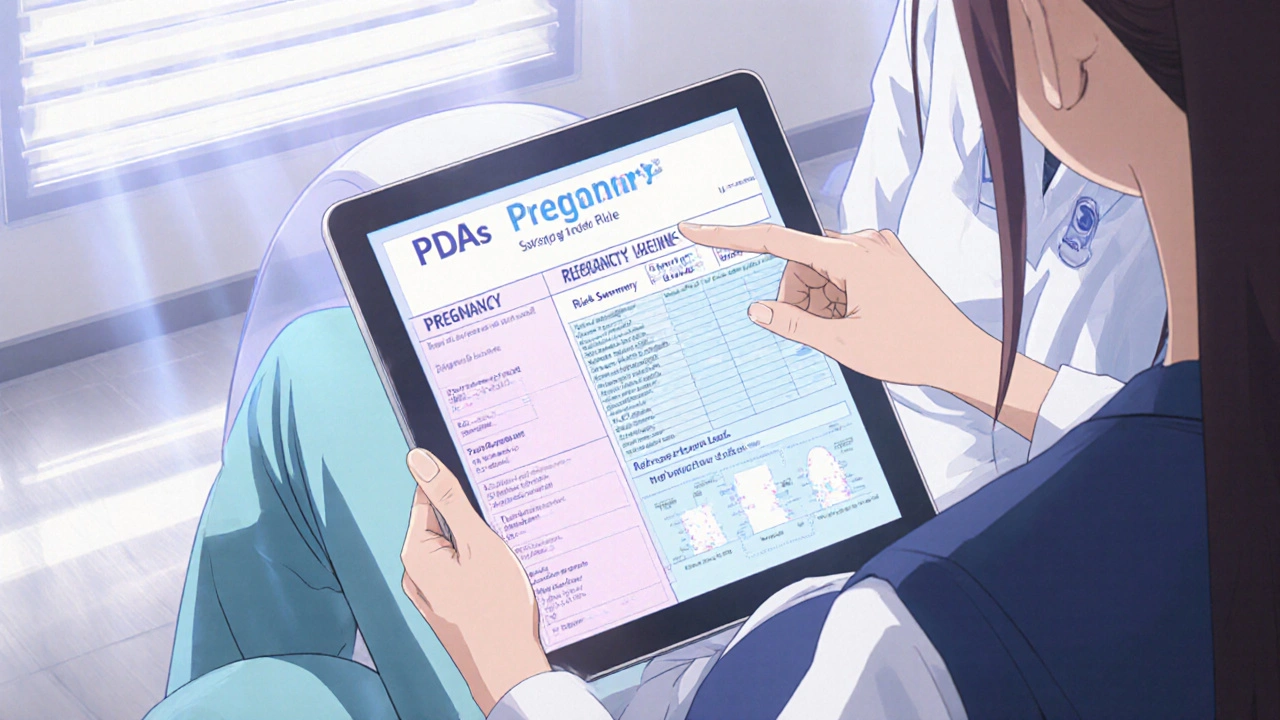
For years, if you saw a drug labeled as Category C or D during pregnancy, you might have assumed it was either safe or dangerous - no middle ground. But that system is gone. Since 2015, the U.S. Food and Drug Administration (FDA) replaced those simple letters with detailed, narrative labels that give real context about risks during pregnancy and breastfeeding. If you’re pregnant, planning to be, or breastfeeding and taking any prescription medication, understanding these new labels isn’t optional - it’s essential.
What Changed with Pregnancy and Lactation Drug Labels?
The old system used letters: A, B, C, D, and X. It sounded simple, but it was misleading. A “C” didn’t mean “maybe safe.” It meant there wasn’t enough human data to rule out risk - and that’s true for about 70% of all prescription drugs. People saw C and panicked. Or worse, they ignored it.
The new system, called the Pregnancy and Lactation Labeling Rule (PLLR), scrapped the letters entirely. Now, every drug label has three clear subsections under Section 8: Pregnancy, Lactation, and Females and Males of Reproductive Potential. Each one follows the same structure: Risk Summary, Clinical Considerations, and Data. This isn’t just more text - it’s better information.
How to Read the Pregnancy Section
Start with the Risk Summary. This isn’t a vague warning. It tells you the background risk of birth defects (about 3% in any pregnancy) and miscarriage (10-20% of known pregnancies). Then it tells you how the drug changes that risk. For example: “Exposure during the first trimester is associated with a 1.5-fold increased risk of neural tube defects compared to the background rate.” That’s specific. It doesn’t say “avoid.” It says, “Here’s what we know.”
Next, look at Clinical Considerations. This is where you find actionable advice. Does the drug require extra ultrasounds? Is there a specific time in pregnancy when use is riskiest? Are there alternatives that are better studied? This section might say: “Monitor fetal growth every 4 weeks if used beyond 20 weeks gestation.” That’s the kind of detail you need to make a decision with your provider.
The Data section backs it all up. It tells you what kind of studies were done - human trials, animal studies, case reports - and what the limitations are. If it says “prospective cohort of 1,200 pregnancies,” that’s stronger than “case reports from 2008.” Don’t skip this part. It tells you how confident you can be in the information.
Understanding Lactation Labeling
Breastfeeding and medication use is one of the most common concerns. The old system didn’t even have a dedicated section for it. Now, the Lactation subsection gives you real numbers.
Look for phrases like: “Infant exposure is estimated at less than 5% of the maternal dose.” Or: “Serum concentration in breast milk is 0.8 mg/L.” These aren’t guesses. They’re based on pharmacokinetic studies. The label will also mention if there are known effects on the infant - like drowsiness, poor feeding, or changes in lab values.
Some labels even tell you when the drug peaks in breast milk. For example: “Peak milk concentration occurs 1-2 hours after maternal dose.” That helps you time feeds to minimize exposure. If you’re worried, you can pump and dump during that window - but only if the label says it’s necessary. Many drugs are safe even if they pass into milk.
What About Birth Control and Fertility?
The third section - Females and Males of Reproductive Potential - is often overlooked. But it’s critical. If you’re on a drug that could harm a fetus, the label will say whether you need to use birth control, what kind, and how effective it needs to be. For example: “Use two forms of contraception with failure rates below 1% per year.” It might even say: “Pregnancy test required within 7 days before starting treatment.”
This section also covers fertility. Some drugs can cause temporary infertility in men or women. If that’s the case, it’s clearly stated. You need to know this before you start treatment - not after you miss a period.
Why This Matters More Than the Old Letters
The letter system made doctors and patients feel like they had a simple answer. But the truth is, pregnancy and drug safety is never simple. A drug might be safe in the second trimester but risky in the first. Or it might be safe for the baby but make the mother sicker. The PLLR gets that.
Studies show the new labels reduce misinterpretation from 68% to 31%. That’s a huge win. But it comes with a cost: time. Pharmacists report spending 5-7 extra minutes per prescription counseling. Doctors say it takes 3-5 label reviews before they feel confident using them.
That’s why many now use tools like MotherToBaby or TERIS - free services that translate the labels into plain language. If you’re overwhelmed, call them. They’re staffed by specialists who’ve read hundreds of these labels.
What to Do When You’re Confused
Don’t guess. Don’t stop your medication without talking to your provider. And don’t rely on Google searches or Reddit threads. Here’s what to do instead:
- Find the drug’s official prescribing information. Search “[Drug Name] FDA label” on the FDA website.
- Go to Section 8. Read the Risk Summary first - that’s the most important part.
- Check Clinical Considerations for what you need to monitor or avoid.
- If you’re breastfeeding, look for infant exposure percentages and effects.
- Call MotherToBaby at 1-800-733-4727. They’ll walk you through it in 10 minutes.
Pharmacists are also trained on these labels now. If your pharmacist says, “I’m not sure,” ask them to check the FDA label. Most have access to it through their system.
What’s Missing - and What’s Coming
Even with all the improvements, gaps remain. A 2023 report found that 63% of psychiatric drug labels still don’t specify which trimester carries the highest risk - even though we know timing matters. And only 15% of women in pregnancy registries are Black or Hispanic, even though those groups make up 30% of U.S. pregnancies. That means we’re missing data on how drugs affect diverse populations.
The FDA is working on it. In 2023, they released draft guidance proposing visual risk icons - like traffic lights - to go with the narrative text. By 2025, they aim to update every pregnancy-related label. That’s good news. But until then, you still need to read the full text.
Bottom Line
Reading a PLLR label isn’t like reading a warning sticker. It’s like reading a mini medical report. It’s longer. It’s more detailed. And it’s far more useful. The goal isn’t to scare you. It’s to help you and your provider make the best decision - whether that means continuing your medication, switching to a safer one, or adjusting your treatment plan.
If you’re pregnant or breastfeeding and taking any drug, take 10 minutes to read the label. Don’t wait for your doctor to explain it. You’re the one living with the decision. The information is there. You just need to know where to look.
What do the old pregnancy categories (A, B, C, D, X) mean now?
Those letter categories are no longer used on new drug labels. They were removed because they were misleading - they made complex risks seem like simple grades. You may still see them on older packaging or in outdated resources, but they’re not accurate. Always rely on the current FDA label under Section 8, which uses narrative descriptions instead.
Are all drugs labeled with the new PLLR format?
As of 2023, about 78% of prescription drugs in the U.S. have updated labels under the Pregnancy and Lactation Labeling Rule. Drugs approved after June 30, 2015, were required to use the new format immediately. Older drugs had until 2020 to update. If you’re unsure, check the FDA’s website for the most current prescribing information.
Is it safe to take antidepressants while breastfeeding?
Many antidepressants are considered safe during breastfeeding. Labels now show infant exposure levels - for example, sertraline typically results in less than 10% of the maternal dose reaching the infant, with no reported adverse effects in most studies. Always check the specific drug’s Lactation section. Avoid drugs with high infant exposure or known side effects like sedation or poor feeding. Talk to your provider about alternatives if needed.
What if my drug label says “no data available”?
“No data available” means there haven’t been enough human studies to draw conclusions - not that the drug is dangerous. This is common with newer drugs or those rarely used in pregnancy. In these cases, your provider may rely on animal studies, case reports, or data from similar drugs. You can also contact MotherToBaby or join a pregnancy registry to help fill the knowledge gap.
Can I trust pregnancy exposure registries?
Yes. These registries are now required on drug labels and are run by reputable organizations like the CDC or academic hospitals. They collect real-world data from pregnant women taking specific medications. Since the PLLR, participation has grown from 5,000 to over 25,000 pregnancies annually. Your participation helps future patients make safer choices. It’s voluntary and confidential.




Comments (16)