
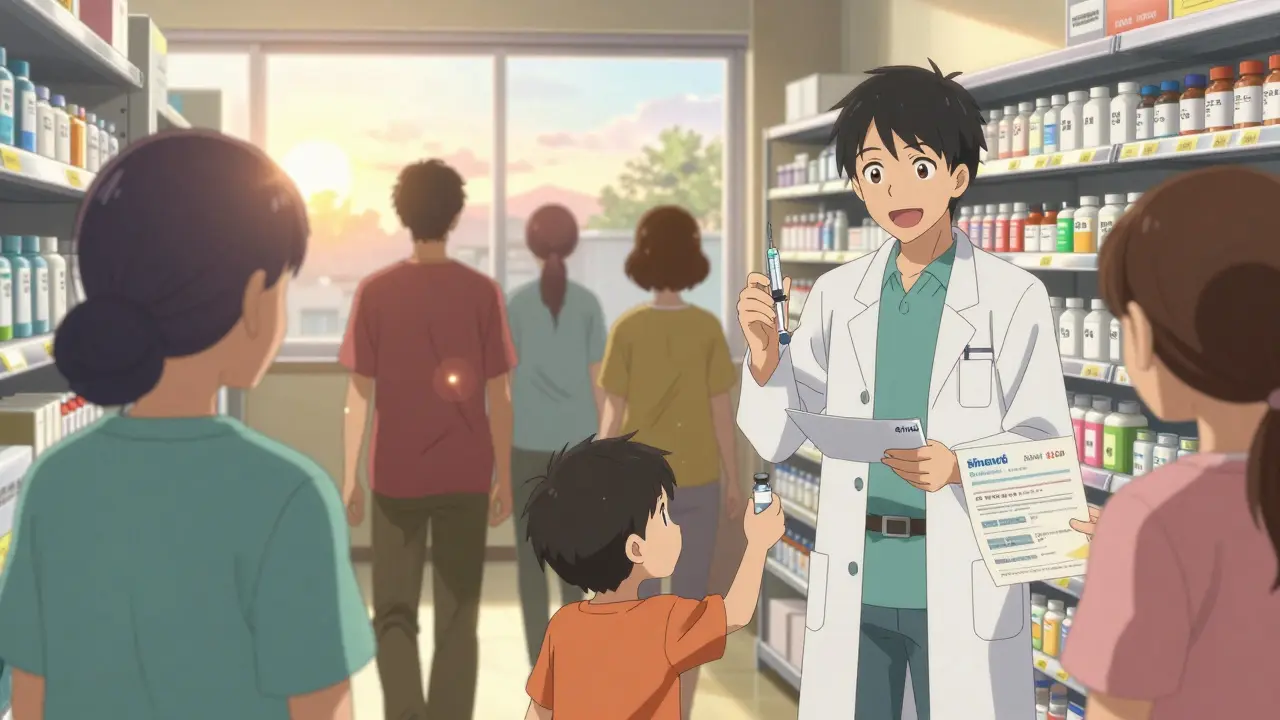
When you walk into a pharmacy, you might think you’re just there to pick up a prescription. But for many people, that pharmacy visit is the only healthcare interaction they have all year. And increasingly, pharmacists are stepping up-not just to fill scripts, but to push for better health outcomes through immunizations and affordable generic medications.
Pharmacists Are More Than Pill Dispensers
Ten years ago, getting a flu shot meant scheduling an appointment with your doctor, waiting weeks, and often paying out-of-pocket. Today, you can walk into a local pharmacy during lunch, get vaccinated in 10 minutes, and leave with your prescription for high blood pressure already filled. That shift didn’t happen by accident. It’s the result of pharmacists fighting for expanded roles in healthcare.In 2025, every state in the U.S. allows pharmacists to administer vaccines. That’s a huge leap from 1995, when only nine states permitted it. The change wasn’t just legal-it was cultural. Pharmacists started seeing themselves not as middlemen in the drug supply chain, but as frontline public health workers.
They’re not just giving shots. They’re asking patients: Have you had your pneumonia vaccine? Are you up to date on shingles? Did you know your insulin can cost half as much if you switch to the generic? These aren’t side conversations. They’re core parts of the job.
Why Immunizations in Pharmacies Work
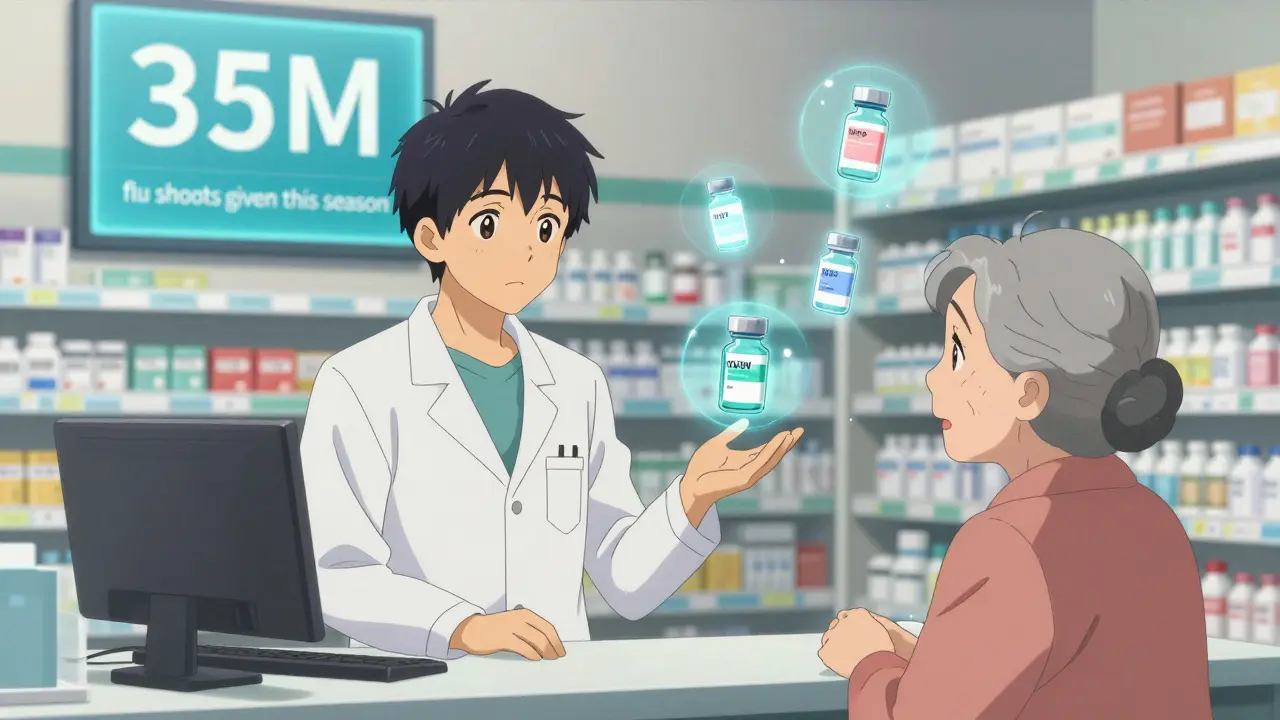
There’s a simple reason pharmacy-based immunizations are growing: accessibility. Over 93% of Americans live within five miles of a community pharmacy. Most are open evenings and weekends. No appointment needed. No waiting room full of sick people.During the 2022-2023 flu season, chain pharmacies gave out over 35 million flu shots-nearly 38% of all adult flu vaccines administered in the U.S. Independent pharmacies added another 22%. That’s more than doctors’ offices, clinics, or hospitals combined.
And it’s not just flu shots. Pharmacists now give vaccines for HPV, shingles, hepatitis, meningitis, and more. In California, pharmacists can even initiate vaccines for kids as young as three-something most doctors still can’t do without a separate prescription.
Patients notice. Surveys show 87% choose pharmacies for vaccines because it’s convenient. But convenience isn’t the whole story. Pharmacists spend 7 to 10 minutes with each patient, answering questions, correcting myths, and addressing fears-especially around mRNA vaccines. On Reddit and pharmacy forums, patients repeatedly mention pharmacists as the one person who actually listened when they were scared.
Generic Prescriptions: Saving Money, Saving Lives
While immunizations are about prevention, generic prescriptions are about affordability. And that’s where pharmacists play a quiet but powerful role.Take metformin for type 2 diabetes. The brand version costs $200 a month. The generic? $4. That’s not a typo. Pharmacists know this. They see patients skipping doses because they can’t afford the brand. So they ask: Have you tried the generic? Let me check your insurance.
Studies show that when pharmacists actively recommend generics, adherence improves by up to 30%. That means fewer hospital visits, fewer complications, lower long-term costs. But here’s the catch: many pharmacy benefit managers (PBMs) make it harder. They push brand-name drugs for higher rebates-even when the generic is cheaper for the patient. In fact, 78% of independent pharmacists say PBM practices hurt their ability to help patients.
Pharmacists aren’t just recommending generics. They’re fighting for them. In 2023, the National Community Pharmacists Association launched a campaign to pressure PBMs and Congress. Over 23,000 pharmacists wrote to lawmakers. Patients sent 6,000 messages. They didn’t just ask for change-they demanded it.
The Hidden Barriers
It’s not all progress. Behind the scenes, pharmacists face real roadblocks.First, reimbursement. Medicare pays pharmacists only 87% of what it actually costs to give a vaccine. That means for every flu shot, pharmacies lose money. Independent pharmacies, already operating on thin margins, are especially vulnerable. Some have stopped offering vaccines altogether because they can’t afford the loss.
Second, paperwork. Thirty-four states require pharmacists to report every vaccine to state registries within 72 hours. Sixteen states have looser rules. That means a pharmacist in Texas might need to file five different systems just to cover a single patient’s shots. One pharmacist in Minnesota told a reporter: “I spend more time entering data than I do talking to patients.”
Third, vaccine storage. Cold chain failures happen. Twelve percent of community pharmacies have lost vaccines due to temperature spikes. Each incident costs an average of $1,200. That’s not just a financial hit-it’s a public health risk.
And yet, 92% of independent pharmacies now offer immunizations-up from 65% in 2015. They’re doing it because they know it matters.
What’s Next?
The future is clear: pharmacists will be even more central to healthcare. By 2026, they’re projected to administer over half of all adult vaccines in the U.S.States are already moving. Between 2020 and 2023, 27 states expanded pharmacists’ authority. Fourteen removed age limits for pediatric vaccines. More are considering letting pharmacists order lab tests, adjust prescriptions, or manage chronic conditions under collaborative agreements with doctors.
But the biggest hurdle isn’t law-it’s integration. Right now, immunization records sit in state databases, doctor systems, and pharmacy software. They don’t talk to each other. That’s dangerous. A patient might get a vaccine at the pharmacy, but their primary care doctor never knows. That’s a missed opportunity.
That’s why groups like the American Society of Health-System Pharmacists are pushing for a unified electronic system. Over 89% of pharmacists surveyed agree: we need one record, not five.
What Patients Can Do
You don’t have to wait for policy changes to benefit from pharmacist advocacy.- Ask your pharmacist: “What vaccines do I need?” Don’t assume your doctor told you everything.
- Ask: “Is there a generic version of this?” Even if you’re on insurance, the copay might still be high.
- Check your state’s pharmacy board website. Some allow pharmacists to give vaccines to kids under 12 now.
- If your pharmacy won’t give a vaccine, ask why. Is it policy? Cost? Training? That feedback matters.
Pharmacists are trained, certified, and ready. They just need you to ask.
Why This Matters
This isn’t about pharmacists wanting more power. It’s about fixing a broken system.People skip vaccines because they’re too expensive, too hard to get, or because no one ever explained why they matter. People skip their meds because they can’t afford them. Pharmacists are on the front lines of both problems.
They’re the ones who notice when a patient hasn’t picked up their blood pressure pill in three months. They’re the ones who see the fear in someone’s eyes when they hear the word ‘vaccine.’ They’re the ones who remember that a $4 pill can mean the difference between a healthy life and a hospital bed.
That’s not advocacy. That’s care.
Can pharmacists really give all types of vaccines?
Yes, in most states, pharmacists can administer all CDC-recommended vaccines-including flu, shingles, HPV, tetanus, and COVID-19. Some states, like California and Oregon, also allow pharmacists to give vaccines to children as young as three. However, age limits still exist in a few states, especially for younger kids. Always check your state’s rules, but don’t assume you need a doctor’s appointment.
Why do some pharmacies charge more for vaccines than others?
It’s usually about overhead and insurance contracts. Chain pharmacies often get bulk discounts from manufacturers and have lower operating costs. Independent pharmacies may pay more per dose and have fewer patients to spread costs across. Also, some pharmacies don’t bill insurance directly for vaccines and charge cash prices. Always ask if the price includes administration fees-and whether your insurance covers it.
Are generic drugs as safe and effective as brand-name ones?
Absolutely. The FDA requires generics to have the same active ingredient, strength, dosage form, and route of administration as the brand. They must also meet the same strict manufacturing standards. The only differences are in inactive ingredients (like fillers) and packaging. For 90% of medications, generics work identically. Pharmacists are trained to spot when a generic might not be suitable-for example, in narrow therapeutic index drugs like warfarin or levothyroxine-but those cases are rare.
Why don’t pharmacists just give me the cheapest option without asking?
Because it’s not always that simple. Sometimes, the cheapest option isn’t the best for your body. Maybe you’re allergic to a dye in the generic. Maybe your insurance requires prior authorization for the brand. Or maybe your doctor prescribed a specific formulation for a reason. Pharmacists check your history, talk to your prescriber if needed, and then recommend the safest, most affordable option-not just the cheapest.
What can I do if my pharmacy won’t give me a vaccine?
Ask why. If they say it’s because they don’t have the vaccine in stock, ask if they can order it. If they say it’s policy, ask if they’re trained to administer vaccines-many aren’t, but they can be. If they say it’s because of insurance rules, ask them to call your insurer. Pharmacists are advocates. If you push back respectfully, they’ll often go the extra mile. If they still refuse, find another pharmacy. You have options.


Comments (10)