
When you pick up a prescription at the pharmacy, you might not think about who made the pill or how much it cost to produce. But behind every drug-whether it’s a brand-name medication or its generic version-there’s a complex web of labor, regulation, and economics that determines its price. The biggest difference? Labor cost. And it’s not what you’d expect.
Why Generic Drugs Cost Less-It’s Not Just the Active Ingredient
Many people assume generic drugs are cheaper because they use the same active ingredients as brand-name drugs. That’s true. But here’s the catch: the active ingredient itself only makes up about 10-15% of the total production cost. The rest? Packaging, testing, quality control, compliance, and labor. And this is where the real gap opens up. Brand-name drugs are developed from scratch. That means years of research, clinical trials, regulatory filings, and patent protection. The FDA estimates it costs $2.6 billion on average to bring a new drug to market. That cost doesn’t vanish-it gets baked into the price. Part of that price pays for the scientists, doctors, and regulatory teams who spent over a decade working on the drug. Generic manufacturers don’t have to do any of that. They don’t run clinical trials. They don’t pay for patents. So their upfront labor costs are nearly zero. But that doesn’t mean their labor costs are low. It just means they’re structured differently.How Labor Is Used in Generic vs Brand Production
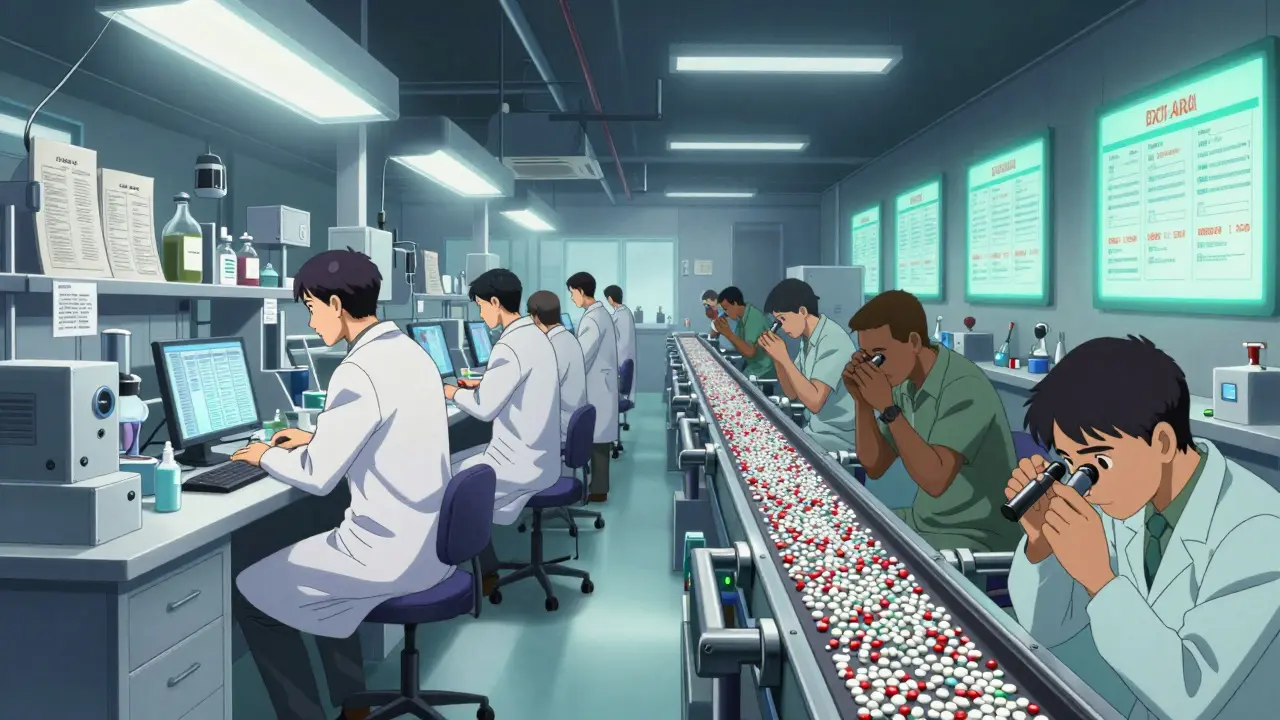
In brand-name drug production, labor is spread across high-skill roles: pharmacologists, clinical trial coordinators, regulatory affairs specialists, and R&D teams. These are expensive positions. Salaries for these roles can run $100,000 to $250,000 per year. And since brand manufacturers produce smaller batches-often just enough to meet demand-they can’t spread labor costs across millions of units. Generic manufacturers? Their labor is focused on one thing: consistency at scale. Think of it like this: a brand-name drug might be made in a single facility, producing 10 million pills a year. A generic version? It’s made in three different countries, across five factories, churning out 200 million pills a year. That’s not just volume-that’s a labor multiplier. For generics, labor isn’t about innovation. It’s about precision. Every batch must match the original drug’s performance. That means:- Chemists verifying raw material purity
- Technicians running daily quality tests
- Documentation specialists logging every step of every batch
- Inspectors checking for contamination
Scale Is the Secret Weapon
Here’s where generics win: economies of scale. BCG’s 2019 study found that when a generic manufacturer doubles its production volume, its unit cost drops by 27%. For brand-name drugmakers? Only 17%. Why? Because labor efficiency skyrockets when you’re making millions of pills a day. Imagine a technician who checks 50 samples an hour. If they’re working on a small batch of 10,000 pills, they’re doing 200 checks. If they’re on a line producing 5 million pills a week? Same technician. Same time. Same pay. But now they’re covering 100 times more product. That’s not just efficiency-it’s a geometric advantage. This is why generics can sell for 80-85% less than brand-name drugs-even though the active ingredient costs the same. It’s not because they’re cutting corners. It’s because they’ve turned labor into a scalable asset.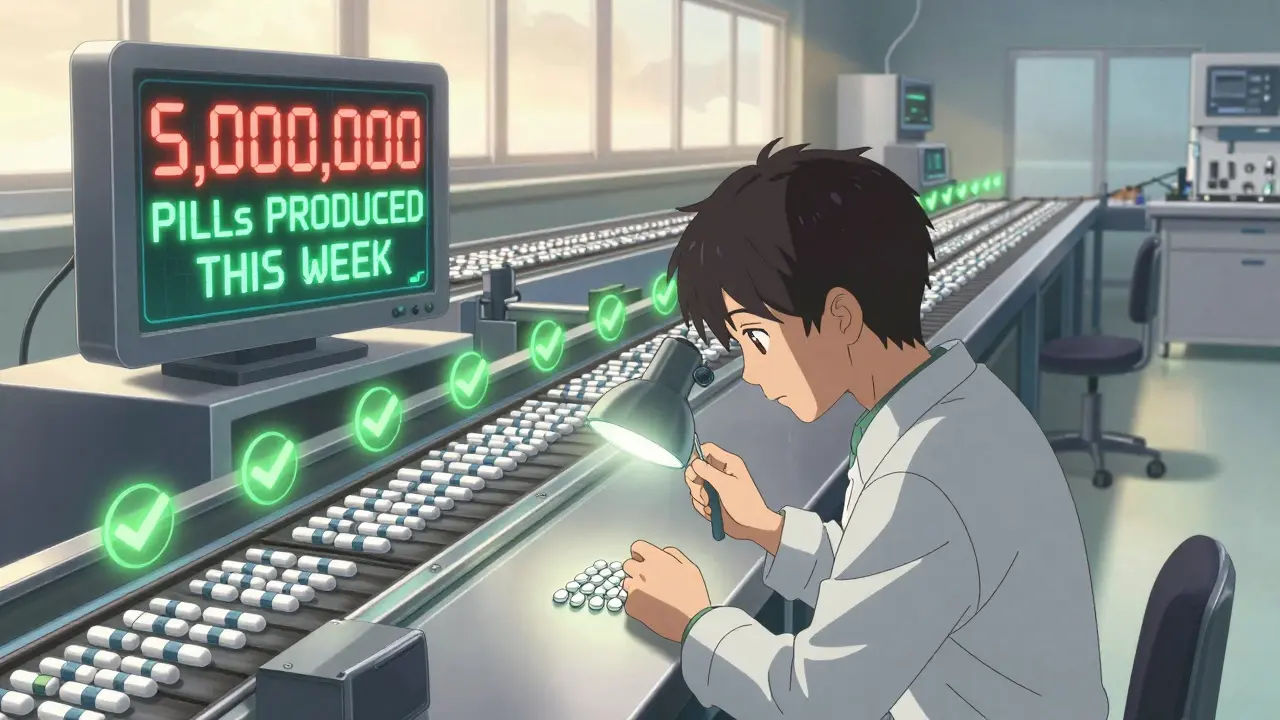
Geography Changes Everything
Let’s talk about where these pills are made. Over 80% of the active ingredients in U.S. generic drugs come from India and China. Why? Labor costs there are about 42% lower than in the U.S., according to Prosperous America’s 2023 analysis. But it’s not just wages. It’s also infrastructure, regulatory oversight, and scale. A single facility in India might produce 50 different generic drugs on the same line. In the U.S., that would be considered a regulatory nightmare. In India? It’s standard. That means fewer workers are needed per drug. Fewer facilities. Fewer inspections. Fewer overhead costs. The HHS Office of the Assistant Secretary for Planning and Evaluation (ASPE) points out this isn’t necessarily about efficiency-it’s about systemic advantages: lower environmental standards, government subsidies, and workforce flexibility. These factors don’t make Indian labor “better,” but they do make it cheaper. And that cheap labor? It shows up on your pharmacy receipt. About 15% of the price difference between U.S.-made and imported generics comes from this geographic labor arbitrage.Pressure to Cut Costs-And the Risk
Here’s the dark side of low prices: pressure. With nine out of ten prescriptions filled being generics, competition is brutal. If one company drops its price by 5%, others have to follow. That forces manufacturers to cut costs wherever they can. Labor is often the easiest target. The FDA warned in 2023 that “lower cost of generic drugs may place pressure on companies to adopt strategies that lower the cost of manufacturing,” including reducing staffing, trimming training, or skipping audits. That’s not hypothetical. There have been multiple FDA warning letters in the last five years to generic manufacturers for falsified data, inadequate testing, and understaffed labs. A 2021 study in the Journal of Generic Medicines found that plants with fewer than 10 quality control staff had a 3x higher rate of batch failures than those with 20+ employees. Labor isn’t just a cost-it’s a safeguard.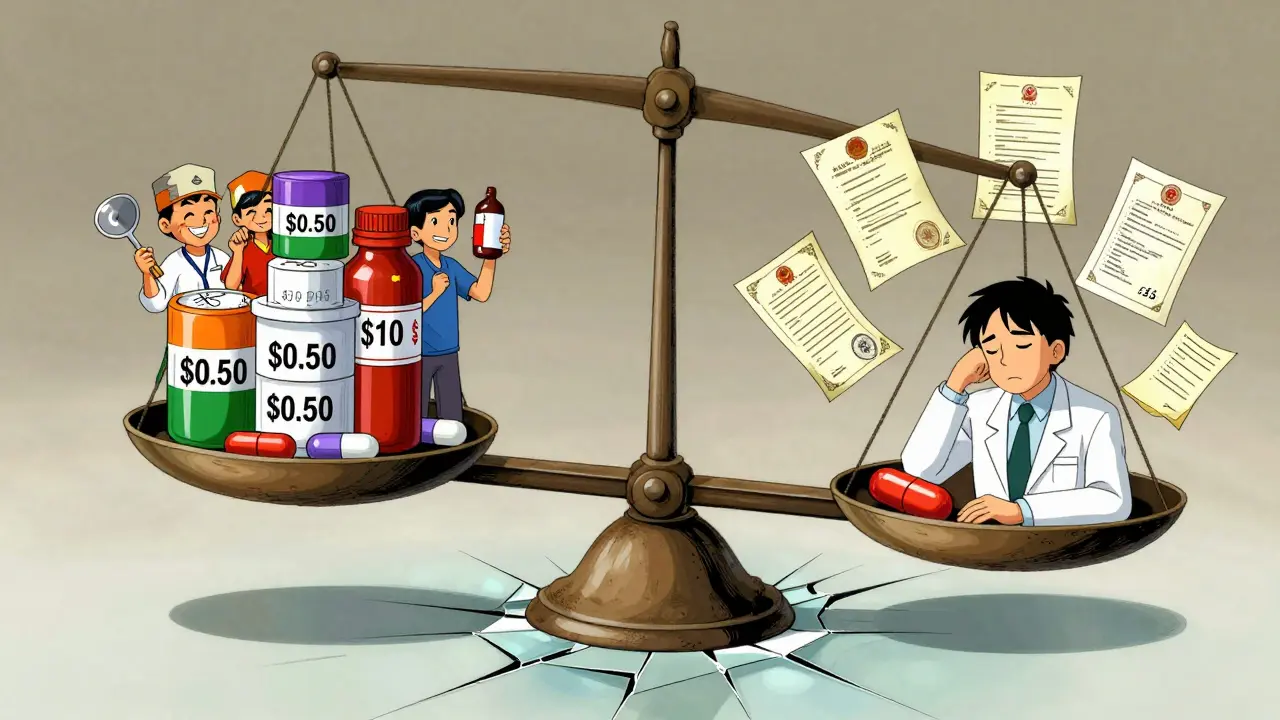
Outsourcing: The New Normal
More and more generic manufacturers are turning to Contract Manufacturing Organizations (CMOs). Instead of hiring their own staff, they outsource production to third-party factories. BCG’s data shows biosimilar producers now spend 42% of their production costs on CMOs-up from 28% just five years ago. Why? Because it lets them avoid fixed labor costs. They pay per batch, not per employee. If demand drops? They scale back. If demand spikes? They hire more CMO capacity. This shift turns labor from a fixed expense into a variable one. It’s smart business. But it also means less control. If a CMO cuts corners, the brand gets blamed. And regulators are starting to crack down.What This Means for You
You’re not just saving money when you choose a generic drug. You’re benefiting from a system built on scale, efficiency, and global labor networks. But that system is fragile. If competition disappears-because of mergers or patent settlements-prices can creep back up. The ASPE report found that “settlement agreements between brand and generic companies redistribute producer surplus,” meaning sometimes generics don’t compete as hard as they should. And if labor costs keep being squeezed, quality could slip. That’s not a guess. It’s what the FDA has seen. The truth? Generic drugs are cheaper not because they’re poorly made. They’re cheaper because they’re made in massive quantities, by people who know exactly what to do, in places where labor is affordable. But that system only works if it’s monitored, regulated, and respected.What You Can Do
- Ask your pharmacist: Is this generic made in the U.S. or imported? Not all generics are equal. - Check FDA alerts: The FDA publishes warning letters for drug manufacturers. If a plant has been cited for quality issues, you can find out. - Support transparency: Demand labeling that shows where your drugs are made. Consumer pressure has changed food and electronics-why not drugs? The next time you fill a prescription, remember: the low price isn’t magic. It’s math. And math depends on people-how many, where they are, and how well they’re supported.Why are generic drugs so much cheaper if they have the same ingredients?
Generic drugs are cheaper because their manufacturers don’t have to spend billions on research, clinical trials, or patent protection. Instead, they focus on producing the same drug at scale. Labor costs are lower because they’re spread across millions of units, and many are produced overseas where labor is cheaper. Quality control is still required, but the absence of upfront R&D costs allows for much lower prices.
Do generic drugs use the same labor as brand-name drugs?
No. Brand-name drug production relies on high-skill, high-cost roles like R&D scientists and regulatory experts. Generic production focuses on repetitive, high-volume tasks: quality testing, batch documentation, and packaging. The skills are different, and the scale is vastly larger, making labor more efficient per unit.
Is labor cost the biggest factor in generic drug pricing?
Not the biggest-but one of the most important. Raw materials and packaging are significant, but labor drives efficiency. Because generics are made in huge volumes, labor costs per pill are extremely low. However, quality control labor alone can account for over 20% of total production cost, making it a critical component.
Why do some generic drugs have quality issues?
Intense price pressure forces some manufacturers to cut costs by reducing staff, skipping inspections, or outsourcing to under-regulated facilities. The FDA has issued warning letters to multiple plants for falsified data, inadequate testing, and understaffed labs. It’s not the norm-but it’s happening.
Are U.S.-made generics safer than imported ones?
Not necessarily. The FDA inspects both U.S. and foreign facilities using the same standards. However, imported generics often come from countries with lower labor and environmental costs, which can lead to higher production volumes and lower prices. The key is whether the facility is FDA-approved-not where it’s located.
How does competition affect labor costs in generic drug production?
More competitors mean lower prices, which forces manufacturers to cut costs. This often means reducing staff, automating processes, or outsourcing to contract manufacturers. While this keeps prices low, it can also increase the risk of quality issues if oversight is reduced. The FDA has noted this as a growing concern.



Comments (8)