

Liver Enzyme Elevation Checker
Understand Your Liver Enzyme Results
Enter your ALT or AST value to determine if it's clinically significant based on medical guidelines.
Many people get their routine blood work back and see one line that makes them panic: ALT or AST is slightly high. You didn’t feel sick. You didn’t change your diet. You’re not drinking. But now you’re Googling ‘liver failure from statins’ at 2 a.m. The truth? Most of the time, a mild rise in liver enzymes from medication isn’t a crisis-it’s noise.
What counts as a mild elevation?
Liver enzymes like ALT (alanine aminotransferase) and AST (aspartate aminotransferase) are proteins that leak into the blood when liver cells are stressed or damaged. Normal levels vary slightly by lab, but generally, anything under 40 U/L is considered normal. A mild elevation means your numbers are between 1 and 3 times the upper limit of normal. That’s usually 40-120 U/L for ALT. Moderate is 3-5 times, and anything above 5 times is a red flag.Here’s the key: if your ALT is 85 U/L and you’re on a statin, you’re not in danger. You’re in the common zone. Studies show that 10-15% of healthy adults have mild elevations on routine blood tests. Medications are the top reason why.
Which meds cause this?
You don’t need to be on something exotic. Common drugs you might already be taking can nudge these numbers up:- Acetaminophen (Tylenol): Even at the max daily dose of 4,000 mg, up to 58% of healthy people show mild ALT spikes. It’s not overdose-it’s normal physiology.
- Statins (atorvastatin, rosuvastatin): About 0.5-2% of users get mild elevations. The FDA stopped recommending routine liver tests for statin users in 2012 because the elevations didn’t predict real liver damage.
- Amiodarone: Used for heart rhythm issues, it causes elevations in 15-20% of users.
- Methotrexate: Often prescribed for rheumatoid arthritis or psoriasis. Liver enzymes rise in 10-15% of people on low doses.
- Isoniazid: For tuberculosis. Around 10-20% of patients see elevations in the first two months.
None of these mean your liver is failing. They mean your liver is working harder to process the drug. Think of it like your muscles getting sore after a new workout-not broken, just adapting.
Why do doctors still worry about this?
It’s not that doctors are overreacting. It’s that they’re trained to look for danger signs. Back in the 1990s, when liver injury from drugs like troglitazone happened, guidelines were strict. We learned the hard way. But now, we know the difference between a harmless blip and true toxicity.Real liver damage from medication comes with symptoms: yellow skin, dark urine, nausea, swelling in the belly, extreme fatigue. If you have those, call your doctor immediately. But if you’re feeling fine and your ALT is 80? That’s not an emergency. It’s a data point.

What should you actually do?
Don’t stop your meds. Don’t panic. Do this:- Wait 2-4 weeks and get the test repeated. Levels often drop back down on their own.
- If it’s still mildly high but stable? Keep taking the medication. The American College of Gastroenterology says: ‘Minor elevations do not indicate significant liver damage.’
- If it keeps climbing past 3 times the normal level? Then talk to your doctor about switching or lowering the dose.
- For acetaminophen users: Stick to 2,000 mg a day if you have any liver condition at all.
A 2021 study in the Journal of Hepatology found that 73% of people on statins with mild enzyme elevations saw their numbers return to normal-even while staying on the drug.
Why do so many people stop their meds?
Fear. Pure and simple.A GoodRx survey of 3,500 people found that 58% stopped their prescribed medication because of a mild liver enzyme result-even though their doctor told them it was fine. That’s dangerous. Stopping statins increases your risk of heart attack and stroke. Stopping methotrexate can make your arthritis flare up. Stopping isoxinid can let TB come back.
One patient on HealthUnlocked had ALT levels between 65-85 U/L for five years while on atorvastatin. No symptoms. No liver damage on ultrasound. His heart stayed protected. He didn’t stop the drug. He didn’t need to.
What’s changing in medicine?
The medical world is catching up. In 2021, Epic’s electronic health records started blocking automatic alerts that told doctors to stop statins for mild elevations. At Mayo Clinic, that cut unnecessary discontinuations by 29%.New research is even better. A May 2023 study in Hepatology Communications found a blood test using microRNA biomarkers can tell the difference between harmless enzyme rises and real liver injury-with 92% accuracy. That’s not in clinics yet, but it’s coming.
And the FDA? They’ve already moved on. Their 2012 decision to remove routine liver monitoring for statins was based on 31 trials with 86,000 patients. No link between mild enzyme spikes and liver failure.
What about other liver problems?
Don’t confuse medication-induced elevations with fatty liver disease. NAFLD affects up to 30% of adults in the U.S. and UK. It’s caused by obesity, insulin resistance, and sugar-not statins. If you have both, your doctor needs to untangle them. But even then, mild enzyme rises from meds are still usually not the main issue.Also, alcohol matters. If you’re drinking even a few drinks a day, that’s likely contributing more than your pill. Be honest with your doctor about alcohol, sugar, and weight. Those are the real drivers of liver stress.
Bottom line: Don’t stop. Don’t stress. Just check back.
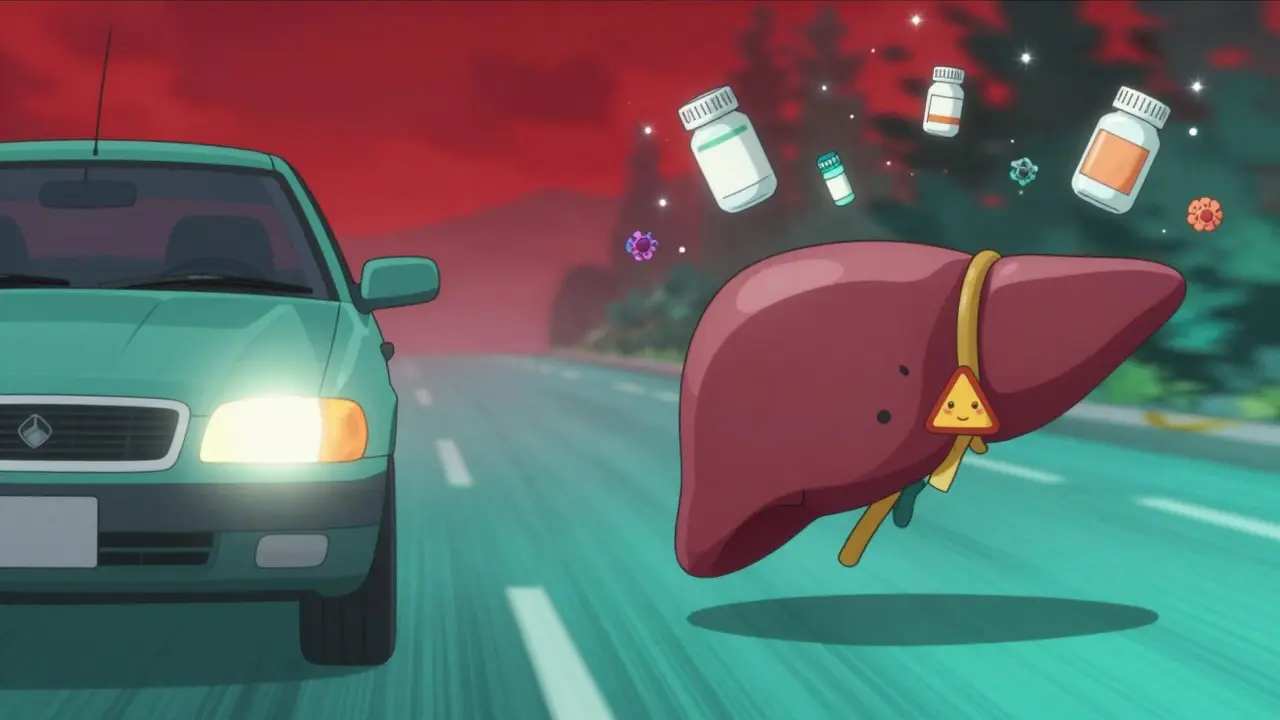
A mild elevation in liver enzymes from medication is not a diagnosis. It’s a signal-like a check engine light. It doesn’t mean your car is broken. It means something’s different. Sometimes it’s nothing. Sometimes it’s a loose gas cap. Rarely, it’s something serious.If your numbers are below 3 times normal and you feel fine, keep taking your medicine. Get a repeat test in 4 weeks. If it drops or stays the same, you’re fine. If it climbs, then you and your doctor can make a plan.
You’re not alone. Millions of people have this. Most of them never even knew it happened.
Can mild liver enzyme elevations from medication cause permanent liver damage?
No, mild elevations-defined as less than 3 times the upper limit of normal-are almost never linked to permanent liver damage. Studies show that in patients continuing their medication, liver enzymes typically return to normal without intervention. True drug-induced liver injury is rare and comes with symptoms like jaundice, nausea, and abdominal pain, not just a slightly elevated blood test.
Should I stop taking statins if my ALT is high?
No, unless your ALT is above 3 times the normal level and rising, or you have symptoms. Major guidelines from the AASLD, AHA, and FDA all say statins should not be stopped for mild enzyme elevations. Stopping them increases your risk of heart attack and stroke. The benefit of keeping your cholesterol under control far outweighs the risk of a harmless lab result.
How long does it take for liver enzymes to go back to normal after stopping a medication?
It varies. For acetaminophen, levels often normalize within 1-2 weeks after reducing the dose. For statins, if you continue the medication, enzymes usually drop back to normal in 4-8 weeks. If you stop the drug, they may normalize faster, but that’s not always necessary. The key is monitoring trends, not single values.
Are there any supplements or diets that can lower liver enzymes?
There’s no strong evidence that milk thistle, vitamin E, or liver cleanses reliably lower medication-induced enzyme elevations. The best approach is managing the cause: adjusting your medication if needed, reducing alcohol, losing weight if overweight, and cutting back on sugar. Supplements can even harm your liver-some herbal products are linked to drug-induced injury themselves.
If I have fatty liver, should I avoid medications that raise liver enzymes?
Not necessarily. Many people with fatty liver disease safely take statins, acetaminophen, and other common drugs. The key is monitoring and avoiding alcohol and high-sugar diets. If your liver enzymes are only mildly elevated and stable, continuing the medication is usually safer than stopping it. Your doctor may check for other causes of liver stress, but medication isn’t automatically the villain.
What to do next
If you’ve just found out your liver enzymes are mildly high:- Don’t panic. Don’t stop your meds.
- Write down everything you’re taking-prescriptions, OTC pills, supplements.
- Check your alcohol intake. Even one drink a day can add up.
- Book a follow-up blood test in 4 weeks.
- Ask your doctor: ‘Is this likely from my medication? Should I keep taking it?’
You’re not broken. Your liver isn’t failing. You just need to understand what the numbers really mean-and what they don’t.





Comments (11)