

Antihistamine Driving Safety Checker
Check Your Antihistamine Safety
Select an antihistamine to see driving safety information
Important: Even if you don't feel drowsy, these medications can impair your driving ability. Always test new medications at home before driving.
Why Some Allergy Pills Make You a Dangerous Driver
Many people pop an antihistamine before heading out for a road trip, thinking they’re just treating a runny nose. But if you’re taking a first-generation antihistamine like diphenhydramine (Benadryl), you might be putting yourself and others at risk. These drugs don’t just stop sneezing-they slow down your brain. Studies show they can impair your reaction time, lane control, and decision-making as much as being legally drunk. And here’s the scary part: you might not even feel it.
First-generation antihistamines cross the blood-brain barrier easily. That’s how they work-they block histamine in the brain to reduce allergy symptoms. But that same action makes you drowsy. In controlled driving tests, people who took diphenhydramine showed 30-50% more lane deviation than those who took a placebo. That’s the same level of impairment as a blood alcohol concentration of 0.05-0.08%. In most places, that’s the legal limit for drunk driving.
The Three Generations of Antihistamines-And Which Ones Are Safe
Not all antihistamines are created equal. They’re grouped into three generations based on how much they affect your brain.
- First-generation: Diphenhydramine (Benadryl), chlorpheniramine, clemastine, hydroxyzine. These are the worst for driving. They cause drowsiness, slower reflexes, and blurred vision. Even if you feel fine, your brain isn’t operating normally.
- Second-generation: Cetirizine (Zyrtec), loratadine (Claritin), fexofenadine (Allegra). These were designed to be less sedating. But not all are equal. Cetirizine still causes impairment in 15-20% of users, especially at higher doses. Loratadine is usually safer, but not risk-free.
- Third-generation: Levocetirizine (Xyzal), fexofenadine (Allegra). These are the safest for drivers. Multiple double-blind studies show no significant driving impairment-even after repeated daily use. They barely enter the brain, so your alertness stays intact.
The American Academy of Allergy, Asthma & Immunology recommends third-generation antihistamines for anyone who drives, works with machinery, or needs to stay sharp. If you’re still taking Benadryl or similar pills, you’re using outdated medicine. There’s no reason to risk your safety when better options exist.
How Much Danger Are You Really In?
It’s not just about feeling sleepy. Research from the National Highway Traffic Safety Administration shows that drivers using sedating antihistamines are six times more likely to be involved in a crash than those who don’t. That’s worse than using a cell phone while driving. And it’s not rare: about 5% of drivers admit to taking these meds before getting behind the wheel.
Real-world data backs this up. In traffic accident investigations, antihistamines were found in 0.6% of victims’ blood samples-and nearly all of those were first-generation drugs. Reddit users report similar patterns. In one thread with over 140 comments, 63% said they felt drowsy or slowed down after taking Benadryl. Twelve percent admitted to near-miss accidents because of it.
One user wrote: “Took Benadryl before a road trip and had to pull over three times because I kept nodding off-never doing that again.” That’s not an exaggeration. It’s a common story.
The Alcohol Trap: A Deadly Mix
Many people don’t realize that combining antihistamines with alcohol is like pouring gasoline on a fire. A single drink with diphenhydramine can double or even triple your impairment. You might think you’re fine because you only had one beer. But your brain is getting hit from two directions: the drug and the alcohol. Together, they amplify each other’s effects.
Studies show this combo can make you as impaired as someone with a BAC of 0.12%-well above the legal limit. And because both substances are depressants, your coordination, judgment, and reaction time collapse faster than you’d expect. Even if you feel “just a little buzzed,” you’re in serious danger.
Why ‘Non-Drowsy’ Labels Are Misleading
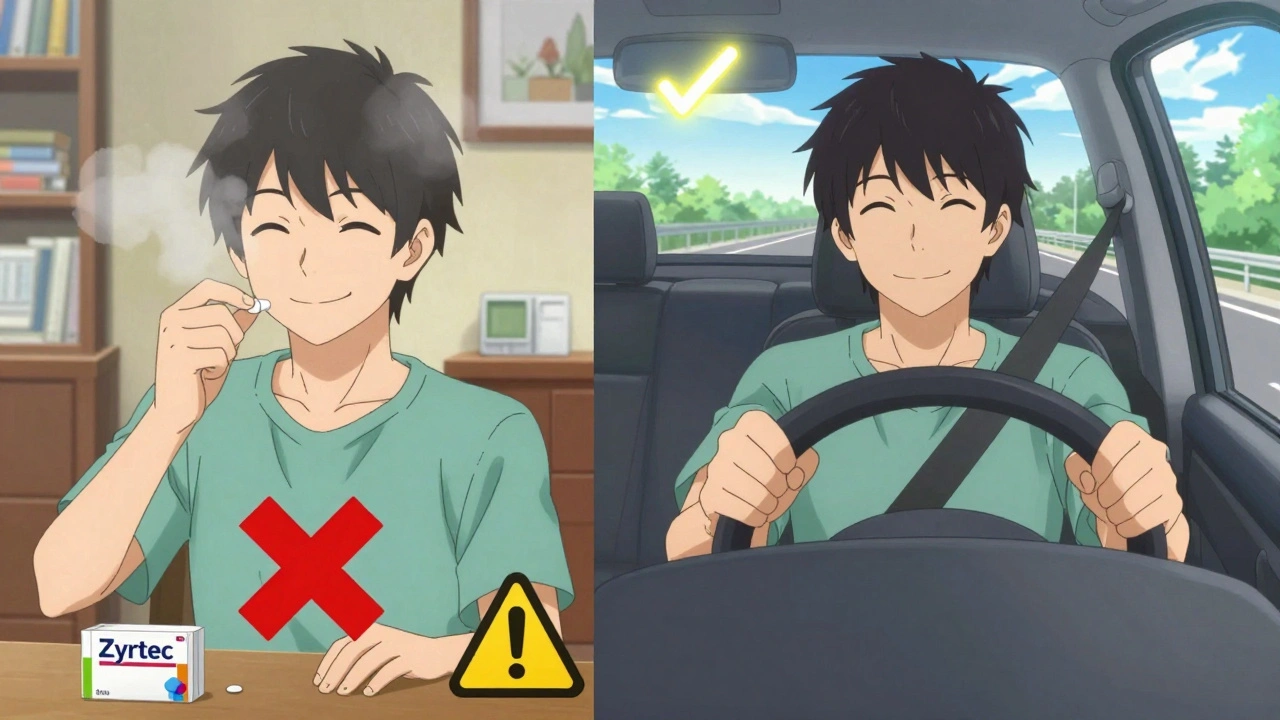
Look at the bottle of Zyrtec. It says “non-drowsy.” But that’s not the whole story. The label doesn’t say “zero risk.” In fact, 15-20% of people who take cetirizine still experience measurable driving impairment, according to Dr. F. Estelle R. Simons. The same goes for loratadine-some people are just more sensitive.
Here’s the truth: “non-drowsy” doesn’t mean “safe to drive.” It means “less likely to make most people sleepy.” But if you’re one of those people who reacts strongly, you won’t know until you’re already behind the wheel. That’s why experts recommend testing any new antihistamine at home first. Take it on a weekend, do some simple tasks, see how you feel before you drive.
What You Should Do Right Now
- Switch to third-generation antihistamines: Fexofenadine (Allegra) and levocetirizine (Xyzal) are the gold standard. They’re more expensive-$35 a month versus $4 for Benadryl-but they’re worth it. Your life is worth more.
- Never drive after taking first-generation antihistamines: Even if you think you’re fine. Your brain is still slowed. You can’t trust how you feel.
- Wait 48 hours after starting any new antihistamine: Your body reacts differently than others. Give yourself time to see how it affects you before getting behind the wheel.
- Avoid alcohol completely: No exceptions. Even one drink can turn a “mild” side effect into a dangerous one.
- Check your meds: Many cold and flu remedies contain diphenhydramine or doxylamine. Read the active ingredients list. If it’s there, don’t drive.
Some people think tolerance builds up-that after a few days, the drowsiness goes away. But research shows that’s not reliable. Even after five days of use, drivers still show 15-20% more impairment than baseline. You’re not getting used to it-you’re just getting used to being impaired.
Legal Consequences You Can’t Afford to Ignore
In 22 European countries, it’s illegal to drive within 8-12 hours of taking a first-generation antihistamine. In 14 countries, these drugs are classified as controlled substances-you need a special permit to drive while taking them.
In the U.S., you won’t be arrested just for having antihistamines in your system. But if you’re in an accident and testing positive for diphenhydramine, you can be charged with reckless driving, negligent homicide, or even DUI. Insurance companies will deny claims if they prove medication impairment contributed to the crash. And if you hurt someone, you could face civil lawsuits.
The NHTSA reports that 3.5 million traffic violations each year involve impairing medications. Antihistamines make up 15-18% of those cases. That’s not a small number. That’s a preventable epidemic.
What’s Changing in 2025
Regulators are catching up. In March 2023, the European Medicines Agency required all antihistamine labels to clearly state driving risks based on drug generation. The FDA approved levocabastine nasal spray in 2021-a new option with no measurable impairment in clinical trials.
More doctors are prescribing third-generation antihistamines as first-line treatment for drivers. A 2022 survey of 1,200 U.S. allergists found that 78% now start patients on fexofenadine or levocetirizine if they drive regularly.
And the market is shifting. Fexofenadine now holds 38% of the U.S. antihistamine market by value-up from just 12% in 2000. More people are choosing safety over cost. But the price gap still keeps many on older drugs. If you’re on Benadryl because it’s cheap, ask your doctor about generic fexofenadine. It’s often available for under $10 a month.
Final Warning: Feeling Fine Doesn’t Mean You’re Safe
Here’s the biggest myth: if you don’t feel sleepy, you’re okay to drive. That’s false. Research shows 70% of people taking first-generation antihistamines cannot accurately judge their own impairment. Your brain is foggy, but you think you’re alert. That’s when accidents happen.
Don’t gamble with your life-or someone else’s. If you have allergies and drive, switch to a third-generation antihistamine. Avoid alcohol. Test new meds at home. Read every label. And remember: safe driving isn’t about how you feel. It’s about what science says your brain is actually doing.
Can I drive after taking Benadryl if I don’t feel sleepy?
No. Even if you feel fine, Benadryl (diphenhydramine) slows your reaction time, impairs coordination, and reduces alertness. Studies show 70% of people taking it cannot accurately judge their own level of impairment. You may think you’re okay, but your brain isn’t functioning normally. The safest choice is to avoid driving entirely after taking it.
Is Zyrtec safe to take before driving?
Zyrtec (cetirizine) is considered non-sedating, but it still causes measurable driving impairment in 15-20% of users, especially at higher doses. If you’ve never taken it before, test it at home first. Avoid driving for at least 48 hours after starting it. If you feel even slightly sluggish, don’t get behind the wheel.
What’s the safest antihistamine for drivers?
Fexofenadine (Allegra) and levocetirizine (Xyzal) are the safest options. Clinical trials show no significant driving impairment after single or repeated doses. They don’t cross the blood-brain barrier significantly, so your alertness stays intact. These are the drugs recommended by allergy specialists for anyone who drives or operates machinery.
Can I drink alcohol while taking antihistamines?
Never. Alcohol and antihistamines both depress the central nervous system. Together, they can multiply impairment by 200-300%. Even one drink with a first-generation antihistamine can make you as impaired as someone with a blood alcohol level of 0.12%. That’s over the legal limit in every U.S. state.
Are over-the-counter antihistamines less dangerous than prescription ones?
No. Many over-the-counter antihistamines are first-generation drugs like diphenhydramine and doxylamine, which are just as impairing as prescription versions. The danger isn’t in whether it’s OTC or prescription-it’s in the active ingredient. Always check the label. If it contains diphenhydramine, chlorpheniramine, or hydroxyzine, treat it like a sedative and avoid driving.
What to Do Next
If you’re currently taking a first-generation antihistamine and drive regularly, talk to your doctor or pharmacist about switching. Ask for fexofenadine or levocetirizine. If cost is an issue, ask about generic versions-they’re often affordable. Check your medicine cabinet for cold, flu, or sleep aids that contain hidden antihistamines. Replace them with safer alternatives.
Remember: allergies don’t have to cost you your safety. There’s no excuse to risk your life-or someone else’s-on outdated medication. The science is clear. The options are available. The choice is yours.




Comments (11)