
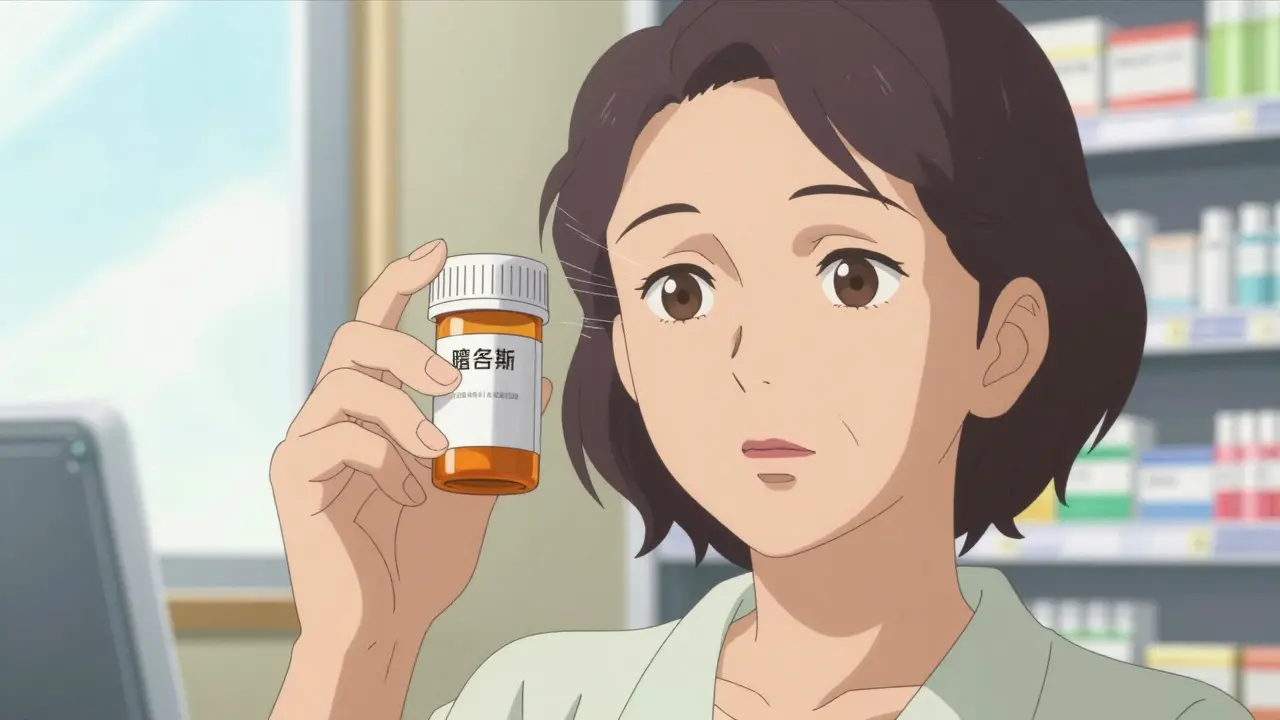
Why Checking Your Prescription Label Matters
Every year, hundreds of thousands of people in the U.S. take the wrong medication - not because their doctor made a mistake, but because the label on the bottle didn’t match what they were supposed to get. It sounds unlikely, but it happens more than you think. A pill that looks like your blood pressure medicine might actually be your neighbor’s diabetes drug. A label with your name on it might say a completely different strength. And if you don’t check, you won’t know until it’s too late.
The good news? You don’t need to be a doctor or a pharmacist to catch these errors. All you need is five seconds and the right habit. Checking your prescription label when you pick it up is the last line of defense between you and a dangerous mistake. Studies show that patients who verify their labels reduce the chance of taking the wrong medicine by 67%. That’s not just a number - it’s your safety.
What Should Be on Every Prescription Label
By law, every prescription label in the U.S. must include six key pieces of information. If any of these are missing, wrong, or unclear, you have the right to ask for a corrected label. Here’s what to look for:
- Your full legal name - First and last, exactly as you gave it to the pharmacy. Middle names or initials must match too.
- Medication name - Both the brand name (like Lipitor) and the generic name (like atorvastatin) should be listed.
- Strength - This tells you how much medicine is in each pill or dose. Watch out for mistakes like 5 mg vs. 50 mg.
- Dosage instructions - How often and how to take it. Does it say “once daily” or “twice daily”? Does it say “with food” or “on an empty stomach”?
- Prescriber’s name - The doctor who wrote the prescription.
- Pharmacy name and phone number - So you can call if something doesn’t look right.
Some labels also include the National Drug Code (NDC) - a 10- or 11-digit number that tracks the exact batch of medicine. It’s not something you need to memorize, but if you’re ever in doubt, you can give it to the pharmacist to double-check.
How to Verify Your Label in 30 Seconds
You don’t need to be an expert to spot a mistake. Just follow this simple six-step process every time you pick up a prescription:
- Hold the bottle at eye level - Good lighting helps. Don’t check it under a dim hallway light or while walking to your car.
- Check your name - Is it spelled exactly like your driver’s license? If it says “Matthew H.” but your full name is “Matthew James Hekman,” that’s a red flag.
- Match the medication name - Did your doctor say “metformin”? Does the label say “metformin”? If it says “glipizide” instead, stop. Don’t take it.
- Confirm the strength - Your doctor prescribed 10 mg? The label better say 10 mg. If it says 20 mg, ask why. This is one of the most common errors.
- Read the directions - “Take one tablet by mouth twice daily” should match what your doctor told you. If it says “every 6 hours,” that’s a big difference.
- Check the pharmacy info - If the phone number looks wrong or the pharmacy name doesn’t match where you picked it up, something’s off.
This takes less than a minute. But skipping it? That’s where mistakes happen.
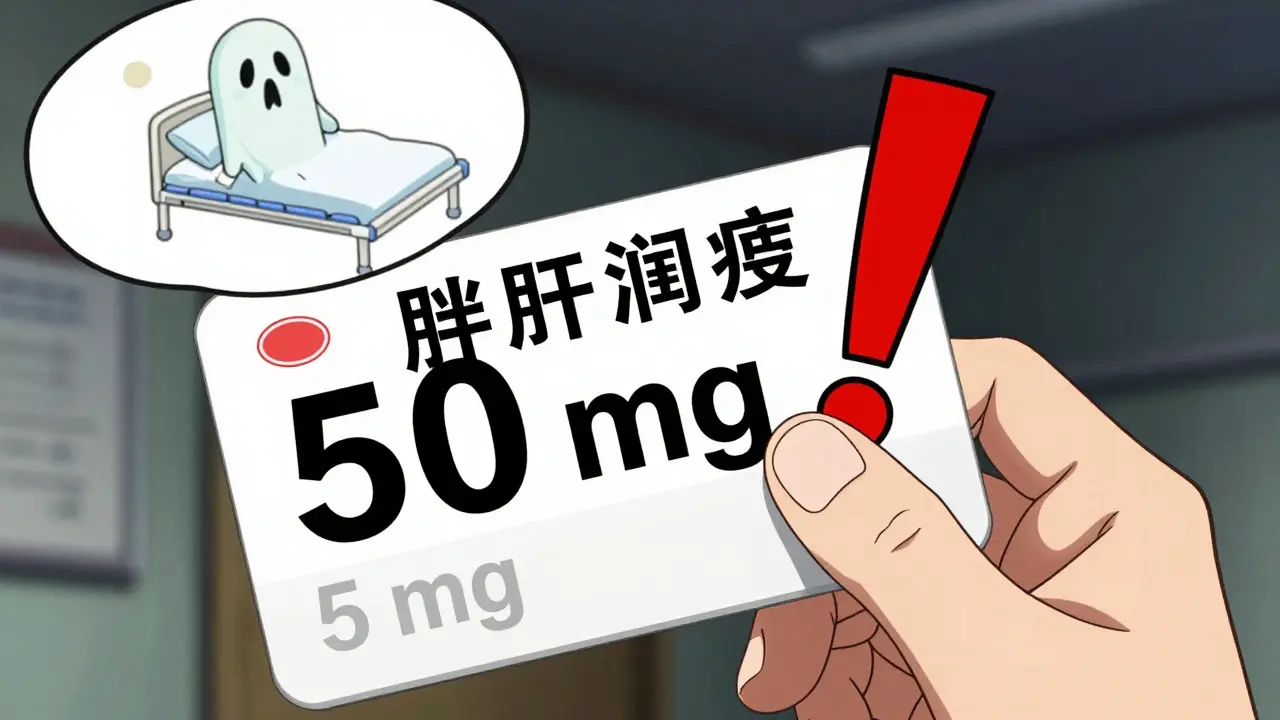
Common Mistakes People Miss (And How to Catch Them)
Most errors aren’t obvious. Here are the top three things people overlook - and how to fix them:
- Similar-sounding names - “Hydrochlorothiazide” and “hydroxyzine” look alike. One treats high blood pressure. The other treats anxiety. If you’re unsure, ask the pharmacist: “Is this the same medicine my doctor said I need?”
- Small print - Many labels use 10-point font. That’s too small for many adults, especially over 65. If you can’t read it, ask for a large-print version. Most pharmacies have them. CVS and Walgreens both offer magnifiers at the counter - use them.
- Wrong patient - Yes, this happens. A 2023 survey found that 15% of label errors were due to someone else’s prescription being given to you. It’s rare, but it’s real. Always check your name. If it’s even slightly off, say something.
One Reddit user shared how they caught a deadly mistake: their mom’s blood thinner was labeled as 10 mg instead of 5 mg. She would have bled internally if they hadn’t checked. Another person almost took their roommate’s medication - same name on the label, different pills. That’s why you can’t assume.
What to Do If Something’s Wrong
If you spot an error, don’t take the medicine. Don’t wait. Don’t think, “It’s probably fine.”
Go back to the pharmacy counter. Say clearly: “I think there’s an error on this label. My name is [your full name], and I was prescribed [medication name], [strength]. This label says something different.”
Pharmacists are trained to handle this. They’ll check their records, call your doctor if needed, and fix it - no questions asked. In fact, the American Medical Association says doctors should encourage patients to do exactly this. You’re not being difficult. You’re being smart.
If the pharmacy dismisses you or says, “It’s fine,” ask to speak to the pharmacist in charge. If they still won’t fix it, call your doctor’s office directly. You have the right to safe medication. No pharmacy should make you feel silly for asking.
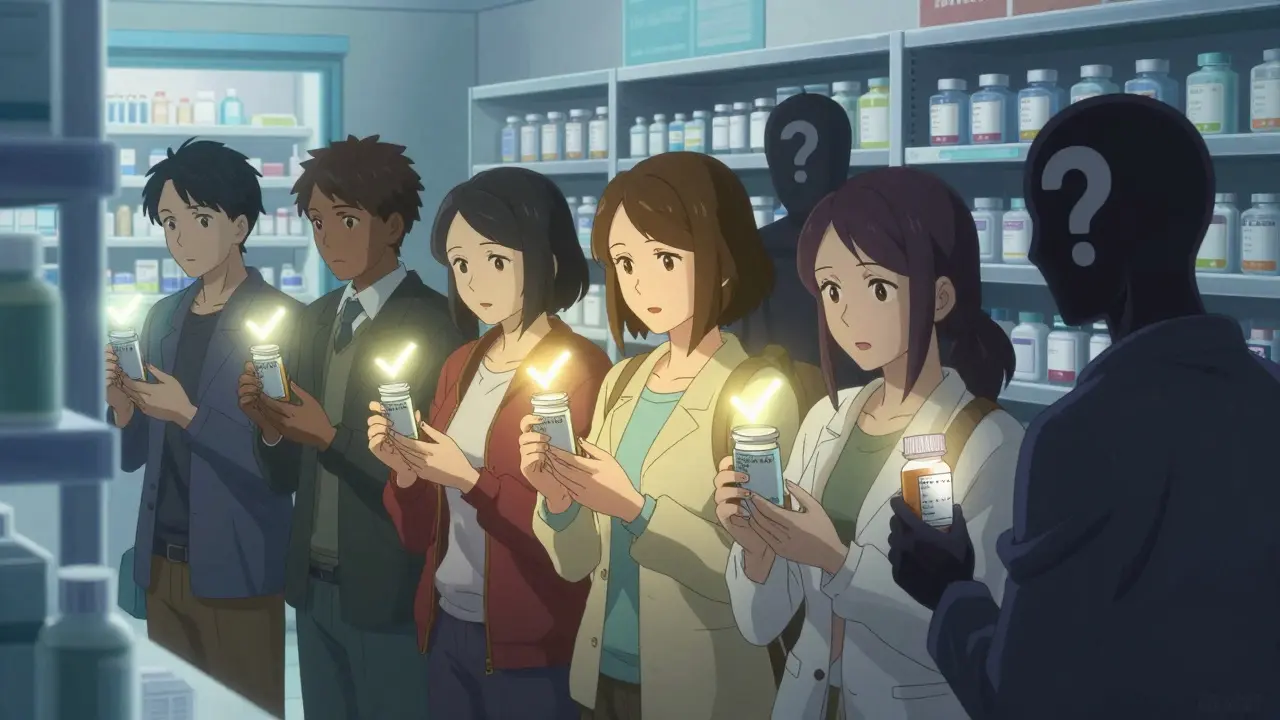
Tools and Tips to Make Verification Easier
You don’t have to rely on memory or perfect vision. Here are some simple tools that help:
- Pocket magnifier - A $5 plastic magnifier from any drugstore can help you read tiny print. Keep one in your wallet.
- Smartphone camera zoom - Use your phone’s camera to zoom in on the label. It’s free and always with you.
- Medication list - Keep a printed or digital list of all your medications, including names and strengths. Show it to the pharmacist when you pick up a new prescription.
- Large-print labels - Ask for them. By 2023, 71% of adults over 50 said they felt safer when pharmacies offered big-print instructions.
- QR codes - Some newer labels have QR codes. Scan them with your phone to hear a voice explanation of your medicine in your language. This feature is expanding fast - expect it in most pharmacies by 2026.
The FDA’s 2023 initiative will require all labels to use 24-point font for your name by the end of 2025. That’s a big step forward. But until then, you still need to check.
Why This Isn’t Just Your Responsibility - But It Still Is
Some experts argue that patients shouldn’t have to check their own labels. They say pharmacies and systems should be designed to prevent errors - and they’re right. But right now, the system isn’t perfect. And until it is, you’re the final checkpoint.
Think of it like checking your seatbelt. The car has airbags, anti-lock brakes, and crash sensors. But you still buckle up. Why? Because you know the system can fail. Your label check is the same thing.
The CDC says states that require pharmacists to verbally confirm labels with patients have 18% fewer medication errors. That’s because when patients are involved, mistakes get caught. You’re not just protecting yourself - you’re helping make the whole system safer.
Final Thought: Make It a Habit
You don’t need to be perfect. You just need to be consistent. The first time you check your label, it might feel awkward. The second time, it’ll feel normal. By the third time, you won’t even think about it.
Start today. Next time you pick up a prescription - any prescription - pause. Look at the label. Read your name. Read the medicine. Read the dose. If it’s right, you’re safe. If it’s wrong, you just saved yourself from a hospital visit.
That’s not just good advice. It’s a lifesaver.




Comments (15)