

Switching from a brand-name drug to a generic is common - it saves money, and for most people, it works just fine. But what if you start feeling worse? What if your blood pressure spikes, your thyroid levels go haywire, or you break out in a rash after your pharmacy filled your prescription with a generic version? If that’s happened to you, you’re not alone. And you’re not wrong to want to go back to the brand. But switching back isn’t as simple as asking your pharmacist. There’s a process. And if you skip the steps, you could face delays, denials, or even dangerous gaps in treatment.
Why Switching Back Might Be Necessary
Generic drugs are required by the FDA to have the same active ingredient, strength, and dosage form as the brand-name version. That sounds straightforward. But what’s not the same? The inactive ingredients. Things like dyes, fillers, preservatives, and coatings. These don’t treat your condition - but they can affect how your body reacts. For most people, these differences don’t matter. But for some, they do. Patients with conditions like epilepsy, hypothyroidism, or those on blood thinners like warfarin are especially sensitive. A 2022 study in Neurology found that switching between different generic versions of anti-seizure drugs led to a 27% higher chance of breakthrough seizures. That’s not a small risk. And it’s not just about seizures. People with inflammatory bowel disease have reported flare-ups after switching generics. Others develop rashes, nausea, or dizziness - symptoms that vanish when they return to the original brand. The FDA acknowledges this. In a 2022 safety alert, they warned that switching between different manufacturers - even between a brand and a generic - can cause loss of effectiveness or new side effects in patients taking narrow therapeutic index drugs. These are medications where even tiny changes in blood levels can cause serious harm.What the Law Says About Switching Back
In the U.S., pharmacists are allowed to substitute generics unless the doctor writes “Dispense as Written” (DAW) on the prescription. But if you’ve had a bad reaction, you can ask your doctor to override that. The key is documentation. You can’t just say, “I don’t like the generic.” You need to show a clinical reason. Most insurance plans, including Medicare Part D, require prior authorization before covering a brand-name drug when a generic is available. In 2023, 68% of brand-name drugs needed prior auth under Medicare Part D. That means your doctor has to prove the generic didn’t work - not just that you prefer the brand. Twenty-eight states have laws that block pharmacists from switching certain high-risk medications - like levothyroxine or phenytoin - without the prescriber’s explicit approval. So if you’re on one of these, your pharmacist can’t swap you out even if they want to. But if you were already switched, you still need a doctor’s note to go back.The 7-Step Process to Switch Back Safely
Switching back isn’t a phone call. It’s a process. Here’s how to do it right:- Track your symptoms. Write down exactly what changed. Did your INR levels fluctuate? Did your TSH spike? Did you get a rash? Note dates, symptoms, and lab values. This isn’t just for your doctor - it’s for the insurance company too.
- See your doctor. Don’t try to switch on your own. Your doctor needs to confirm the generic caused the issue. They’ll review your history, lab results, and symptoms to decide if switching back is medically necessary.
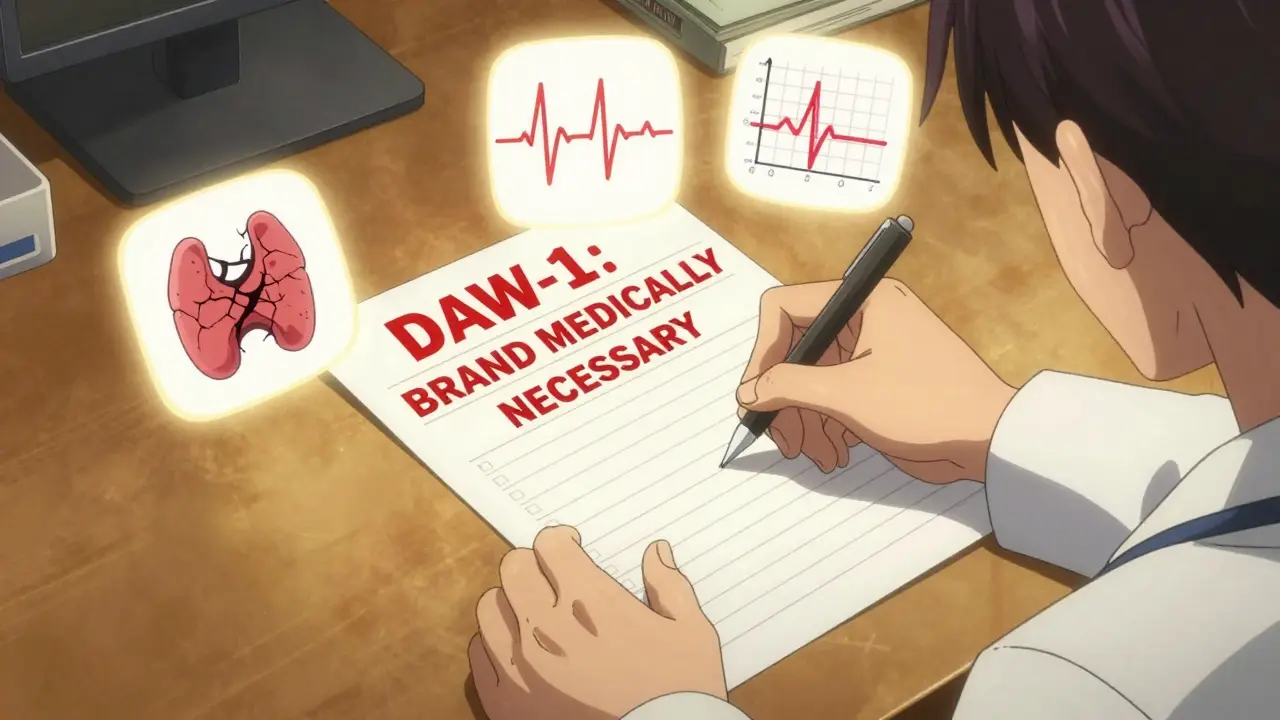
- Ask for a “Brand Medically Necessary” prescription. Your doctor must write the exact brand name on the script - not just “brand” or “original.” For example: “Synthroid 50 mcg,” not “levothyroxine.” They also need to check the box on the prescription form that says “DAW-1” or “Brand Medically Necessary.”
- Submit supporting documents. Your doctor may need to complete a CMS Form 1490S or a similar prior authorization form. Attach lab reports, previous prescriptions, and a short note explaining why the generic failed. The more detail, the better.
- Call your pharmacy. Not all pharmacists know the process. Some may refuse to fill a brand-name script unless they’ve seen prior auth approval. Call ahead. Ask if they need a faxed prior auth form. Keep a record of who you spoke to and when.
- Follow up with your insurer. If your claim is denied, don’t give up. You have the right to appeal. Most denials are overturned if you have solid clinical documentation. The AMA says 63.7% of appeals succeed with proper paperwork.
- Schedule a follow-up. After you switch back, see your doctor within 7-10 days. Check your lab values again. Make sure your symptoms improved. This proves the switch worked - and protects you if insurance asks for proof later.
What Happens If You Don’t Follow the Steps
Skipping any of these steps can lead to real problems. In 2022, the FDA recorded 1,247 medication errors linked to improper switching. The most common? Pharmacists filling a generic because the doctor didn’t specify the brand. Patients ended up without their medication for days. Others got the wrong generic - and had a reaction. Insurance denials are the biggest hurdle. A 2023 survey found that 41.7% of patients who asked to switch back were refused by their pharmacy at least once. Blue Cross Blue Shield denied 82% of initial requests for brand-name levothyroxine, according to patient reports on PatientsLikeMe. One woman in Ohio waited three weeks for approval - during which her TSH levels climbed to 18.5 (normal is 0.4-4.0). She ended up in the ER. And here’s the scary part: some doctors don’t know how to fill out the forms correctly. A 2023 study found that 67% of prescribers made errors on prior auth paperwork before training. After three hours of training, that dropped to 18%. If your doctor seems unsure, guide them. Bring the steps above. They’ll appreciate it.Costs and Insurance Realities
Let’s be honest: brand-name drugs cost a lot more. In 2023, the average monthly cost for a brand-name cardiovascular drug was $450.72. The generic? $112.45. That’s a 300% difference. But here’s what most people don’t realize: your insurance might still cover the brand - if you prove it’s medically necessary. Medicare Part D, Medicaid, and many private plans have exceptions for patients who can’t tolerate generics. You might pay a higher copay - say $75 instead of $10 - but you’ll still get the drug. Some patients worry about cost. But if the generic made you sick, the real cost isn’t the price tag - it’s the ER visits, missed work, or hospitalizations that follow. One patient on Reddit shared that after switching back to Synthroid, her energy returned, her hair stopped falling out, and she stopped missing work. She paid $60 more a month - but saved $1,200 in lost wages and doctor visits.
When You Shouldn’t Switch Back
Not every patient needs to go back. For 92.7% of medications, switching from brand to generic works perfectly. If you’ve been on a generic for months without issues, don’t switch back just because you’re worried. The American Medical Association warns that many requests are based on perception, not science. And for some drugs - especially anti-seizure meds - switching back and forth is dangerous. The AAN guidelines strongly advise against it. If you’ve had a seizure after switching, don’t keep switching. Stick with one version - brand or generic - and stick with it.What to Do If Your Insurance Still Says No
If you’ve done everything right and your insurer still denies the request, you have options:- Ask your doctor to write an appeal letter. Use the exact wording from your medical records.
- Call your insurer’s member services. Ask for a case manager. They often have more flexibility than automated systems.
- Check if the brand manufacturer offers a patient assistance program. Many provide free or discounted drugs for low-income patients.
- Consider an authorized generic. Sometimes the brand company sells the exact same drug under a generic label. It’s cheaper than the brand, but identical to it.
Final Thoughts
Switching back from a generic to a brand isn’t about being picky. It’s about safety. For some, it’s the difference between feeling well and feeling ill. The system isn’t perfect - insurance delays, pharmacist confusion, and doctor oversight make it harder than it should be. But it’s possible. And when done right, it works. Don’t let cost or confusion stop you from asking for what you need. Your health isn’t a commodity. If a generic isn’t working, speak up. Document everything. Follow the steps. And don’t give up.Can I just ask my pharmacist to give me the brand name instead of the generic?
No. Pharmacists are legally allowed to substitute generics unless the prescription says “Dispense as Written” or “Brand Medically Necessary.” Even if you ask, they can’t give you the brand unless your doctor has written it that way and your insurance has approved it. Trying to bypass the process can delay your medication or lead to errors.
How long does it take to get insurance approval to switch back?
It varies. For Medicare Part D, prior authorizations for brand-name drugs take an average of 14.3 days. Some plans process them faster - as quickly as 72 hours under the 2024 Medicare redesign - but many take two weeks or more. If you’re at risk of a health crisis, ask your doctor to request an expedited review. They can flag your case as urgent.
What if I can’t afford the brand-name drug even with insurance?
Many brand-name manufacturers offer patient assistance programs. For example, AbbVie (maker of Synthroid) and Pfizer have programs that provide free or low-cost medications to eligible patients. You can also ask your doctor about authorized generics - these are made by the brand company but sold under a generic label. They’re cheaper than the brand but identical in active ingredients and formulation.
Are all generics the same?
No. Generics from different manufacturers can have different inactive ingredients. That’s why switching between generics - or between a generic and a brand - can cause problems. One patient might tolerate a generic from Company A but react badly to the same drug from Company B. That’s why it’s important to stick with one version once you find what works.
Can my doctor write a prescription for a specific generic manufacturer?
Yes, but it’s rare. Most prescriptions don’t specify the manufacturer. However, in some states, doctors can write “Do Not Substitute” and name a specific generic brand if they’ve found it works best for a patient. This is more common with narrow therapeutic index drugs. But it’s not guaranteed to be covered by insurance unless it’s deemed medically necessary.
What should I do if I run out of my brand-name drug and only generics are available?
If you’re on a high-risk medication like warfarin or levothyroxine and you’re out of your brand, don’t take a different generic without talking to your doctor. Call your prescriber immediately. They may be able to get you a short-term supply or help you get an emergency authorization. Never skip doses or switch on your own - even temporarily. Small changes can lead to big problems.
Will switching back to brand affect my insurance premiums?
No. Your premiums are based on your plan, not on which drugs you take. However, if your insurer denies coverage and you pay out of pocket, it may affect your out-of-pocket spending. But this doesn’t change your monthly premium. Insurance companies track drug usage for cost analysis - not to raise your rates.





Comments (11)