

Why Talking About Medications with Doctors Matters for Seniors
Most seniors take more than one medication. In fact, nearly 9 out of 10 adults over 65 are on at least two prescription drugs. About 1 in 7 take five or more every day. That’s not just common-it’s risky. Each extra pill increases the chance of side effects, dangerous interactions, or mistakes. And here’s the hard truth: medication problems send over 350,000 older adults to the hospital every year in the U.S. alone. But it doesn’t have to be this way. The biggest factor in keeping seniors safe isn’t new drugs or fancy tech-it’s clear, honest talk with their healthcare team.
What You Need to Bring to the Appointment
Don’t rely on memory. Even the most organized person forgets details under stress. Instead, bring everything in one bag. That means all prescription bottles, over-the-counter pills, vitamins, herbal supplements, and even patches or creams. Why? Because doctors often don’t know what seniors are taking at home. A 2022 study found that 25% of medication lists patients give to doctors are wrong-either missing something or listing the wrong dose.
Write down your concerns ahead of time. Not just ‘I feel tired,’ but ‘I’ve been dizzy every morning since I started the new blood pressure pill.’ Write down the names, doses, and times you take each one. If you’re not sure why you’re taking something, write that too. You’re not being difficult-you’re being smart. Providers appreciate it.
The Four Questions Every Senior Should Ask
Doctors don’t always explain everything. You have to ask. Here are the four most important questions to use at every appointment:
- How does this medication help my specific condition? Don’t accept vague answers like ‘it’s for your heart.’ Ask: ‘Does this lower my blood pressure? Reduce my risk of stroke? Ease my joint pain?’
- What are the side effects I should watch for? Some side effects are mild. Others are dangerous. Know what’s normal and what needs a call to the doctor.
- Could this interact with anything else I’m taking? Even common things like ibuprofen, calcium supplements, or grapefruit juice can cause serious problems when mixed with certain prescriptions.
- What should I do if I miss a dose? Some pills are safe to take late. Others can be dangerous. Never guess.
Ask these questions even if you’ve taken the same medicine for years. Conditions change. New drugs get added. What was safe last year might not be safe now.
How to Make Sure You Understand What the Doctor Says
Doctors talk fast. Medical terms are confusing. And when you’re worried, it’s hard to focus. That’s why the ‘teach-back’ method works so well. After the doctor explains something, say: ‘Let me make sure I got this right.’ Then repeat it back in your own words.
Example: Doctor says, ‘Take this statin at night with a full glass of water.’ You say, ‘So I take the blue pill every night before bed, with a big glass of water, and I shouldn’t take it with grapefruit juice?’ That’s teach-back. Studies show this cuts medication errors by over 30%.
Also, ask the doctor to slow down. Say: ‘I want to get this right. Can you explain that again?’ No one will think less of you. In fact, they’ll respect you more.
Why Bringing Someone With You Helps
It’s not weak to bring a family member or friend. It’s smart. During appointments, people get overwhelmed. They forget what was said. They miss details. A second person can take notes, ask questions you didn’t think of, and remember the answers.
Research shows seniors with someone advocating for them have 18% fewer bad reactions to medications. That’s not a small number. That’s life-changing.
Give your companion a quick heads-up before the visit: ‘I want you to listen for when the doctor talks about my blood thinner. I’m not sure if it’s still the right dose.’
Use Tools to Stay on Track
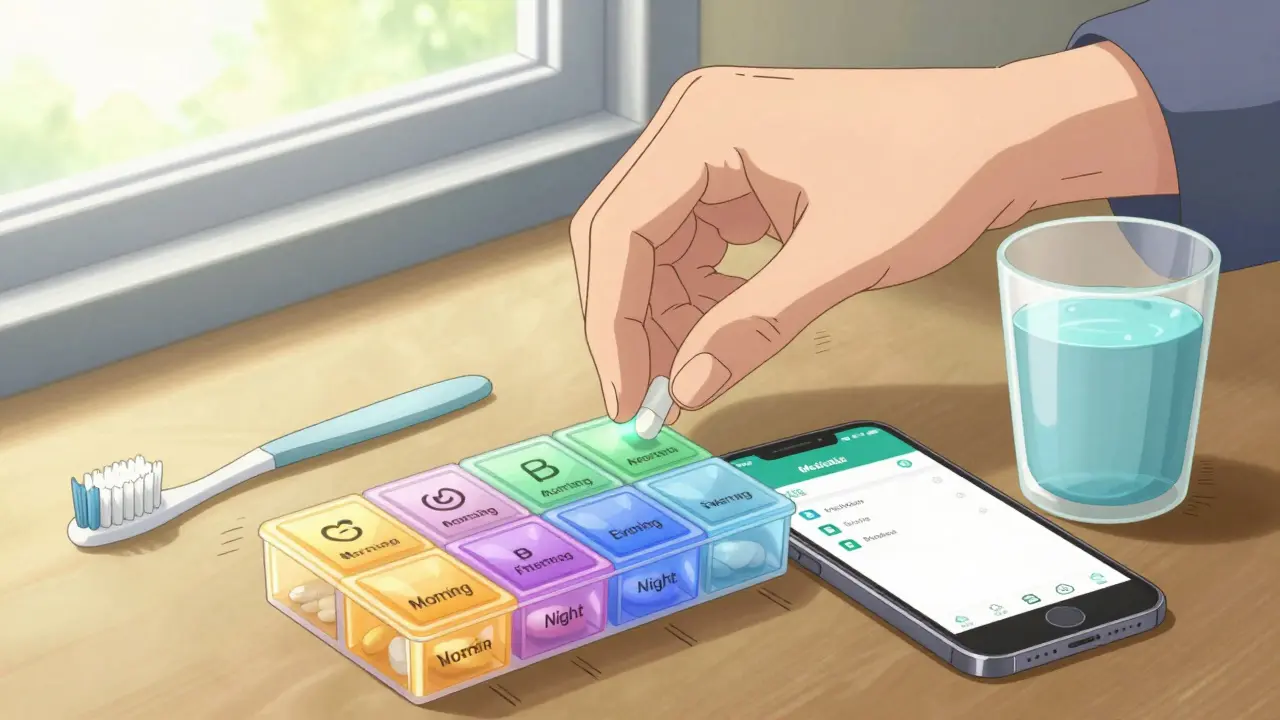
Managing multiple pills is hard. A pill organizer with compartments for morning, afternoon, evening, and night makes a huge difference. Some even have alarms. Apps like Medisafe or Round Health can send phone alerts, track refills, and warn you about interactions. These aren’t luxuries-they’re safety tools.
Another simple trick: tie medication times to daily habits. Take your morning pills right after brushing your teeth. Take your evening ones before you sit down for dinner. Routines stick better than alarms.
And don’t forget: pharmacies can help. Many now offer medication synchronization-meaning all your refills are due on the same day each month. That cuts down on missed doses and confusion.
When to Ask for a Medication Review
Doctors don’t always look at your whole list. They focus on the issue you came in for. That’s why you need to ask for a full medication review at least once a year-or sooner if you’ve had a hospital stay, changed doctors, or started a new drug.
Ask: ‘Can we go through everything I’m taking? Are there any I can stop?’
Many seniors are on medications they no longer need. A 2022 study found that cutting unnecessary pills reduced hospital visits by 27%. That’s not just saving money-it’s saving health.
Be ready for this conversation. Bring your list. Be honest about what you’re taking and what you’re skipping. If you stopped a pill because it made you feel sick, say so. That’s vital information.

What to Do If You’re Not Heard
Sometimes, doctors rush. Sometimes, they dismiss concerns. If you feel like you’re not being listened to, speak up. Say: ‘I’m worried this medicine might be doing more harm than good. Can we talk about alternatives?’
If that doesn’t work, ask for a referral to a geriatric pharmacist. These specialists focus only on older adults’ medication needs. They can spot problems doctors miss. Many Medicare plans now cover medication therapy management services for people on eight or more drugs.
And if you’re in a care facility, ask for a care coordinator. Most now have someone whose job is to make sure your meds are reviewed regularly.
What’s Changing in 2026
Things are getting better. In January 2024, Medicare started requiring full medication reviews for people taking eight or more prescriptions. Independent pharmacies are syncing refills more often. New apps approved by the FDA are helping seniors track doses with voice reminders and family alerts.
The American Geriatrics Society is updating its Beers Criteria this year, adding new guidance on how to talk about stopping risky drugs. It’s no longer just about which pills to avoid-it’s about how to have those conversations with respect and clarity.
The goal isn’t to take fewer pills. It’s to take the right ones. And that only happens when you’re part of the conversation.
Final Thought: You’re Not Just a Patient. You’re a Partner.
Your health isn’t something that happens to you. It’s something you help shape. Every time you bring your meds to an appointment, ask a question, or speak up about a side effect-you’re protecting yourself. You’re not being difficult. You’re being responsible. And that’s the most powerful thing you can do.





Comments (15)