
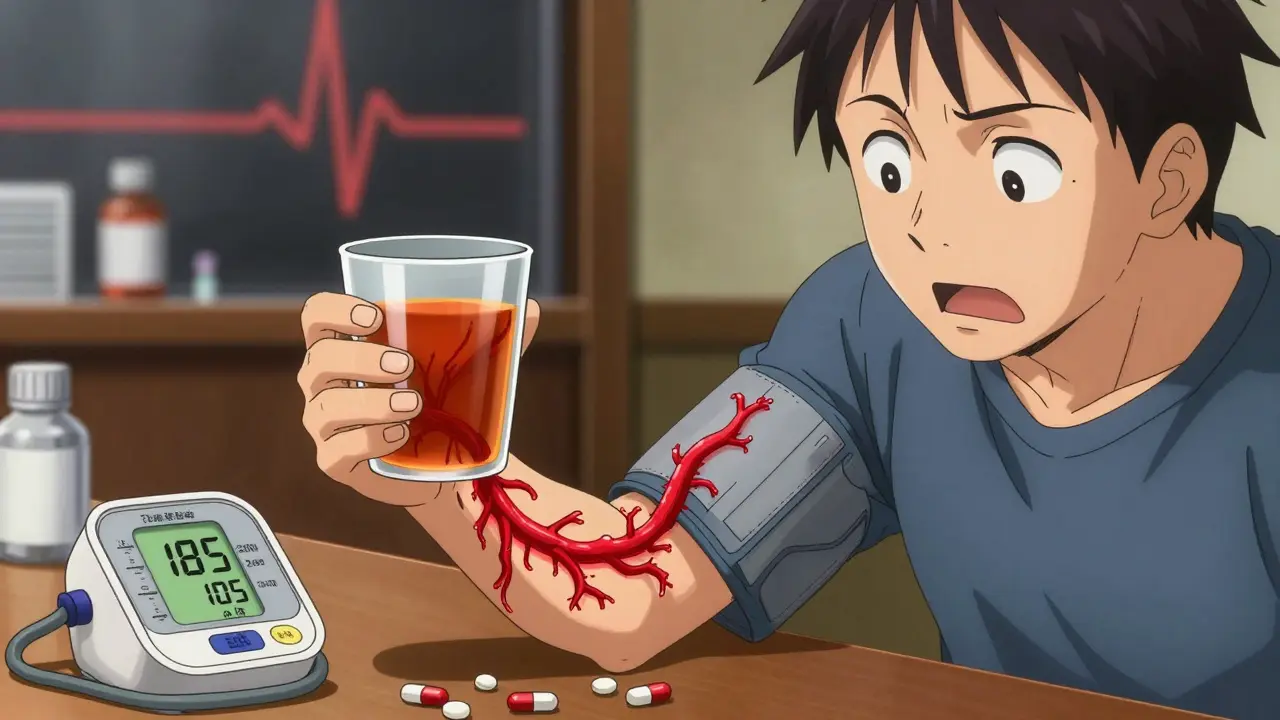
Most people think of licorice root as just a sweet treat or a natural remedy for sore throats. But if you’re taking blood pressure medication, that candy bar or herbal tea could be quietly sabotaging your treatment-sometimes with dangerous results.
What’s Actually in Licorice Root?
Licorice root comes from the plant Glycyrrhiza glabra, and its sweetness isn’t just natural-it’s powerful. The main compound behind that sweetness is glycyrrhizin, which is about 50 times sweeter than table sugar. But it’s not harmless. Glycyrrhizin acts like a fake hormone in your body, mimicking aldosterone, a natural hormone that tells your kidneys to hold onto salt and water. That sounds fine until you realize: holding onto salt and water raises your blood pressure.
That’s the problem. If you’re on blood pressure meds to lower that pressure, glycyrrhizin is working directly against them. It doesn’t just make your meds less effective-it can undo weeks of careful control in days.
How Licorice Root Neutralizes Blood Pressure Drugs
The real culprit isn’t just salt retention. Glycyrrhizin breaks down in your body into glycyrrhetic acid, which blocks an enzyme called 11β-HSD2. This enzyme normally protects your kidneys from being flooded by cortisol, a stress hormone that behaves like aldosterone. When the enzyme is blocked, cortisol starts acting like aldosterone-and your kidneys start hoarding sodium, flushing out potassium, and increasing blood volume.
That’s bad news for anyone on antihypertensives:
- ACE inhibitors (like lisinopril): Effectiveness drops by 30-50%. Your blood pressure can spike 15-25 mmHg systolic.
- ARBs (like losartan): Lose about 25% of their power. Studies show patients need higher doses just to maintain control.
- Calcium channel blockers (like amlodipine): Blood pressure control worsens by 15-20%. Some patients report sudden dizziness or headaches after starting licorice.
- Potassium-sparing diuretics (like spironolactone): This is the worst combo. Licorice can completely cancel out the drug’s effect within 7-10 days, leading to dangerous drops in potassium and dangerous spikes in blood pressure.
A 2015 study in the European Journal of Clinical Nutrition found that people consuming just 100 mg of glycyrrhizin daily for two weeks saw systolic blood pressure rise by up to 30 mmHg. That’s enough to push someone from controlled to emergency-level hypertension.
Real People, Real Consequences
It’s not just theory. Real patients are ending up in emergency rooms because they didn’t know.
One 68-year-old man in the U.S. was managing his blood pressure well on lisinopril-until he started drinking licorice tea every day for ‘digestive health.’ Within 10 days, his BP jumped from 130/80 to 185/105. His doctor found out when he checked his potassium levels-they were dangerously low.
A Reddit user on r/HighBloodPressure shared how their doctor discovered they were eating black licorice candy while on amlodipine. Their systolic pressure rose 22 points over two weeks. They had no idea the candy contained real licorice root.
In New Zealand, a 55-year-old man on fludrocortisone (a steroid that also affects blood pressure) spiked to 210/115 after starting licorice supplements. He had panic attacks and ended up in the hospital.
These aren’t rare. Over 150 documented cases worldwide since 1968. And according to a 2023 survey of online patient forums, 92% of users who tried licorice while on blood pressure meds reported worse control. Only two out of 147 WebMD reviews mentioned any benefit.

Not All Licorice Is the Same
Here’s the twist: most licorice-flavored candy in the U.S. doesn’t even contain licorice root. About 95% of it uses anise oil for flavor. That’s safe. No glycyrrhizin. No risk.
But if you see Glycyrrhiza glabra, licorice extract, or licorice root on the ingredient list-stop. That’s the dangerous kind.
It’s not just candy. Licorice root is in:
- Herbal supplements (especially for digestion or fatigue)
- Traditional Chinese medicine formulas (25% contain it)
- Some cough syrups and throat lozenges
- Herbal laxatives (30% have it)
- Even some tobacco products
And here’s the kicker: labels don’t tell you how much glycyrrhizin is in them. One brand might have 5 mg per serving. Another might have 50 mg. There’s no standard. That’s why doctors call it a ‘wild card’ interaction.
What About Deglycyrrhizinated Licorice (DGL)?
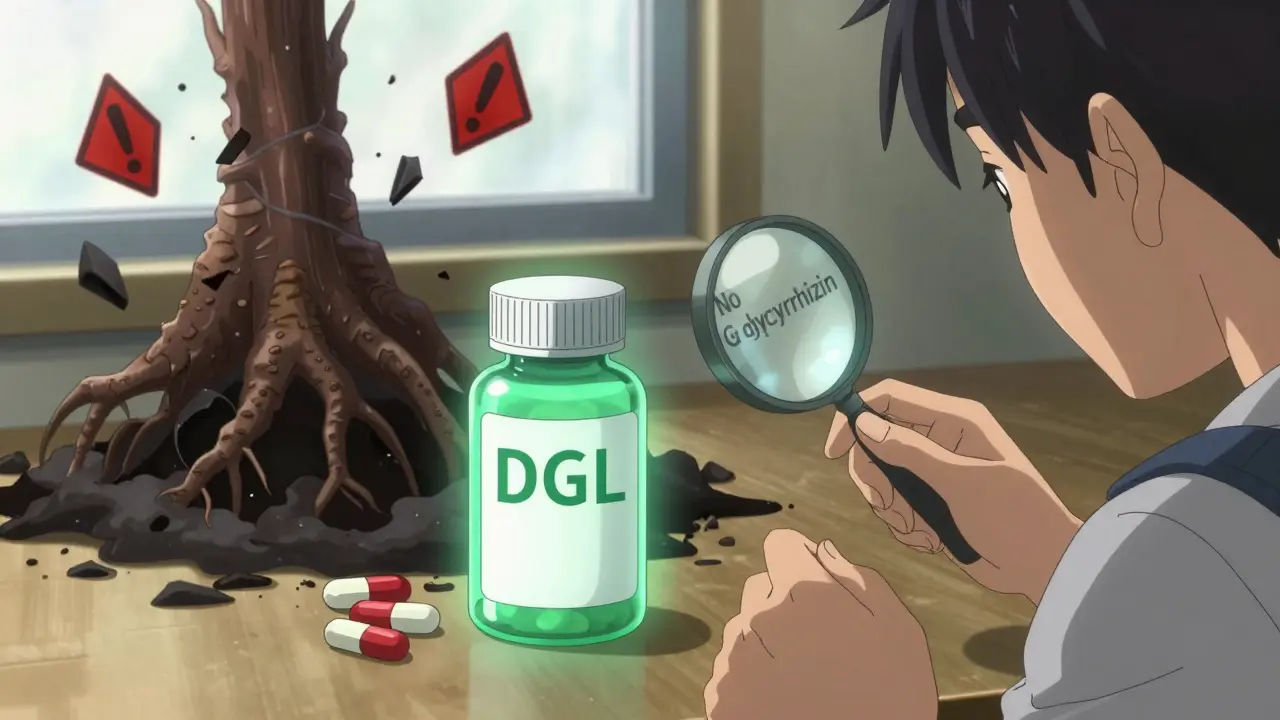
If you’re looking for licorice’s benefits without the risk, DGL is the answer. It’s licorice root with the glycyrrhizin removed-usually down to less than 1%. It’s commonly used for stomach ulcers and heartburn and doesn’t affect blood pressure or potassium.
Look for products labeled ‘DGL’ or ‘deglycyrrhizinated licorice.’ Avoid anything that just says ‘licorice root’ without clarification.
What Should You Do?
If you’re on blood pressure medication:
- Check every product you consume. Read ingredient labels like your life depends on it-because it might.
- Avoid all licorice root unless it’s explicitly labeled DGL.
- Talk to your pharmacist. They can check your supplements, teas, and even OTC cough meds for hidden licorice.
- Get your potassium checked if you’ve consumed licorice in the past month. Levels can drop below 3.0 mmol/L-dangerously low-within 10 days.
- Don’t assume ‘natural’ means safe. Licorice root is a plant, but it’s also a potent drug.
The European Food Safety Authority says 100 mg of glycyrrhizin per day is the upper limit for healthy adults. But if you’re on blood pressure meds? That limit should be zero.
What’s Changing?
Regulators are catching up. The EU has required warning labels on products with more than 10 mg glycyrrhizin per serving since 2012. The U.S. FDA has issued warnings but doesn’t require labeling. That’s changing. The proposed Dietary Supplement Listing Act of 2023 would force manufacturers to list active compounds-including glycyrrhizin-on labels. That could prevent a lot of avoidable hospital visits.
Until then, you’re your own best defense. Don’t rely on marketing. Don’t trust ‘natural’ claims. Read the label. Ask your pharmacist. And if you’re unsure? Skip it.
Blood pressure control is delicate. Licorice root doesn’t just interfere-it can destroy years of progress in days. And once your potassium drops and your pressure spikes, it’s not just inconvenient. It’s life-threatening.
Can I have licorice tea if I’m on blood pressure medication?
No. Most licorice teas contain real licorice root and glycyrrhizin. Even small amounts, consumed daily, can raise blood pressure and lower potassium. If you want a sweet herbal tea, choose rooibos, chamomile, or peppermint instead.
Does licorice affect all blood pressure meds the same way?
No. The biggest risk is with potassium-sparing diuretics like spironolactone, where licorice can completely cancel the drug’s effect. ACE inhibitors and ARBs lose about 25-50% of their power. Calcium channel blockers are less affected, but still compromised. No blood pressure medication is safe with licorice root.
How long does it take for licorice to affect blood pressure?
It can happen in as little as 7-10 days of daily use. Some people notice changes in energy, swelling in ankles, or headaches earlier. Blood pressure spikes are often noticed after 2-3 weeks of regular consumption, but the damage to potassium and fluid balance starts immediately.
Is deglycyrrhizinated licorice (DGL) safe with blood pressure meds?
Yes. DGL has the glycyrrhizin removed-typically to less than 1%. It’s used for digestive issues and doesn’t interfere with blood pressure medications. Just make sure the label says ‘DGL’ or ‘deglycyrrhizinated.’ Avoid anything labeled ‘licorice root’ without clarification.
Can I have licorice candy if it says ‘flavor’ on the label?
Probably, but check the ingredients. In the U.S., 95% of licorice-flavored candy uses anise oil, not real licorice root. If the label says ‘anise oil,’ ‘fennel,’ or ‘natural flavor,’ it’s safe. If it says ‘licorice extract’ or ‘Glycyrrhiza glabra,’ avoid it.
What should I do if I’ve been eating licorice and my blood pressure is high?
Stop consuming licorice immediately. Contact your doctor. Ask for a serum potassium test and a blood pressure check. Don’t wait for symptoms. Many people don’t feel anything until their pressure is dangerously high or their potassium is critically low. Your doctor may need to adjust your meds temporarily.




Comments (15)