
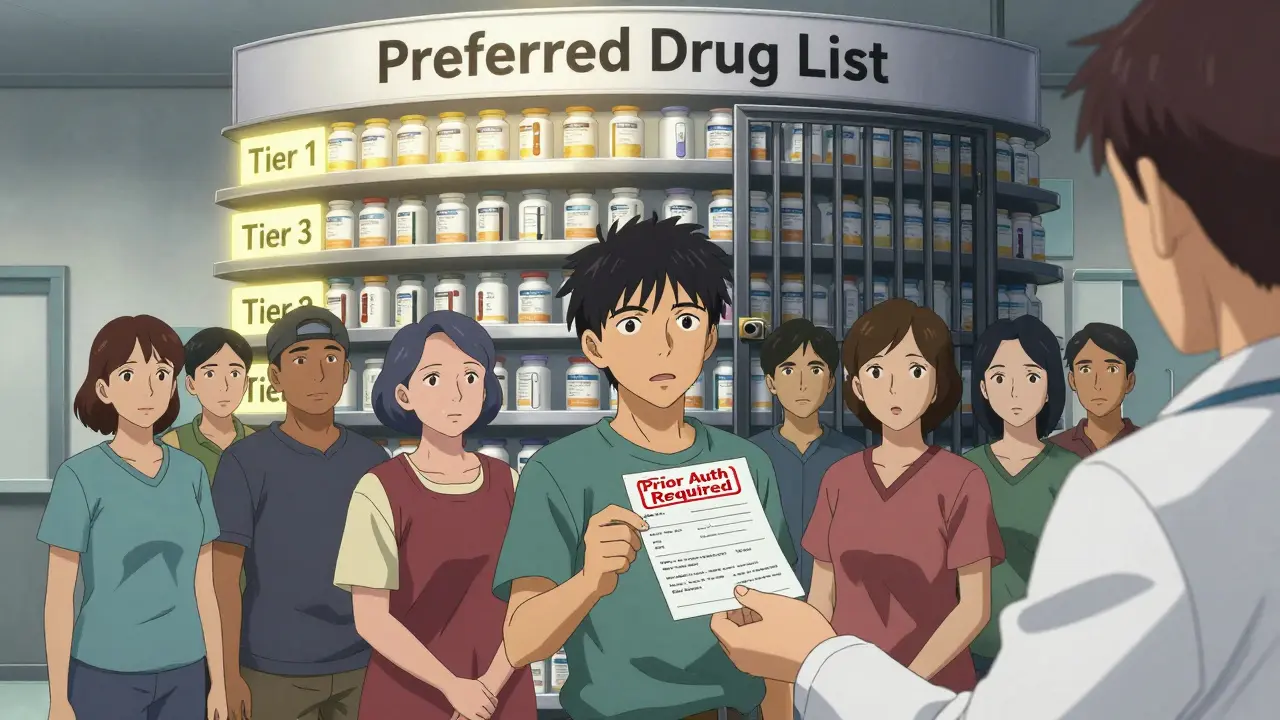
When you’re on Medicaid, getting your prescriptions filled shouldn’t be a battle - but it often feels like one. If you’ve ever been told your medication isn’t covered, had to try two other drugs first, or waited weeks for approval, you’re not alone. Medicaid covers prescription drugs for 85 million Americans, but what’s actually included? And why does it vary so much from state to state?
Medicaid Must Cover Prescriptions - But States Control the Details
Federal law doesn’t require states to cover outpatient prescription drugs under Medicaid. Yet, every state does. Why? Because without drug coverage, people skip doses, end up in the ER, or get sicker - and that costs more in the long run. But here’s the catch: while all states cover drugs, which drugs and how you get them? That’s up to each state.
Each state builds its own Preferred Drug List (PDL), also called a formulary. This isn’t just a list of approved medications. It’s a tiered system that determines your out-of-pocket cost and whether you need prior authorization. Tier 1 usually means low-cost generics. Tier 2 is brand-name drugs. Tier 3? Often specialty meds - like those for MS, rheumatoid arthritis, or hepatitis C - with the highest copays and strictest rules.
For example, in North Carolina, a common generic like lisinopril might cost you $3. But if you need a brand-name version like Prilosec, you could pay $35 - unless you get prior authorization. And if your doctor prescribes a drug not on the list? You might need to fail two other drugs first.
Step Therapy: The ‘Try Two Before You Get One’ Rule
Step therapy - also called trial and failure - is one of the most frustrating parts of Medicaid pharmacy coverage. The idea is simple: if a cheaper, equally effective drug exists, you must try it first. Only if it doesn’t work can you move to a more expensive option.
In 38 states, including North Carolina and Florida, you must fail two preferred drugs before getting a non-preferred one. So if your doctor wants to prescribe Wellbutrin XL for depression, Medicaid might require you to try two SSRIs like sertraline and fluoxetine first - even if you’ve already tried them and they didn’t help.
That’s not just paperwork. It’s real delay. According to the Medicare Rights Center’s 2024 survey, 63% of Medicaid beneficiaries faced delays in getting non-preferred meds due to step therapy. The average wait? Seven days just for the first request. If denied, appeals can take over two weeks.
There are exceptions. If you’re already stable on a drug, or if there’s only one approved option (like for certain rare diseases), you can often skip the trial. But proving that? That’s where your doctor’s note comes in.
Prior Authorization: The Paperwork Hurdle
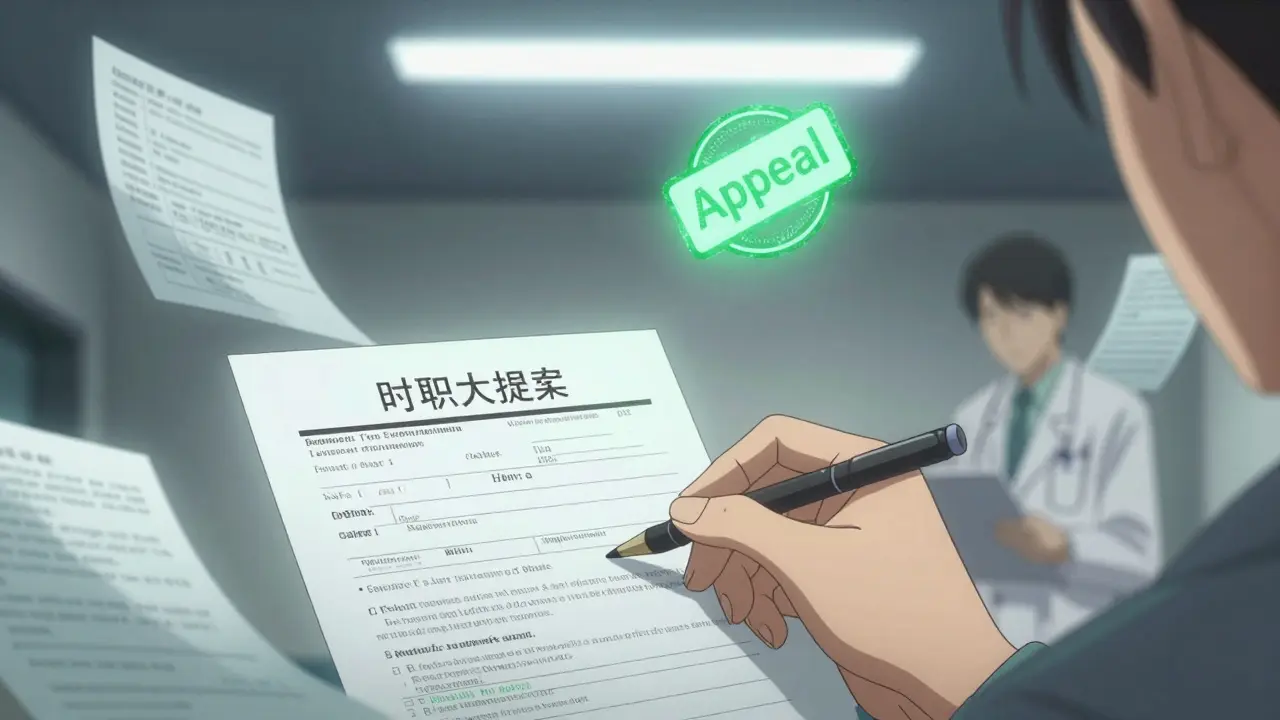
Even if a drug is on the formulary, you might still need prior authorization. This means your doctor must submit documentation - often clinical notes, lab results, or proof of failed alternatives - to prove the drug is medically necessary.
North Carolina requires detailed clinical notes for insulin pens used by Type 1 diabetics. Florida requires separate paperwork for physician-administered drugs like injections for rheumatoid arthritis. In some states, prior auth for a single drug can take up to 10 business days.
But here’s the good news: 78% of denied prior auth requests are overturned on appeal - if you submit complete documentation. That means if your doctor fills out the forms correctly and includes lab values, past treatment history, and why other drugs failed, you’re likely to get approved.
Still, many beneficiaries don’t know this. SHIP counselors report that new Medicaid users need an average of 2.7 help sessions just to understand their coverage rules.
Costs: Copays, Deductibles, and the Extra Help Program
Most Medicaid enrollees pay little to nothing for prescriptions. But it depends on your state and your income level.
For standard Medicaid recipients: copays range from $0 to $4 for generics and $1 to $6 for brand names. Some states charge nothing at all.
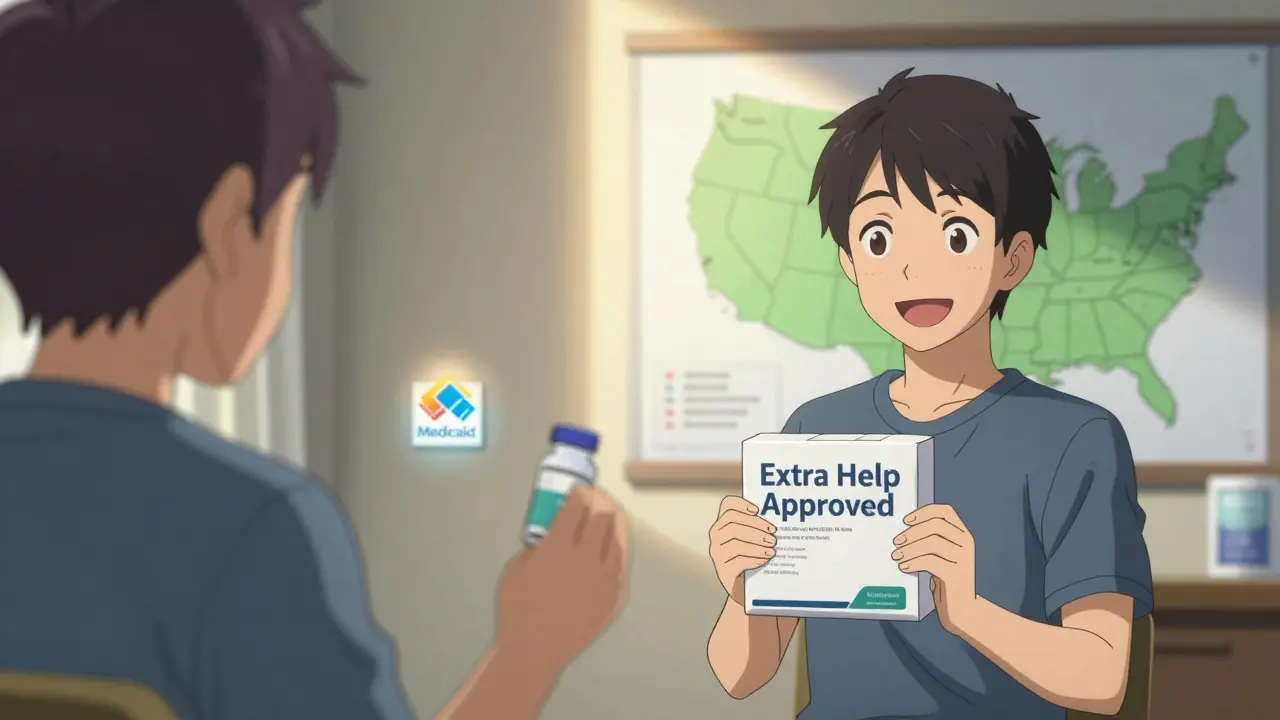
But if you qualify for Extra Help - a federal program for low-income Medicare beneficiaries - your costs drop even lower. In 2025, Extra Help means:
- $0 premium
- $0 deductible
- $4.90 copay for generics
- $12.15 for brand-name drugs
- After you hit $2,000 in total drug costs? $0 for everything else.
Here’s the kicker: 1.2 million people are eligible for Extra Help but aren’t enrolled. If you have full Medicaid coverage, you automatically qualify - but you still have to apply. Many don’t know.
And if you’re dual-eligible (on both Medicare and Medicaid)? You get the best of both. Your Medicaid plan covers what Medicare doesn’t - including copays, deductibles, and drugs not covered by Part D.
What’s Not Covered? The List Keeps Changing
Just because a drug is FDA-approved doesn’t mean Medicaid covers it. States remove drugs from their formularies all the time - usually because they no longer offer a rebate or are too expensive.
In 2025, North Carolina dropped 12 drugs from its list - including Vasotec, Trulance, and Uceris - because manufacturers stopped offering rebates. Epidiolex®, a costly epilepsy treatment, was moved from preferred to non-preferred status, meaning higher costs and more paperwork.
Some states also exclude certain drug classes entirely. For example, weight-loss drugs like Ozempic or Mounjaro are rarely covered unless for diabetes - even though they’re FDA-approved for obesity. Mental health drugs? Sometimes covered, sometimes restricted. It varies wildly.
How to Navigate the System
Here’s how to make sure you get what you need:
- Know your state’s formulary. Visit your state’s Medicaid website. Look for “Preferred Drug List” or “Pharmacy Formulary.”
- Ask your pharmacy. When you pick up a script, ask: “Is this on the formulary? Do I need prior auth?”
- Work with your doctor. If a drug is denied, ask your provider to appeal - and make sure they include clinical notes.
- Check for Extra Help. If you’re on Medicaid, you’re likely eligible. Apply at Medicare.gov.
- Use mail-order pharmacies. Many states require you to use mail-order for maintenance drugs like blood pressure or diabetes meds. It’s cheaper and more convenient.
The Bigger Picture: Why This Matters
Medicaid spends $64.3 billion a year on prescriptions. But 89% of the pills are generics - and they only cost 27% of the total. Meanwhile, 3% of drugs - mostly specialty biologics - cost 42% of the budget. That’s why states tighten restrictions: not to deny care, but to keep the program running.
Yet, when rules are too strict, people skip doses. A 2023 study in southern states found that overly restrictive formularies delayed hepatitis C treatment - and led to more liver failure. That’s not just a health issue. It’s a financial one.
That’s why CMS is pushing for change. By Q1 2026, states will need to prove their formularies don’t create “unreasonable barriers.” And if the MedPAC recommendation passes, the Federal Upper Limit for generics could drop from 250% to 225% of the average price - saving Medicaid $1.2 billion a year.
Meanwhile, gene therapies are coming. Twelve to fifteen new ones, each costing over $2 million. Medicaid programs are already testing new payment models - like outcome-based contracts - where manufacturers only get paid if the drug works.
This isn’t just about paperwork. It’s about access. And if you’re on Medicaid, knowing how the system works can mean the difference between getting better - and falling through the cracks.
Does Medicaid cover all prescription drugs?
No. Medicaid covers most prescription drugs, but each state creates its own formulary - a list of approved medications. Some drugs are excluded because they don’t offer rebates, are too expensive, or have cheaper alternatives. Always check your state’s Preferred Drug List.
Why do I have to try other drugs before getting the one my doctor prescribed?
This is called step therapy or trial and failure. States require it to control costs. You must try one or two lower-cost, clinically similar drugs first. If they don’t work or cause side effects, you can appeal for the original drug. Your doctor’s documentation is key to approval.
How much will I pay for my prescriptions under Medicaid?
Most Medicaid enrollees pay $0-$4 for generics and $1-$6 for brand-name drugs. If you qualify for Extra Help (Low-Income Subsidy), your copays drop to $4.90 for generics and $12.15 for brands. After you spend $2,000 on drugs in a year, you pay nothing for covered prescriptions.
Can I use any pharmacy with Medicaid?
No. You must use a pharmacy in your state’s Medicaid network. Most states require you to use mail-order pharmacies for maintenance medications like blood pressure or diabetes drugs. Check your plan’s list of network pharmacies before filling a prescription.
What if my drug gets removed from the formulary?
If your drug is removed, you may still be able to get it through a prior authorization request - especially if you’re already taking it and it works. Your doctor must submit clinical documentation showing medical necessity. Some states allow grandfathering - meaning you can keep the drug even if it’s no longer on the list.
How do I find out what’s covered in my state?
Visit your state’s Medicaid website and search for “Preferred Drug List” or “Medicaid Formulary.” You can also call your state’s Medicaid helpline or ask your pharmacy. Some states, like North Carolina and Florida, post updated lists quarterly - so check regularly.




Comments (12)