
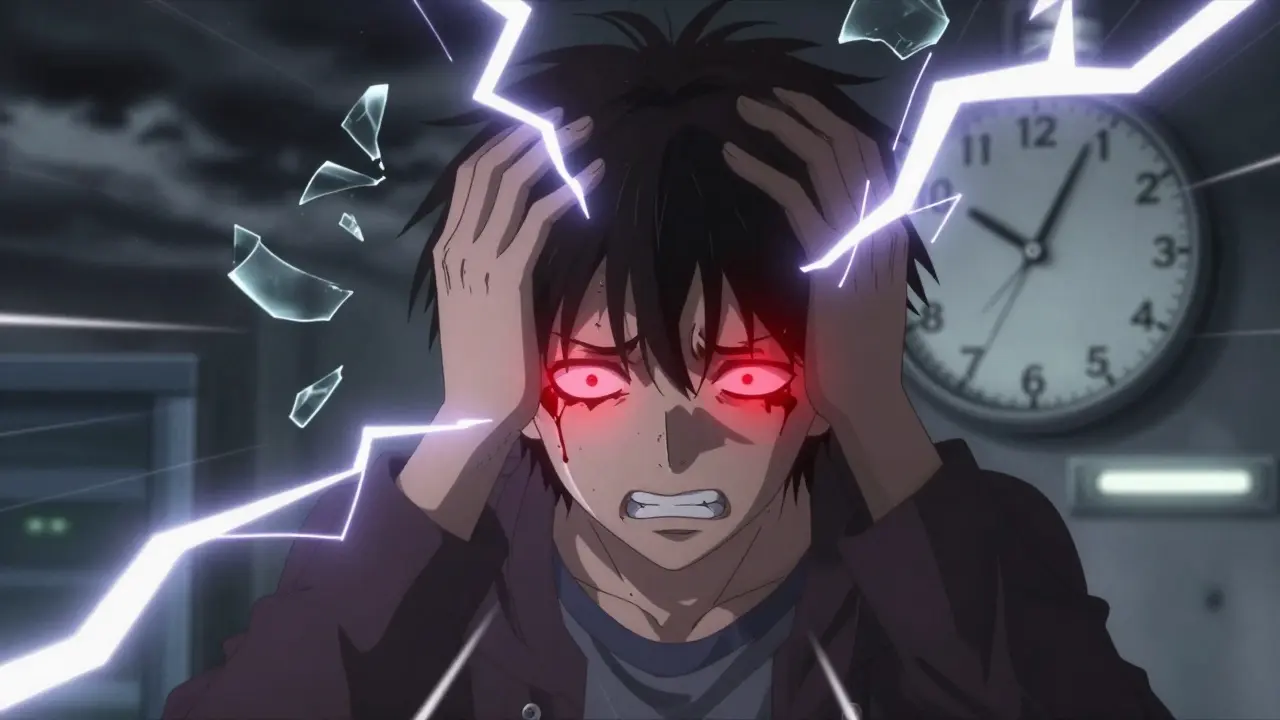
Most headaches are just a nuisance-maybe from stress, lack of sleep, or too much coffee. But some headaches are warning signs. They’re not about tension or caffeine. They’re about something serious, maybe even life-threatening. If your headache comes with sudden, extreme pain or strange symptoms like weakness, confusion, or vision loss, you don’t wait. You don’t take another painkiller. You call 911 or head straight to the ER.
What Makes a Headache Dangerous?
Not all headaches are created equal. The difference between a bad migraine and a medical emergency often comes down to timing, intensity, and what else is happening in your body. Doctors use a checklist called SNNOOP10 to spot red flags. It’s not fancy, but it saves lives. Each letter stands for something that shouldn’t be ignored.For example, thunderclap headache-a pain so intense it peaks in under a minute-is the most urgent red flag. It’s not like a migraine that builds over minutes or hours. This hits like a sledgehammer. About 85% of people with a ruptured brain aneurysm describe it this way. If you’ve never felt anything like it before, and it comes out of nowhere, don’t text your friend. Don’t Google it. Go to the hospital now.
Another major red flag is a headache that comes with focal neurological symptoms. That means one side of your body doesn’t work right-your arm drops, your speech slurs, your vision blurs or doubles. These aren’t typical migraine aura symptoms. Migraine aura usually lasts 5 to 20 minutes and fades completely. Stroke symptoms don’t fade. They get worse. If you’re 32 and suddenly can’t lift your right hand, that’s not anxiety. That’s a stroke. And every minute counts.
When Age Matters: Headaches After 50
If you’re over 50 and you get a new kind of headache, pay attention. It’s not just aging. It could be giant cell arteritis, an inflammation of the arteries in your scalp and neck. Left untreated, it can cause blindness in days. The key signs? Pain when chewing (jaw claudication), tenderness over your temples, and a fever that doesn’t go away. Blood tests and a temporal artery biopsy confirm it, but you need to act fast. Delaying treatment increases your risk of permanent vision loss by 70%.Older adults are also at higher risk for brain tumors. While rare, new-onset headaches in people over 50 have a 1 in 200 chance of being linked to a tumor. Glioblastoma, the most aggressive type, often presents as a headache that gets worse over weeks, especially in the morning or when lying down. It’s not the headache itself that’s the problem-it’s the pressure building inside the skull. That’s why doctors order scans immediately when someone over 50 reports a new, progressive headache.
Headaches After Injury or Illness
A headache after hitting your head isn’t always harmless. If you lost consciousness for more than 5 minutes, threw up more than twice, or feel increasingly confused, you need a CT scan within the hour. The NEXUS II and PECARN guidelines make this clear. Even if you feel okay now, bleeding can start hours later. That’s why ERs don’t just ask, “Did you hit your head?” They ask, “What happened after?”Headaches that come with fever and a stiff neck? That’s meningitis. Bacterial meningitis kills 1 in 10 people even with treatment. Each hour of delay increases the death risk by over 5%. If you have a headache, fever, and can’t touch your chin to your chest, don’t wait for your doctor’s office to open. Go to the ER. Antibiotics need to start within 45 minutes of triage. That’s not a suggestion-it’s protocol.
People with weakened immune systems-those on chemotherapy, with HIV, or taking immunosuppressants-are at risk for fungal meningitis. It’s rare, but it’s deadly. A headache in someone with cancer or an organ transplant isn’t just a headache. It’s a possible infection. The American College of Emergency Physicians says: if you’re immunocompromised and have a headache, get evaluated immediately. No exceptions.

The Silent Red Flags: Papilledema and Vision Changes
You might not notice it, but if your optic nerve is swollen, your brain is under pressure. That’s called papilledema. It’s not something you can see yourself. A doctor spots it with an eye exam. But you might notice symptoms: blurred vision, double vision, or seeing flashing lights that don’t go away. Papilledema can mean a brain tumor, a blood clot, or severe high pressure inside the skull. MRI is now preferred over CT for these cases because it catches 22% more cases of pressure-related damage.Some people think headaches with dizziness or nausea are just migraines. But if those symptoms come with balance problems, trouble walking, or slurred speech, it’s not a migraine. It’s a stroke or a brainstem issue. The International Classification of Headache Disorders (ICHD-3) clearly separates migraine aura from stroke symptoms. Migraine aura builds slowly. Stroke symptoms hit fast and don’t improve.
What Happens in the ER?
When you arrive with a red flag headache, time becomes the most important factor. At hospitals like Mass General Brigham, the protocol is simple: if it’s a thunderclap headache, get a non-contrast CT scan within 30 minutes. If the CT looks normal but suspicion is still high, you get an MRI within 4 hours. Why? Because 3 to 5% of subarachnoid hemorrhages don’t show up on the first CT. Missing one can be fatal.If meningitis is suspected, they draw blood, start antibiotics, and perform a lumbar puncture within 2 hours. No waiting. No “let’s see how it goes.” You don’t get to choose. The rules are strict because the stakes are so high.
Emergency staff use a tool called SNOOP4 to screen quickly: Sudden onset, Neurologic symptoms, Onset after 50, Papilledema. If any of these are present, the patient goes straight to imaging. This system catches 92% of serious cases.
Real Stories, Real Consequences
One Reddit user, ‘HeadacheSurvivor89,’ ignored a thunderclap headache for four hours, thinking it was a migraine. By the time they got to the hospital, the aneurysm had re-bleeded. Their chance of survival dropped by 40%. Another, ‘MigraineWarrior,’ was told their stroke symptoms were anxiety. They were 32. They survived, but lost vision in one eye permanently.On the other side, ‘NeuroAlert’ on PatientsLikeMe recognized their fever and stiff neck as warning signs. They went to the ER right away. Viral meningitis was diagnosed. They recovered fully. Early action made all the difference.
A 2023 survey by the American Migraine Foundation found that 78% of people who acted fast on red flags avoided permanent damage. Only 32% of those who waited did. That’s not luck. That’s timing.

What Should You Do?
You don’t need to be a doctor to know when to act. Here’s your simple guide:- If your headache is the worst of your life and hits suddenly-go to the ER.
- If you have weakness, slurred speech, or vision loss with your headache-call 911.
- If you’re over 50 and have a new headache that won’t go away-see a doctor immediately.
- If you have a fever and stiff neck with a headache-don’t wait for tomorrow.
- If you’ve had a head injury and are vomiting or confused-get scanned now.
- If you’re immunocompromised and have a headache-assume it’s serious until proven otherwise.
The American Headache Society’s campaign says it best: “If your headache comes with confusion, weakness, or vision changes, don’t wait-call 911 immediately.” That’s not fear-mongering. That’s science.
What’s Changing in 2026?
New tools are helping. AI platforms like HeadacheAI, cleared by the FDA in 2023, can analyze your symptoms and flag red flags with 89% accuracy-better than many general practitioners. Point-of-care ultrasound is being tested to detect brain pressure without scans. And the ICHD-4 guidelines now include headaches after vaccination with neurological symptoms as a potential red flag, though extremely rare.But technology doesn’t replace awareness. The biggest problem isn’t lack of tools-it’s lack of recognition. Rural hospitals still lack 24/7 neurology coverage. Patients wait hours. That’s why education matters. If you know what to look for, you can save your life-or someone else’s.
What’s the difference between a migraine and a stroke headache?
Migraine aura develops slowly over 5 to 20 minutes and usually fades completely within an hour. Stroke symptoms hit fast-within seconds or minutes-and don’t go away. If your weakness, speech trouble, or vision loss gets worse instead of better, it’s not a migraine. It’s a stroke. Time is brain.
Can a headache be a sign of a brain tumor?
Yes, but it’s rare. Brain tumors often cause headaches that are worse in the morning, get worse over weeks, and may be accompanied by nausea, vomiting, or changes in vision or personality. If you’re over 50 and have a new, persistent headache that doesn’t respond to usual treatments, imaging is recommended.
Is a thunderclap headache always a ruptured aneurysm?
Not always, but it’s the most common cause. Other possibilities include reversible cerebral vasoconstriction syndrome (RCVS) or spinal fluid leaks. But because ruptured aneurysms can be fatal, every thunderclap headache is treated as a medical emergency until proven otherwise.
Should I get a CT scan for every bad headache?
No. Most headaches don’t need imaging. CT scans are only recommended if red flags are present-like sudden onset, neurological symptoms, or trauma. Unnecessary scans expose you to radiation and can lead to false alarms. The goal is to use imaging wisely, not routinely.
Can stress cause a headache that feels like a red flag?
Stress can make headaches worse, but it doesn’t cause thunderclap pain, sudden weakness, or vision loss. If your headache has those features, it’s not stress. It’s a neurological emergency. Don’t blame stress to avoid the hospital. When in doubt, get checked.





Comments (11)