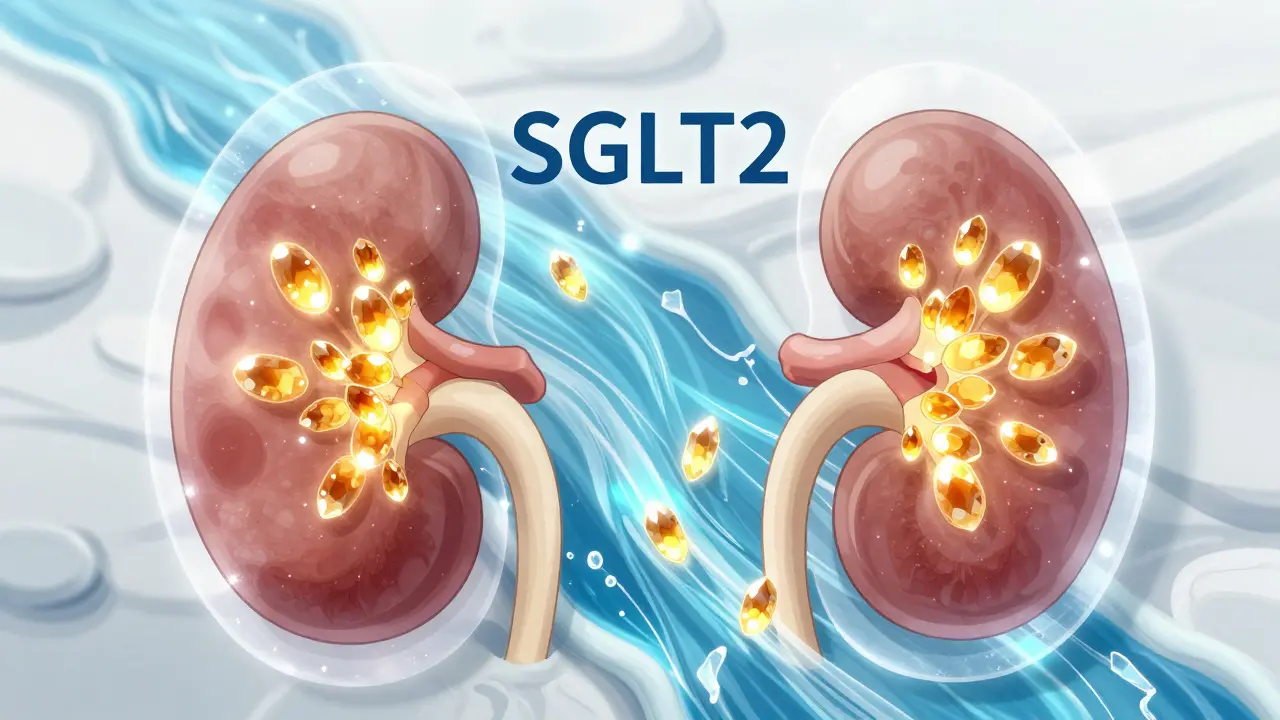
Imagine a medication that doesn't just lower your blood sugar, but actually protects your heart and kidneys from failing. For years, the goal of treating type 2 diabetes was simply to keep glucose numbers in check. But SGLT2 Inhibitors is a class of oral medications that block the kidneys from reabsorbing glucose, allowing the body to flush excess sugar out through urine. Also known as gliflozins, these drugs have shifted from being "last-resort" options to first-line therapy for people with heart or kidney complications.
Quick Summary: What You Need to Know
- Primary Benefit: Lowers HbA1c and provides significant protection against heart failure and kidney disease.
- Weight & Blood Pressure: Often leads to modest weight loss (2-3 kg) and a slight drop in systolic blood pressure.
- Key Risks: Increased chance of genital yeast infections and a rare risk of euglycemic ketoacidosis.
- Who it's for: Especially recommended for T2D patients with established cardiovascular disease or chronic kidney disease.
How SGLT2 Inhibitors Actually Work
Most diabetes drugs target the liver or the pancreas. SGLT2 inhibitors take a different route: the kidneys. Normally, your kidneys filter glucose and then reabsorb it back into the bloodstream. SGLT2 (sodium-glucose cotransporter 2) is the specific protein responsible for this reabsorption. By blocking this protein, these meds force your body to dump about 40 to 100 grams of glucose into your urine every day.
Because you're literally peeing out sugar, your blood glucose levels drop without the drug needing to stimulate more insulin. This is a big deal because it means you have a much lower risk of hypoglycemia (dangerously low blood sugar) compared to older medications. You aren't forcing your body to produce more insulin; you're just opening a "drain" for the excess sugar.
The Big Wins: Heart and Kidney Protection
The most striking thing about this class of drugs isn't the blood sugar control-it's how they save lives. Clinical trials involving over 60,000 patients have shown that these medications do more than just manage a metabolic disorder; they act as organ protectors.
Take Empagliflozin, for example. The EMPA-REG OUTCOME trial found it reduced the risk of cardiovascular death and nonfatal strokes by 14%. Even more impressive is the impact on heart failure. Data from the DAPA-HF and EMPEROR-Preserved trials show a 30-35% reduction in hospitalizations for heart failure, regardless of whether the patient had a reduced or preserved ejection fraction. For some, this means the difference between staying home and spending weeks in a hospital ward.
Then there's the kidney side of things. The CREDENCE trial revealed that Canagliflozin reduced the risk of end-stage kidney disease or renal death by 30%. By reducing the pressure inside the filters of the kidney (the glomeruli), these drugs slow down the progression of Chronic Kidney Disease, giving patients more time before they might need dialysis.
Comparing the Main Options
While they all work similarly, there are a few different brands you'll encounter. Choosing between them often depends on your specific health profile and what your doctor wants to prioritize.
| Drug Name | Common Brand | Typical Dosage | Primary Strength |
|---|---|---|---|
| Empagliflozin | Jardiance | 10mg or 25mg | Strong heart failure and CV death data |
| Dapagliflozin | Farxiga | 5mg or 10mg | Strong CKD and heart failure outcomes |
| Canagliflozin | Invokana | 100mg or 300mg | Significant renal protection (CREDENCE) |
| Ertugliflozin | Steglatro | 5mg or 15mg | Effective glycemic control |

The Trade-offs: Risks and Side Effects
No medication is a magic bullet, and the "sugar-dumping" mechanism of SGLT2 inhibitors creates some specific problems. The most common issue is fungal infections. Because there is more sugar in the urinary tract, it becomes a breeding ground for yeast. Between 5% and 11% of users report genital mycotic infections. While annoying, this is usually manageable with topical treatments, though for some, it's a deal-breaker that leads them to stop the medication.
A more serious, though rare, concern is Euglycemic Diabetic Ketoacidosis (euDKA). In a typical DKA crisis, blood sugar is sky-high. With euDKA, your blood sugar might look normal or only slightly elevated, but your body is producing dangerous ketones. This often happens during "stress events" like severe illness, surgery, or extreme fasting. If you're going into surgery, your doctor will likely tell you to pause these meds for a few days to avoid this risk.
Finally, there's the risk of volume depletion. Because these drugs act as a mild diuretic (making you pee more), elderly patients or those on heavy blood-pressure meds can become dehydrated, which can lead to acute kidney injury. It's a balancing act: the drug protects the kidneys over the long term, but can stress them in the short term if you're dehydrated.
Is It Right for You? Decision Factors
If you're wondering if SGLT2 Inhibitors are a good fit, it usually comes down to your "comorbidities"-the other health issues you have alongside diabetes. If you have heart failure or a declining eGFR (Estimated Glomerular Filtration Rate), these are often a top choice. If you are a low-risk patient with no heart or kidney issues, the absolute benefit is smaller, and the cost might be a bigger consideration.
One thing to watch out for is your kidney function at the start. Most guidelines suggest that if your eGFR is below 30 mL/min/1.73m², these drugs aren't started because they simply don't have enough glucose to filter out, meaning the blood-sugar-lowering effect disappears. However, they may still be kept for their organ-protective benefits until the kidney function drops further.

Real-World Perspectives
In practice, patients often report a "double win" of better A1c levels and weight loss. Some users have shared losing 10-15 pounds over a few months without changing their diet, simply because they are excreting calories through urine. On the flip side, the cost can be a massive barrier. Without insurance or patient assistance programs, a monthly supply can cost over $600, which is why many people stick with older, cheaper generics like Metformin.
Can I take SGLT2 inhibitors if I have Type 1 Diabetes?
Generally, no. These medications are not approved for Type 1 Diabetes because there is a significantly higher risk of developing diabetic ketoacidosis (DKA), which can be life-threatening.
Will these drugs make me go to the bathroom more?
Yes. Because they promote the excretion of glucose and water, you will likely experience increased urination (polyuria). Staying hydrated is crucial to prevent dizziness or kidney stress.
How do they compare to GLP-1 agonists (like Ozempic)?
Both are great for heart health, but they excel in different areas. SGLT2 inhibitors are generally superior for preventing heart failure hospitalizations, while GLP-1 agonists are typically better at reducing major atherosclerotic events like heart attacks and are often more potent for weight loss.
Do I need to monitor my kidneys while taking these?
Yes. Your doctor should check your eGFR before you start and periodically throughout your treatment to ensure your kidney function remains stable and to determine if a dose adjustment is needed.
Are there any rare but serious side effects?
Yes, there are very rare reports of Fournier's gangrene (a severe genital infection) and an increased risk of lower-limb amputations, specifically associated with canagliflozin in some study groups. These are extremely uncommon but are listed as warnings.
Next Steps for Patients
If you're considering a switch in medication, start by asking your doctor for your most recent eGFR and HbA1c numbers. If you have a history of heart failure, specifically ask if an SGLT2 inhibitor could reduce your risk of hospitalization. If you start the medication, keep a close eye on hygiene to prevent yeast infections and carry water with you to avoid dehydration. If you feel suddenly nauseous or fatigued-even if your blood sugar seems fine-contact your provider immediately to rule out euglycemic ketoacidosis.