Drowsy Driving: How Sleepiness Impairs Your Ability to Drive Safely
When you're behind the wheel, drowsy driving, the dangerous state of impaired alertness caused by sleep loss, medication side effects, or circadian rhythm disruption. Also known as fatigue-related driving, it's responsible for over 100,000 crashes in the U.S. every year—many of them fatal. It’s not just about being tired. It’s about your brain slowing down, your reaction time slipping, and your ability to judge distance and speed disappearing—all without you realizing it.
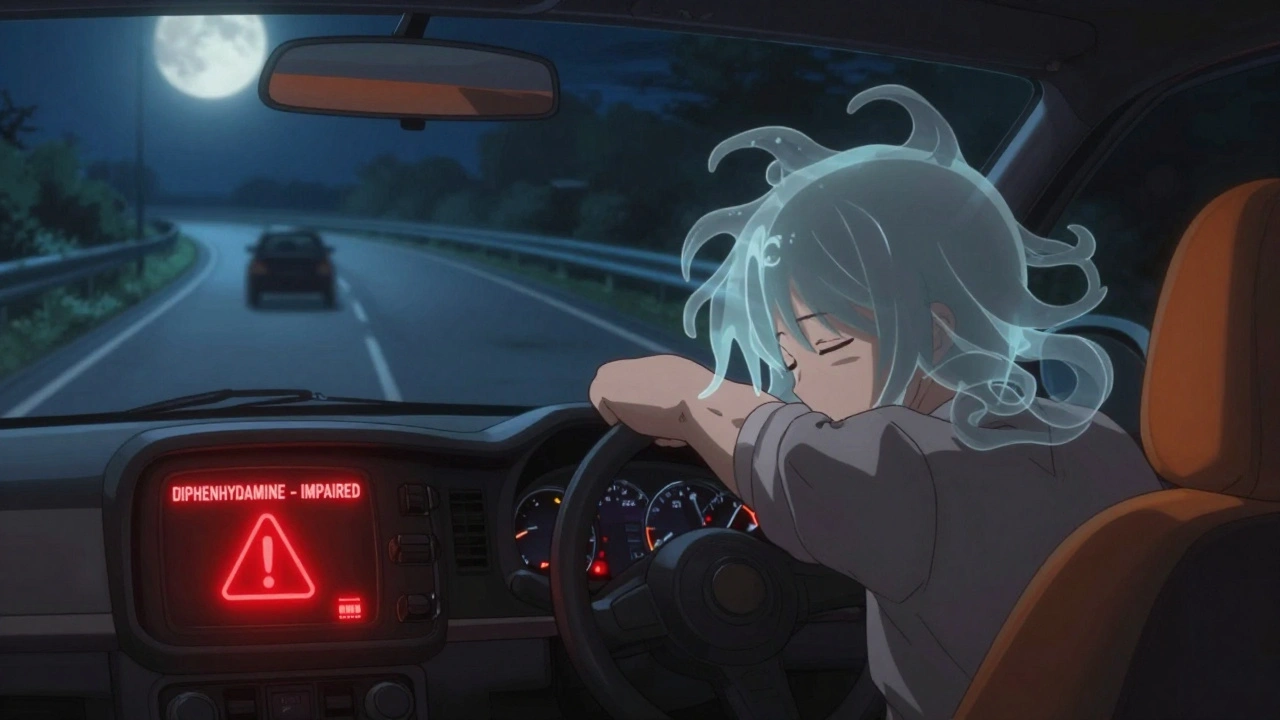
Drowsy driving often starts with something small: a late night, a new medication, or a long shift. Many people don’t connect the dots between their sedative side effects, the drowsiness caused by antihistamines, sleep aids, or even some antidepressants and their risk on the road. A 2021 study found that drivers taking common OTC allergy meds like diphenhydramine were just as impaired as those with a blood alcohol level of 0.05%. And it’s not just pills. Chronic sleep deprivation, shift work, and untreated sleep apnea are major hidden causes. If you’re taking anything that says "may cause drowsiness," you’re not just at risk—you’re already a statistic waiting to happen.
It’s not just about how long you’ve been awake. It’s about when you’re driving. Between 2 a.m. and 6 a.m., your body is wired to sleep. That’s when most fatal drowsy crashes occur. Even a 20-minute nap can cut your crash risk in half—but only if you recognize the signs early: yawning nonstop, missing exits, drifting lanes, or having trouble remembering the last few miles. No one wakes up and says, "I’m too tired to drive." They just slowly lose control.
The good news? You can stop it. Know your meds. Track your sleep. Never rely on caffeine to keep you awake—it’s a bandage, not a fix. If you’re on a long trip, plan for breaks every two hours. If you’re feeling foggy, pull over. There’s no shame in it. What’s shameful is pretending you’re fine when your body is screaming otherwise.
Below, you’ll find real, practical guides on how medications affect alertness, how to spot the warning signs before it’s too late, and what steps you can take right now to protect yourself and others on the road. These aren’t theories. They’re lessons from people who’ve been there—and lived to tell the story.