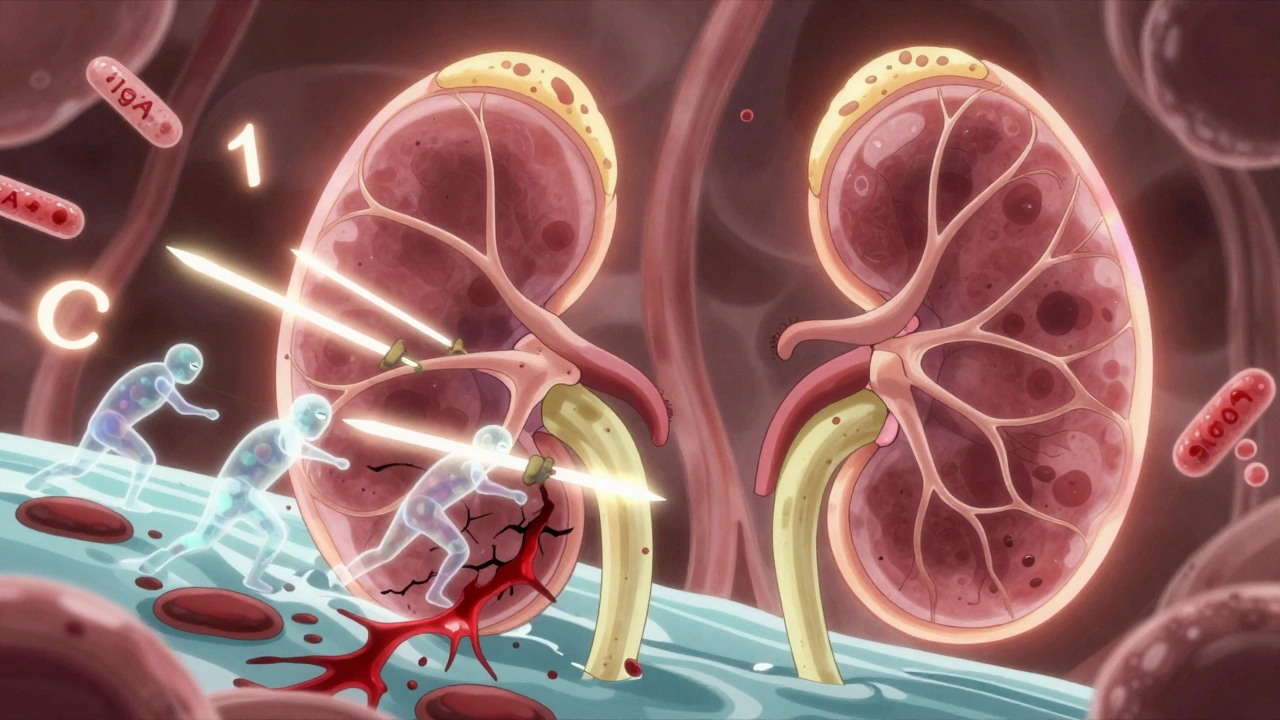
Kidney Inflammation: Causes, Symptoms, and How Medications Help
When your kidney inflammation, a condition where the kidneys become swollen and damaged due to infection, autoimmune response, or toxins. Also known as nephritis, it can develop slowly or hit hard—often without clear warning signs. Your kidneys filter waste, balance fluids, and regulate blood pressure. When they’re inflamed, those jobs get messy. You might not feel anything at first, but over time, swelling in your legs, foamy urine, high blood pressure, or fatigue can show up. It’s not just a minor irritation—it’s a signal your body needs help.
Kidney inflammation isn’t one thing. It includes glomerulonephritis, a specific type where the filtering units of the kidney, called glomeruli, get damaged, often from autoimmune attacks like lupus. It can also come from infections, certain drugs, or even long-term use of painkillers like ibuprofen. Some people develop it after a strep throat infection; others have no obvious trigger. The key is catching it early. Left untreated, it can lead to chronic kidney disease or even kidney failure. That’s why understanding how medications work matters—not just to treat symptoms, but to stop the damage before it’s permanent.
Anti-inflammatory medications, immunosuppressants, and blood pressure drugs like ACE inhibitors are often the first line of defense. They don’t just reduce swelling—they protect kidney tissue from further harm. But not all treatments are the same. What works for one person might not help another, especially if the cause is autoimmune versus infection-based. That’s why knowing your exact diagnosis is critical. You can’t just take a random pill and hope for the best. Real progress comes from matching the right treatment to the root problem.
And it’s not just about pills. Diet, hydration, and avoiding kidney-toxic substances like certain herbal supplements or NSAIDs play a huge role. Many people don’t realize that something as simple as too much salt or dehydration can make kidney inflammation worse. The posts below cover real-world strategies—from how specific drugs reduce inflammation, to what tests actually show what’s going on inside your kidneys, to how lifestyle changes can support healing. You’ll find clear, no-fluff advice on managing symptoms, avoiding common mistakes, and working with your doctor to get the right care.