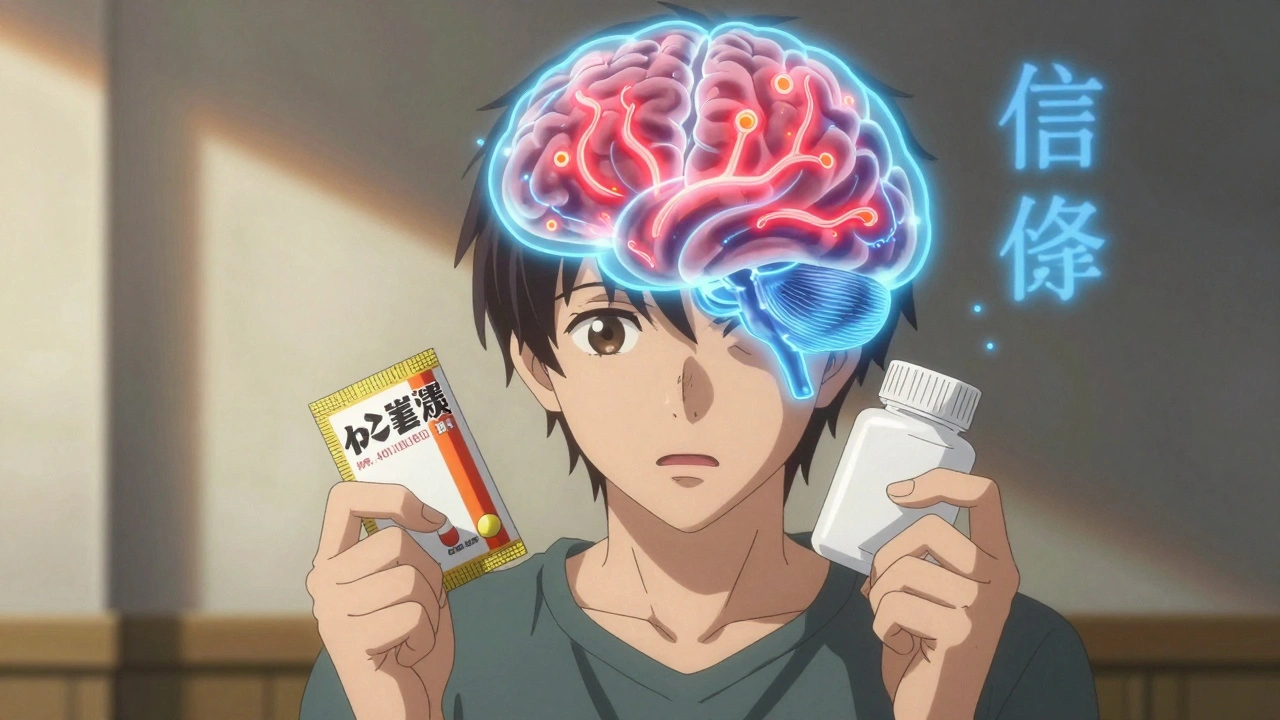
Placebo Effect: How Belief Changes Your Body and Why It Matters
When you take a sugar pill and feel better, it’s not magic—it’s the placebo effect, a measurable change in symptoms caused by expectation rather than active medication. Also known as the placebo response, it’s one of the most powerful forces in health care—even when nothing medically active is given, your brain can trigger real biological changes. This isn’t about being gullible. It’s about how your nervous system responds to trust, ritual, and hope. Studies show the placebo effect can reduce pain, ease depression, lower blood pressure, and even improve motor function in Parkinson’s patients—all without a single drug molecule.
The mind-body connection, the link between psychological states and physical health outcomes is the engine behind this. When you believe a treatment will work, your brain releases natural painkillers like endorphins. It can calm inflammation, boost immune activity, and reset stress responses. This isn’t theoretical—it’s been proven in clinical trials where patients given inert pills reported the same relief as those on real medication. Even more striking, the fake treatment, a sham intervention designed to mimic real care without active ingredients works better when it’s expensive, injected, or wrapped in professional packaging. The more convincing the ritual, the stronger the effect.
This matters because the placebo effect isn’t just noise in drug trials—it’s a tool. Researchers use it to measure true drug efficacy, but doctors also see its power every day in how patients respond to care. A warm conversation, a confident tone, even the color of a pill can influence outcomes. That’s why some of the best treatments aren’t pills at all—they’re the way care is delivered. The posts here show how this invisible force shows up in real life: from how patients react to generic drugs to why some people swear by supplements that have no proven chemistry. You’ll see how belief shapes recovery, how cultural attitudes affect medication adherence, and why the same drug can work better for one person than another—not because of biology alone, but because of expectation.