
Triptan & SSRI Safety Checker
Check Your Combination Safety
Based on the latest clinical evidence, triptans and SSRIs/SNRIs can be safely combined. This tool provides evidence-based information on your specific combination.
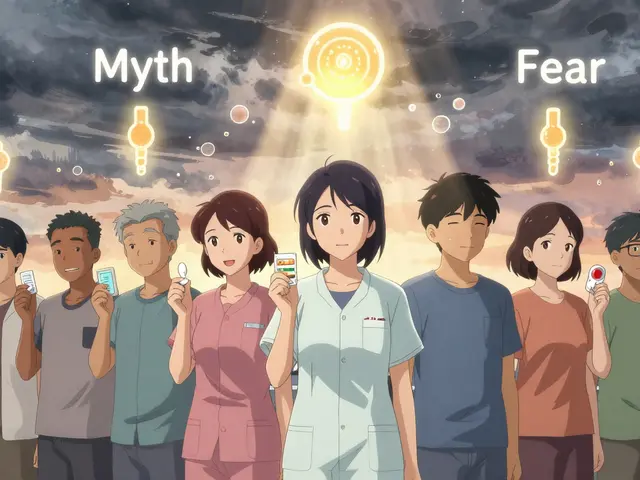
For over a decade, millions of people with migraine and depression have been told they can’t take triptans because they’re on an SSRI. It’s a warning that’s been stamped on pharmacy screens, repeated by well-meaning doctors, and feared by patients. But here’s the truth: triptans and SSRIs together do not cause serotonin syndrome - not in any meaningful, measurable way.
What’s the real story behind the warning?
In 2006, the FDA issued a safety alert: combining triptans (like sumatriptan or rizatriptan) with SSRIs (like fluoxetine or sertraline) might cause serotonin syndrome - a rare but dangerous condition caused by too much serotonin in the brain. The alert was based on theory, not data. No clinical trials showed it. No real-world cases proved it. Just a hunch, built on how the drugs work on paper. Triptans activate serotonin receptors in the brain to stop migraine pain. SSRIs keep serotonin around longer by blocking its reabsorption. On the surface, that sounds like a recipe for overload. But biology doesn’t work like mixing two drinks. It’s not about total serotonin levels - it’s about which receptors get activated, and how.Why triptans don’t trigger serotonin syndrome
Serotonin syndrome isn’t caused by just any serotonin activity. It’s triggered by overstimulation of specific receptors: mainly 5-HT2A, and sometimes 5-HT1A. Triptans? They barely touch those. They bind tightly to 5-HT1B and 5-HT1D receptors - the ones that narrow blood vessels in the brain and silence migraine signals. That’s it. They don’t activate the receptors linked to serotonin syndrome. A 2019 study in JAMA Neurology looked at over 61,000 patients who took both triptans and SSRIs or SNRIs. Zero cases of serotonin syndrome met diagnostic criteria. Not one. Not even a borderline case. Meanwhile, SSRIs alone can cause serotonin syndrome - but only in overdose or when mixed with drugs like MAOIs. Even then, it’s rare: about 0.5 to 0.9 cases per 1,000 patient-months with some SSRIs. The 2019 study authors called the FDA’s warning “a pharmacological misunderstanding.” And they weren’t alone. Dr. P. Ken Gillman, a leading migraine researcher, wrote in 2010: “There is neither significant clinical evidence, nor theoretical reason, to entertain speculation about serious serotonin syndrome from triptans and SSRIs.”What patients are really experiencing
The warning didn’t just sit on a website. It changed lives. A 2022 survey by the American Migraine Foundation found 42% of migraine patients on SSRIs were denied triptans by their doctors or pharmacists. Why? Because of the FDA alert. Many patients were forced to take weaker painkillers, opioids, or expensive alternatives - all because of a myth. Reddit threads are full of stories: “My pharmacist refused to fill my sumatriptan because I take sertraline.” “My neurologist said no triptans unless I stop my antidepressant.” “I had migraines for years and couldn’t get relief because of a warning no one could prove.” In New Zealand, a 2024 article in New Zealand Doctor ran a quiz asking whether SSRI-triptan combinations cause serotonin toxicity. The correct answer? “False.” The fact that this even needs to be taught shows how deep the misinformation runs.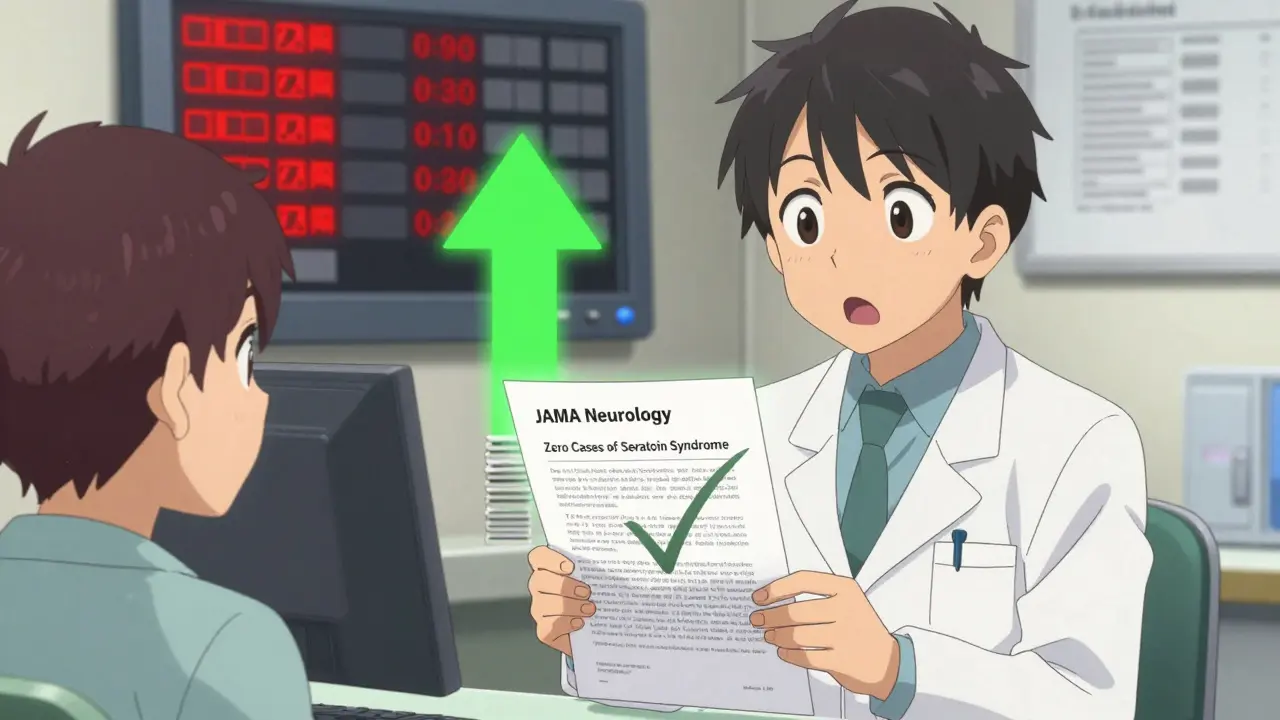
What doctors actually do
Here’s the disconnect: while patients are being turned away, most headache specialists are quietly ignoring the warning. A 2021 survey of 250 headache specialists found 89% routinely prescribe triptans with SSRIs or SNRIs - no extra monitoring, no warnings, no hesitation. Why? Because they’ve seen the data. They’ve treated thousands. They’ve watched patients get better without a single case of serotonin syndrome. The American Headache Society’s 2022 consensus statement says it plainly: “Clinicians should not avoid prescribing triptans to patients taking SSRIs or SNRIs due to theoretical concerns.” The European Medicines Agency never issued the warning at all. And in 2023, the Mayo Clinic updated its patient guide to say: “The theoretical risk has not materialized in clinical practice.”Why the warning still exists
So why hasn’t the FDA pulled the warning? Pharmaceutical labels haven’t changed much. The prescribing info for sumatriptan (Imitrex) still mentions serotonin syndrome - but now adds: “Epidemiological studies have not shown an increased risk.” That’s a backhanded admission: the risk isn’t real, but they’re afraid to remove it. Pharmacy software still flags the combination. Pharmacists still hesitate. Insurance forms still require special approval. The system moves slowly. And when it comes to drug safety, regulators err on the side of caution - even when the caution is based on fiction. A 2020 analysis in Health Affairs estimated this myth costs the U.S. healthcare system $450 million a year. That’s money spent on ineffective treatments, emergency visits, and unnecessary tests - all because a theoretical risk was treated like a proven danger.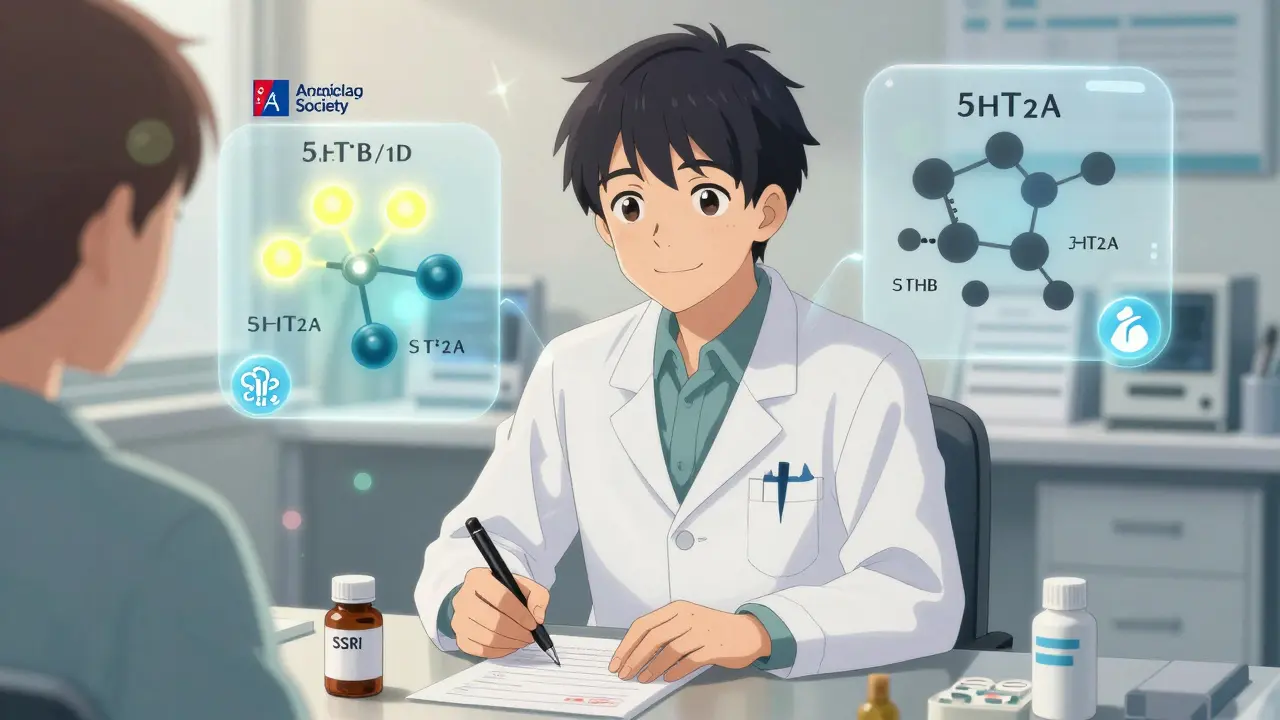
What you should do if you’re on both
If you take an SSRI or SNRI and need a triptan for migraines:- Don’t stop your antidepressant. It’s helping your mental health - and that matters.
- Ask your doctor for the triptan. If they hesitate, show them the 2019 JAMA Neurology study or the American Headache Society guidelines.
- Know the real signs of serotonin syndrome: fever, muscle rigidity, rapid heart rate, confusion, seizures. These don’t appear from triptans + SSRIs. They appear from MAOIs, overdose, or mixing multiple serotonin drugs.
- If your pharmacist refuses to fill it, ask them to check the latest clinical guidelines. Many don’t know the evidence has changed.
The bottom line
This isn’t a debate. It’s settled science. Triptans and SSRIs can be safely taken together. The risk of serotonin syndrome is not just low - it’s effectively zero. The FDA warning was a mistake born from misunderstanding pharmacology, amplified by fear, and sustained by inertia. For the 30 to 50% of migraine sufferers who also live with depression or anxiety, this isn’t just about convenience. It’s about quality of life. You shouldn’t have to choose between managing your migraines and your mental health. You shouldn’t be denied effective treatment because of a myth that’s been debunked - repeatedly - by real-world evidence. The science is clear. The data is solid. The only thing left to change is the fear.Can triptans and SSRIs really cause serotonin syndrome?
No, not in any clinically meaningful way. While the FDA issued a warning in 2006 based on theoretical concerns, large-scale studies - including one of over 61,000 patients - have found zero confirmed cases of serotonin syndrome from this combination. Triptans act on different serotonin receptors (5-HT1B/1D) than those involved in serotonin syndrome (5-HT2A). The risk is so low it’s considered negligible by leading headache societies.
Why do pharmacists still refuse to fill triptans if I’m on an SSRI?
Many pharmacy systems still trigger alerts based on the outdated 2006 FDA warning. Pharmacists aren’t always trained on the latest evidence, and they’re trained to avoid liability. If you’re denied, ask to speak with the pharmacist’s supervisor or request a review of current guidelines from the American Headache Society or UpToDate. You’re not asking for a risky combination - you’re asking for a safe, evidence-based one.
What are the real signs of serotonin syndrome?
Serotonin syndrome typically occurs with high-dose SSRIs, MAOIs, or combinations of multiple serotonin-affecting drugs. Signs include: high fever (over 101.3°F or 38.5°C), muscle rigidity, tremors, rapid heart rate, high blood pressure, confusion, agitation, hallucinations, and seizures. These symptoms develop quickly - usually within hours. If you’re taking only an SSRI and a triptan, you won’t experience this. Triptans don’t increase serotonin levels; they just activate specific receptors.
Is it safe to take triptans if I’ve had serotonin syndrome before?
If you’ve had serotonin syndrome in the past, it was likely caused by something else - like an MAOI, an overdose, or another drug combination. Triptans alone or with SSRIs are not the cause. However, if you’ve had serotonin syndrome before, you should discuss your history with your doctor. They may still avoid triptans out of caution, but not because of the SSRI interaction. Your risk isn’t higher from triptans - it’s higher from whatever caused the original episode.
Are there any medications I should avoid with triptans?
Yes - but not SSRIs. Avoid triptans if you’re taking MAOIs (like phenelzine or selegiline), as this combination has a known risk of serotonin syndrome. Also avoid combining multiple triptans or using triptans with other potent serotonin activators like MDMA or certain migraine preventives (e.g., ergotamines). SSRIs, SNRIs, and even some SNRIs like venlafaxine are safe to combine with triptans based on current evidence.


Comments (11)