
Living with constant discomfort changes the way you move through your day. You might reach for medication first, but recent shifts in healthcare suggest there are gentler paths forward. By March 2026, we have seen significant changes in how doctors view non-pharmacological options. The American Medical Association updated their coding system in 2025 to allow physicians to bill for supervising these specific therapies, signaling that mind-body practices are moving from alternative add-ons to standard care components.
This shift isn't just bureaucratic; it reflects growing evidence that ancient movement practices offer real relief for modern problems. If you are managing aches that feel stuck in your joints or muscles, combining specific types of movement with breathing can reset your nervous system. We often think exercise means lifting weights or running until we sweat, but for those dealing with daily limitations, high-impact routines can actually worsen inflammation. That is where pain management strategies involving slow, deliberate motion become critical.
How These Practices Physically Help Your Body
You might wonder how simply standing or stretching can touch deep-seated pain signals. The mechanism relies on something called neuromodulation. When you focus on slow, rhythmic movements while regulating your breath, you engage the parasympathetic nervous system. This switches your body out of "fight or flight" mode, which is often active during chronic pain cycles. Research from Florida Atlantic University in 2021 identified these approaches as "movement-based mind-body interventions." They address the physical sensation of pain while simultaneously lowering the stress hormones that amplify that sensation.
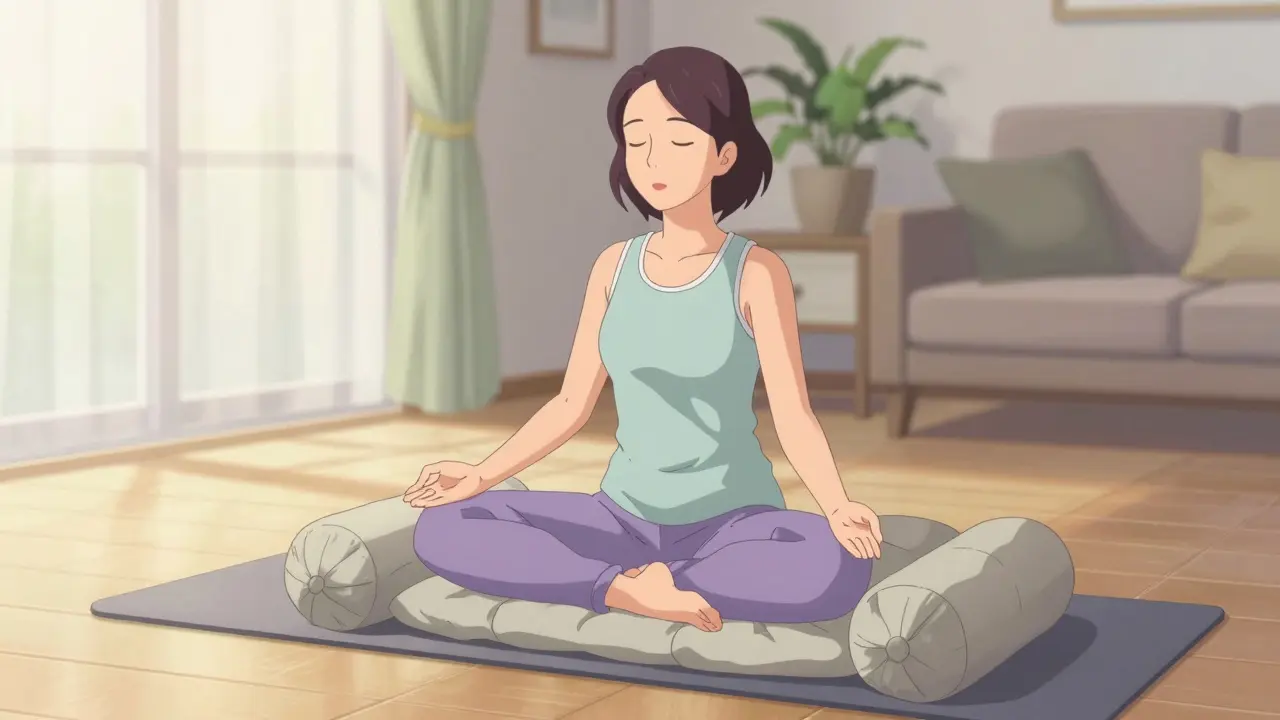
Yoga is a practice rooted in ancient India approximately 5,000 years ago that combines static postures, breath control, and mindfulness. Modern therapeutic applications emerged in Western medicine during the late 20th century. Unlike gym workouts, Yoga for pain focuses on holding shapes to build endurance without impact.
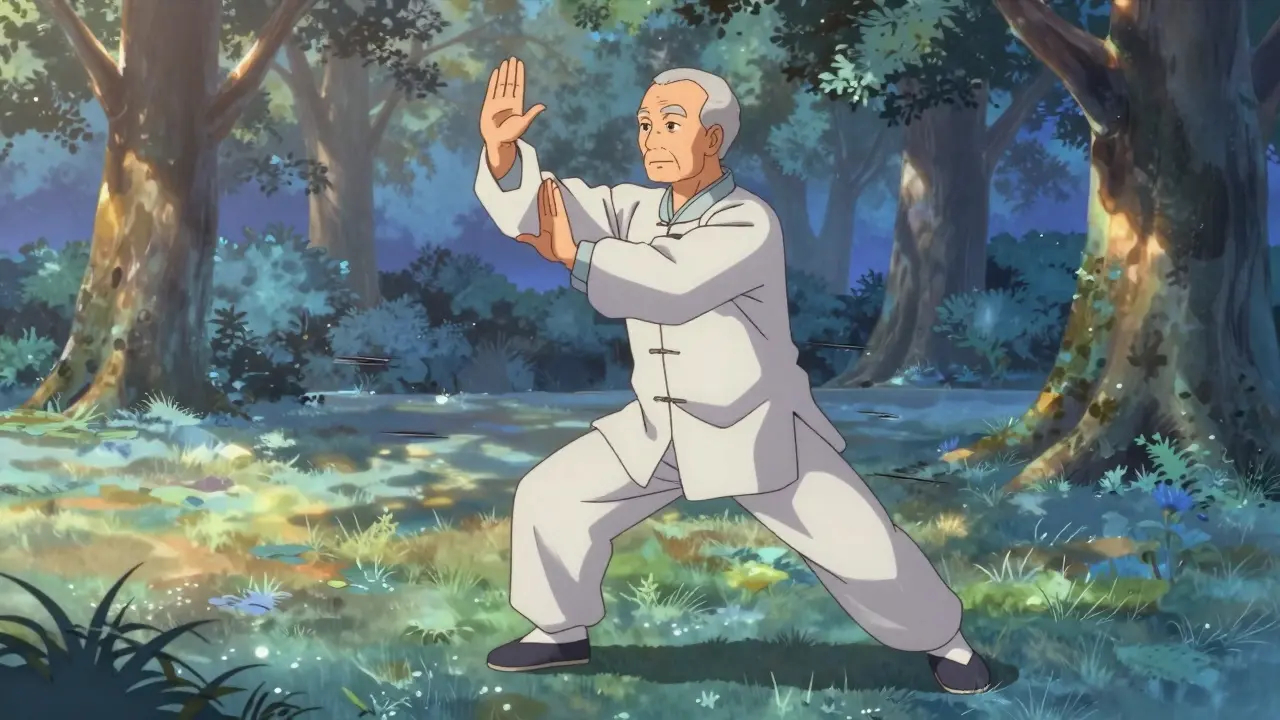
In contrast, Tai Chi is a Chinese martial art that evolved from the 12th century into a continuous flow of fluid movements. It emphasizes weight shifting and balance. While yoga often asks you to hold still, tai chi keeps you gently moving, which helps lubricate stiff joints without jarring them.
| Feature | Yoga | Tai Chi |
|---|---|---|
| Movement Style | Static postures mixed with flows | Continuous, flowing sequences |
| Best For | Flexibility, back stiffness, fibromyalgia | Balance, knee osteoarthritis, fear of falling |
| Session Duration | 45-90 minutes typical | 30-60 minutes typical |
| Patient Preference | Often preferred by females | Higher satisfaction rates among males |
What the Clinical Studies Actually Say
Anecdotes are nice, but we need data to trust the results. The National Center for Complementary and Integrative Health (NCCIH) has been systematic about reviewing this. A 2022 meta-analysis looked at 27 different studies involving over 2,700 participants. They found clear benefits when yoga was practiced consistently over several months. Specifically, people saw meaningful reductions in pain scores after roughly eight weeks of regular attendance.
One standout study published in the New England Journal of Medicine in 2018 focused on fibromyalgia. The researchers followed 66 participants for 12 weeks. Those who practiced tai chi reported 27% greater pain reduction compared to the group doing wellness education and stretching alone. Beyond just pain, the tai chi group slept better and felt less depressed. These psychological wins are huge because pain is deeply connected to mood. If your sleep improves, your pain tolerance usually follows suit.
However, it is not a magic wand for every single issue. The same NCCIH review noted that for rheumatoid arthritis, the results were mixed. Some studies showed improvements, while others found no significant difference in pain scores. This suggests that autoimmune inflammatory conditions might need a different approach than mechanical pain, like osteoarthritis or general back strain.
Choosing the Right Style for Your Condition
Not all yoga classes are suitable for someone in acute pain. Jumping into an athletic power yoga session could lead to injury if your instructor isn't trained in modifications. You need to look for specific styles labeled as restorative or gentle. Hatha yoga is generally beginner-friendly because it moves slowly. Restorative yoga takes this further by using props like bolsters and blankets so you don't have to support your own weight.
Tai chi also has variations. The Chen style is faster and involves more bouncing, which might be too much for sensitive knees. Instead, look for Yang-style tai chi or Sun-style tai chi. These forms are slower and smoother. In fact, Yang-style is the most commonly studied form in clinical settings. For seniors specifically, balance is the priority. A 2021 review showed that tai chi improved balance metrics by 18 to 25% compared to control groups in patients with knee osteoarthritis. This directly reduces the risk of falls, which is a major concern for older adults with joint pain.
Safety Guidelines and Instructor Selection
A common barrier to success is finding a teacher who understands medical constraints. You do not want to end up in a class where the instructor pushes you to ignore pain. The Pacific Pain Physicians' 2023 clinical guidelines warn that improper technique can actually exacerbate certain conditions. For example, forcing a deep squat with bad hip arthritis can damage the joint further.
To navigate this, look for instructors certified by recognized bodies. The Yoga Alliance requires a 200-hour training for registered instructors, which covers anatomy basics. For tai chi, certifications through the National Certification Commission for Acupuncture and Oriental Medicine (NCCAOM) are a good indicator of medical understanding. Before signing up, ask potential teachers: "Do you have experience modifying for chronic pain patients?" If they hesitate, keep looking. It is better to spend extra money on a specialist than waste time getting hurt.
If you cannot find a qualified local class, digital options have matured significantly. In Q2 2024, platforms like Glo and Alo Moves expanded their libraries to include specific therapeutic tracks. Apps like 'Tai Chi for Arthritis' developed by the Arthritis Foundation allow you to pace yourself at home. However, do note that apps lack the ability to correct your posture. A hybrid approach-learning basics online but getting periodic in-person checks-is often safest.
Cost, Insurance, and Practical Implementation
Financially, these practices range widely depending on where you get them. Community centers typically charge between $10 and $15 per drop-in class based on 2023 data from FAU analysis. Streaming subscriptions sit around $18 to $29 monthly. The good news is that coverage is changing. Blue Cross Blue Shield expanded coverage for medically supervised programs to 12 states in 2022, and the Veterans Administration (VA) actively includes these in their pain protocols. The VA lists tai chi explicitly as a practice to decrease chronic pain, serving approximately 45,000 veterans annually across 92 medical centers.
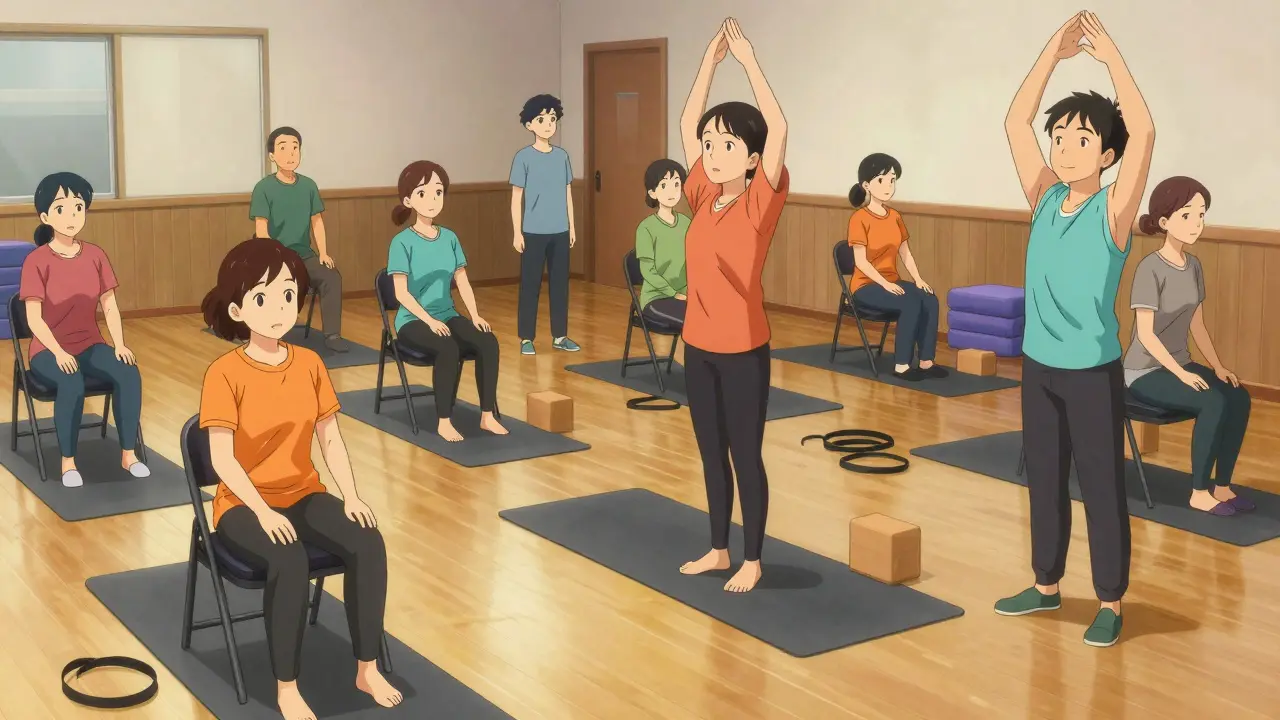
Start small. Harvard Health recommends beginning with 15 to 20-minute daily sessions for the first two weeks. Do not try to commit to an hour-long marathon immediately. Consistency matters far more than intensity. You will likely notice measurable benefits after 6 to 8 weeks. If you experience a flare-up, remember that movement doesn't have to be rigorous. Chair-based adaptations are highly effective. On Reddit's r/ChronicPain community, users frequently mention using seated versions of tai chi on high-pain days when standing isn't possible.
Can yoga and tai chi replace medication?
They are generally designed to complement medications, not replace them entirely. The American Chronic Pain Association advises integrating these practices with conventional treatments. While some veterans report reduced opioid use after six months, you should never stop prescribed medication without consulting your doctor.
Which is better for lower back pain, yoga or tai chi?
Evidence suggests both help, but in different ways. Longer-duration yoga interventions showed significant reductions in back pain in 2021 studies. However, tai chi outperformed stretching exercises for acute lower back pain in younger males. Try starting with the one that feels less intimidating physically.
Is it safe to try these alone at home?
For beginners, yes, provided you use beginner-specific resources. Video guides from reputable sources like the Mayo Clinic or Arthritis Foundation are safer than random social media clips. However, having an expert review your form once every few months prevents bad habits from forming.
How long does it take to feel results?
Most research indicates measurable pain benefits emerge after 6 to 8 weeks of consistent practice. Daily short sessions often work better than sporadic long ones. Maximum effects are typically observed at the 12-week mark.
What equipment do I need to start?
You need minimal gear. A non-slip mat is useful for yoga to prevent slipping. Comfortable clothing that allows full range of motion is essential for both. Props like chairs or blocks can help you maintain proper alignment without straining.
Ultimately, the path to less pain is rarely just about resting the body. Sometimes, gentle activation is what heals the tissue. Whether it is the quiet focus of yoga or the flowing circles of tai chi, the key is consistency. As we move through 2026, the data supports these methods as viable, scientifically backed tools to reclaim your physical life without relying solely on pharmaceuticals.




Comments (15)