
When you’re taking a biologic for rheumatoid arthritis, psoriasis, or Crohn’s disease, you’re not just managing inflammation-you’re changing how your immune system works. That’s powerful. But it also means you’re more vulnerable to infections. The data doesn’t lie: people on biologics have a 2.1 times higher risk of ending up in the hospital because of an infection compared to those on traditional treatments. And it’s not random. This risk is predictable. It’s manageable. But only if you know exactly what to do-and when.
Why Biologics Increase Infection Risk
Biologics are made from living cells. They’re designed to block specific parts of your immune system-like TNF-alpha, IL-17, or IL-23-that drive autoimmune flare-ups. But those same pathways also help fight off bacteria, viruses, and fungi. When you shut them down, your body loses key defenses. That’s why infections become more common, more serious, and sometimes deadly. Not all biologics carry the same risk. TNF inhibitors like adalimumab and infliximab are the most widely used-and the riskiest. Studies show they increase serious infection risk by 1.6 to 1.9 times compared to non-TNF biologics like ustekinumab or secukinumab. Even among TNF inhibitors, there are differences: certolizumab pegol has a lower rate of respiratory infections because it lacks a part of the antibody (Fc region) that triggers stronger immune reactions. Meanwhile, IL-17 inhibitors like secukinumab raise the risk of fungal infections like candidiasis. JAK inhibitors like tofacitinib, though not technically biologics, are often grouped with them and carry a 1.33 times higher risk of shingles. The biggest red flag? Reactivation of old infections. Hepatitis B is the most dangerous. If you’ve had it in the past-even if you never knew it-starting a TNF inhibitor can cause the virus to come back with full force. Without screening and treatment, reactivation happens in nearly 28% of cases. That’s why screening isn’t optional. It’s life-saving.Essential Screening Before Starting a Biologic
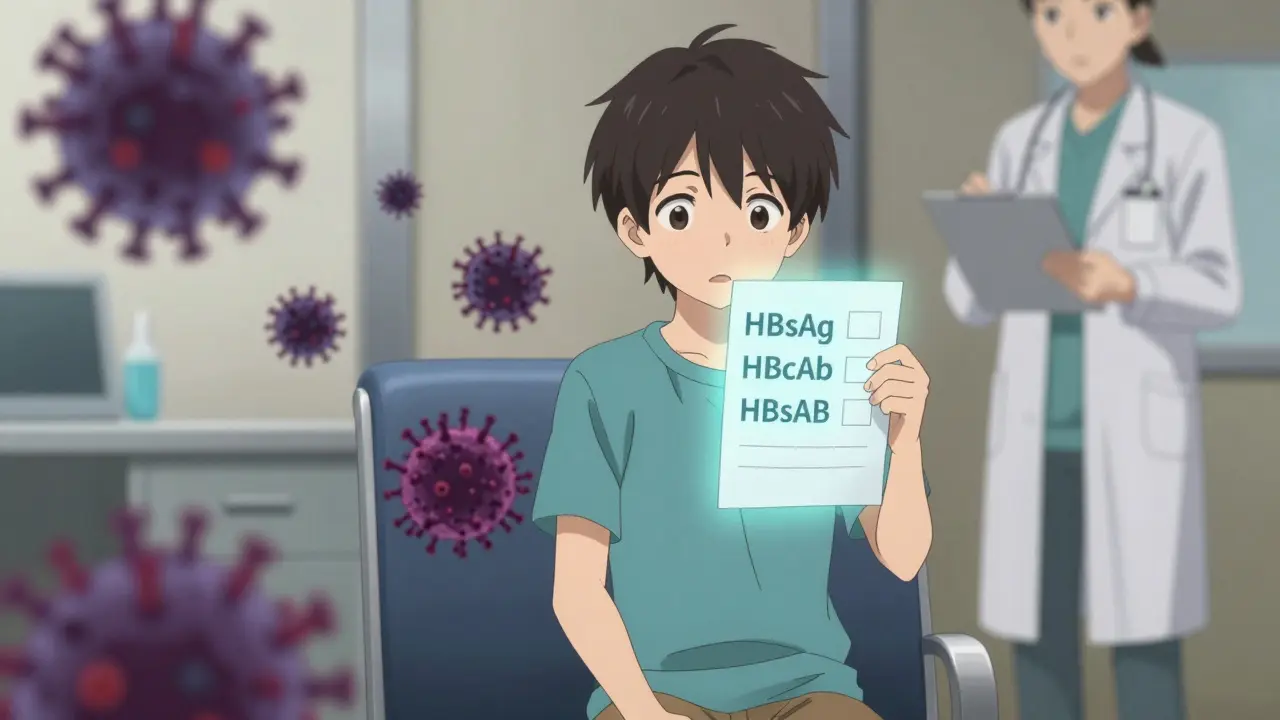
Before you get your first injection or infusion, you need three critical tests:- HBsAg (Hepatitis B surface antigen)
- HBcAb (Hepatitis B core antibody)
- HBsAb (Hepatitis B surface antibody)
Vaccinations: What to Get, When, and Why
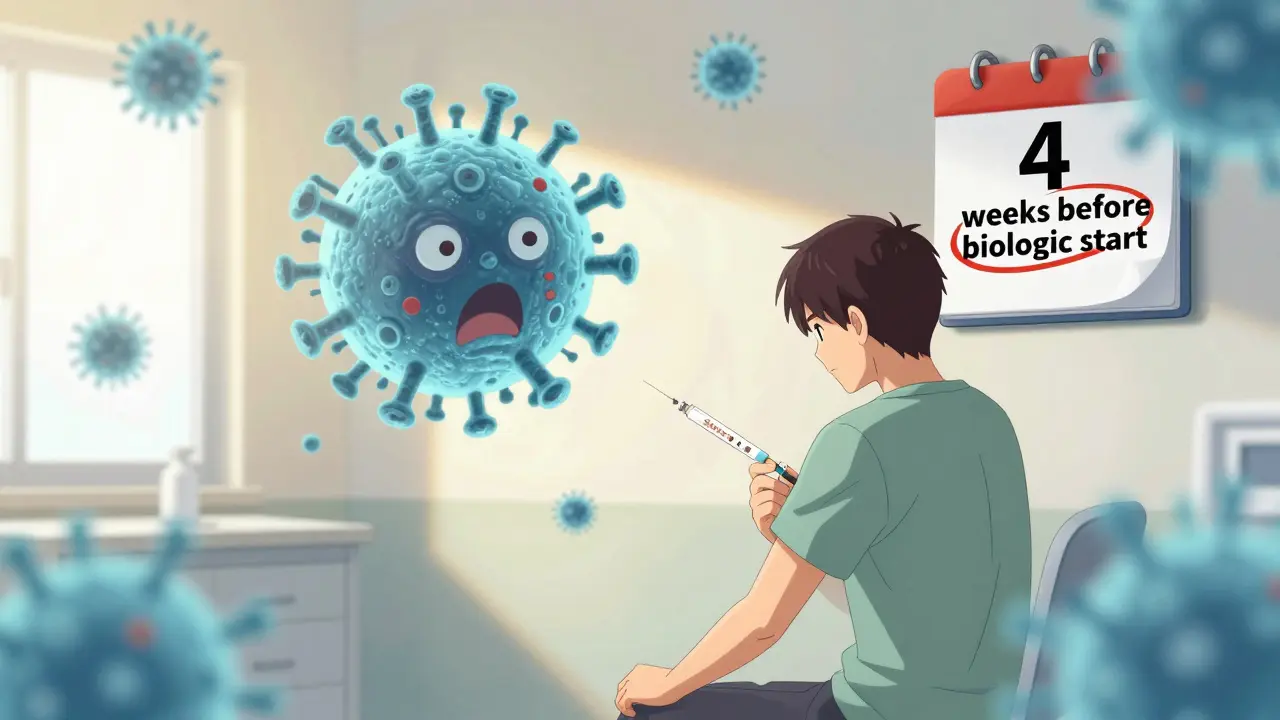
Vaccines are your first line of defense. But timing matters. You can’t just get them anytime. Once you start a biologic, live vaccines become dangerous. That means no more MMR, varicella (chickenpox), or nasal flu spray. If you need them, you have to get them before treatment begins. Here’s the exact schedule:- At least 4 weeks before starting: Live vaccines (MMR, varicella)
- At least 2 weeks before starting: Inactivated vaccines (flu shot, pneumococcal, hepatitis B, Tdap, HPV)
Who’s at Highest Risk?
Not everyone on biologics gets sick. But some people are far more vulnerable. The biggest risk factors:- Age over 50: Risk goes up 37% every decade.
- On steroids: Taking more than 10 mg of prednisone daily multiplies your infection risk by 2.3 times.
- Diabetes: Odds of infection rise by 89%.
- Chronic kidney disease: Risk jumps 2.15 times.
- COPD: Nearly 2.5 times higher risk of lung infections.
What Patients Are Saying-Real Stories, Real Gaps
Patients aren’t just numbers. They’re people who’ve been burned by gaps in care. One patient in Manchester told me: “My rheumatologist started me on Humira without checking my HBV status. I got hepatitis B six months later. I almost lost my liver.” Another wrote on a patient forum: “I got shingles because no one asked if I’d had chickenpox. They just assumed I was immune.” A 2023 survey of over 2,000 patients found that 63% had at least one screening or vaccination step skipped. The most common misses? Hepatitis B core antibody testing (41%) and varicella immunity checks (37%). But the good news? When patients get full education-like the CDC’s 12-point checklist-78% report zero serious infections. That’s not luck. That’s protocol.
What You Need to Do Right Now
If you’re about to start a biologic, or you’re already on one and haven’t been screened:- Ask for HBsAg, HBcAb, and HBsAb tests. Don’t accept just one or two.
- Ask for a TB test (IGRA, not PPD).
- Check your vaccine records. Do you have MMR, varicella, pneumococcal, flu, and hepatitis B?
- If you’re missing live vaccines, get them now-not after you start treatment.
- Get your VZV IgG and anti-HBs levels checked. If they’re low, get boosted.
- Ask your doctor: “Am I on a high-risk biologic? Do I need extra monitoring?”
The Future Is Getting Smarter
New tools are coming. AI models like the Cerner Biologics Safety Algorithm now predict your personal infection risk by analyzing 87 factors-your age, medications, lab values, even your zip code. Some clinics are already using them. In 2026, CMS will start tying 15% of biologic payments to whether clinics followed safety guidelines. That means hospitals will finally have the incentive to get this right. But until then, you’re your own best advocate. Don’t wait for your doctor to bring it up. Ask. Push. Demand the checklist. Because the difference between getting sick and staying well isn’t luck. It’s knowing what to ask for.Can I get the flu shot while on biologics?
Yes. The inactivated flu shot is safe and recommended every year for people on biologics. Avoid the nasal spray version-it contains live virus and is not safe. Get the shot at least two weeks before starting a biologic if possible, but even if you’re already on treatment, the flu shot is still protective.
Do I need to stop my biologic if I get an infection?
Usually, yes. If you develop a serious infection-like pneumonia, sepsis, or tuberculosis-you’ll need to pause your biologic until the infection is fully treated. For mild infections like a cold or urinary tract infection, your doctor might let you continue, but always check first. Never ignore fever, chills, or unexplained fatigue.
Is it safe to get vaccinated after starting a biologic?
You can get inactivated vaccines (like flu, pneumococcal, hepatitis B) after starting biologics, but they may not work as well. Live vaccines (MMR, varicella, nasal flu) are dangerous after starting biologics and should never be given. Always get all necessary live vaccines at least 4 weeks before starting treatment.
What if I already had hepatitis B? Can I still take a biologic?
Yes-but only if you’re on antiviral medication. If you have past hepatitis B (HBcAb positive, HBsAg negative), you must take an antiviral like entecavir or tenofovir before and during biologic treatment. Without it, your hepatitis B can reactivate and cause liver failure. This is non-negotiable.
Why is HBV screening so important for biologics?
Because many people with hepatitis B don’t know they have it. Up to 4.3% of autoimmune patients have hidden (occult) HBV. When you start a TNF inhibitor, your immune system can’t control the virus anymore-and it can explode. Reactivation rates without treatment are 27.6%. With proper screening and antivirals, that drops to under 1%. Screening saves lives.
Can I skip screening if I’m young and healthy?
No. Even if you feel fine, you could still carry latent infections like hepatitis B or tuberculosis. Biologics don’t care how healthy you look-they suppress your immune system regardless. Skipping screening puts you at serious risk. The guidelines exist for everyone, not just high-risk patients.




Comments (8)