

When you see a TV ad for a new cholesterol drug, it’s hard not to notice the smiling couple hiking in the mountains, the soft music, and the calm voice saying, "Don’t let high cholesterol slow you down." What you don’t hear? That there’s a generic version of that same drug, available for a fraction of the price, with the same active ingredients and just as effective. This isn’t an accident. It’s by design.
Direct-to-consumer (DTC) advertising for prescription drugs is legal in only two countries: the United States and New Zealand. In the U.S., pharmaceutical companies spent over $6.5 billion on these ads in 2020. That’s more than ten times what they spent in 1996. And it’s working. Every dollar spent on these ads brings in more than $4 in sales. But here’s the twist: most of that money goes toward promoting branded drugs - not generics.
Advertising Doesn’t Just Sell Drugs - It Changes What People Think Is Best
People don’t just remember the name of the drug they saw on TV. They start to believe it’s the best option. A 2005 study in JAMA showed that when patients asked for a specific branded drug, doctors prescribed it 70% of the time - even if the patient’s condition could be treated just as well with a generic. The same study found that patients who didn’t ask for a drug at all were far less likely to get any prescription.
This isn’t about doctors being weak. It’s about how advertising rewires patient expectations. When you’ve seen a drug advertised 20 times in a month, it starts to feel like the obvious choice. Generics? They don’t run ads. They don’t have the mountains, the happy families, or the catchy jingles. So even though they’re chemically identical, they feel like second-rate options.
The Spillover Effect: Ads Boost Generic Use - But Not Because People Want Them
Here’s something surprising: advertising for branded drugs like Lipitor actually increases the number of prescriptions written for generic statins too. Why? Because when patients ask for the branded version, doctors often say, "We can give you the generic - it’s the same thing." So more people end up on generics.
But here’s the catch: this isn’t because patients chose the generic. It’s because they asked for the brand, and the doctor offered a cheaper alternative. That’s called a spillover effect. It’s not a win for generics - it’s a workaround.
And even when patients get generics this way, they’re less likely to stick with them. Research from the Wharton School found that people who started a medication because of an ad were more likely to stop taking it within six months. Why? Because they didn’t really understand why they were taking it. They just wanted the drug they saw on TV.
What’s in the Ad? Not What You Need to Know
Pharmaceutical ads are carefully crafted. They show healthy, active people. They use bright colors and uplifting music. They mention benefits in clear, bold text. But the risks? Those come in a tiny voice at the end, buried under background noise.
The FDA studied how people remember information from these ads. After seeing an ad four times, people could recall benefits slightly better - but still poorly. Risk information? Even worse. Most people couldn’t remember the most common side effects, even after repeated exposure.
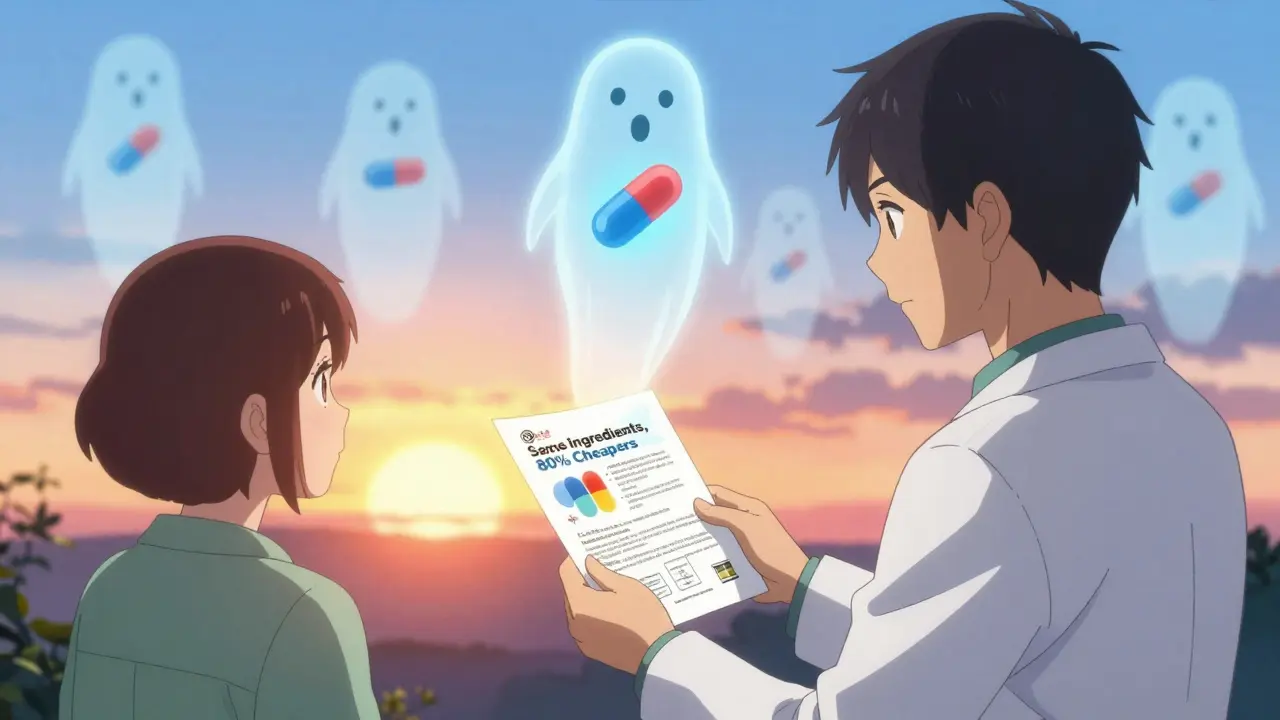
Meanwhile, generic drugs have no such marketing machine. They don’t get to show sunsets or happy grandkids. They’re just listed in a pharmacy aisle, often with a small sign that says "Same as Brand X, 80% cheaper." No emotional hook. No story. Just facts.
Doctors Are Caught in the Middle
Physicians know the science. They know generics work. But they’re also under pressure. Patients come in with printed ads, YouTube videos, or Instagram posts about the latest drug. They say, "I saw this on TV - can I have it?"
One study found that 69% of physician requests from patients - driven by advertising - were for treatments the doctor believed were inappropriate. That includes asking for brand-name drugs when generics were clearly the better option. Doctors often give in, not because they think it’s better, but because they don’t want to argue.
And here’s the cost: when patients get branded drugs instead of generics, the system pays more. The U.S. spends billions extra each year because of this dynamic. That money could go toward better care, lower premiums, or more preventive services.

Why Don’t Generics Advertise?
You might wonder: if generics are just as good, why don’t they run ads too?
The answer is simple: they can’t afford to. Brand-name companies spend millions on ads because they have patent protection and high profit margins. Once a drug goes generic, dozens of manufacturers make it. No single company owns the market. There’s no single brand to promote. So instead of advertising, they compete on price - and that’s not as flashy as a mountain hike.
Some generic makers have tried to change that. A few have started running simple ads saying, "Same as [Brand Name], less than $10 a month." But they’re rare. The system is built to reward branding - not value.
What This Means for You
If you’re taking a prescription, ask yourself: Am I on this drug because my doctor recommended it - or because I saw it on TV?
Ask your pharmacist: "Is there a generic version?"
Ask your doctor: "Is this the best option for me - or just the most advertised?"
Generics aren’t inferior. They’re regulated just as strictly as brand-name drugs. The FDA requires them to have the same active ingredient, strength, dosage, and performance. The only difference? Price. And sometimes, perception.
The real cost of advertising isn’t just the money spent on TV spots. It’s the money patients pay out of pocket. It’s the strain on insurance systems. It’s the delay in adopting more affordable care. And it’s the quiet assumption that if a drug looks expensive, it must be better.
That assumption? It’s wrong.





Comments (15)