
Missing a dose of your blood pressure pill. Forgetting your insulin. Skipping your antidepressant because it makes you feel weird. These aren’t just mistakes-they’re common, costly, and often life-threatening. About half of all people with chronic conditions don’t take their meds like they’re supposed to. And it’s not because they don’t care. It’s because life gets messy. Bills pile up. Side effects hit hard. You feel alone. That’s where support groups and community programs step in-not to lecture you, but to walk beside you.
Why Medication Compliance Isn’t Just About Willpower
It’s easy to think adherence is about remembering to take your pills. But research shows it’s deeper than that. A 2022 study in the American Journal of Managed Care found that people who got only educational brochures showed almost no improvement in taking their meds. Meanwhile, those in peer-led support groups improved by 40%-a difference so big it’s hard to ignore. The reason? Social connection changes behavior. When you hear someone say, “I had the same side effect, and here’s what helped me,” it doesn’t just give you a tip-it gives you hope. You realize you’re not broken. You’re not failing. You’re just human. And that shifts everything.How These Programs Actually Work
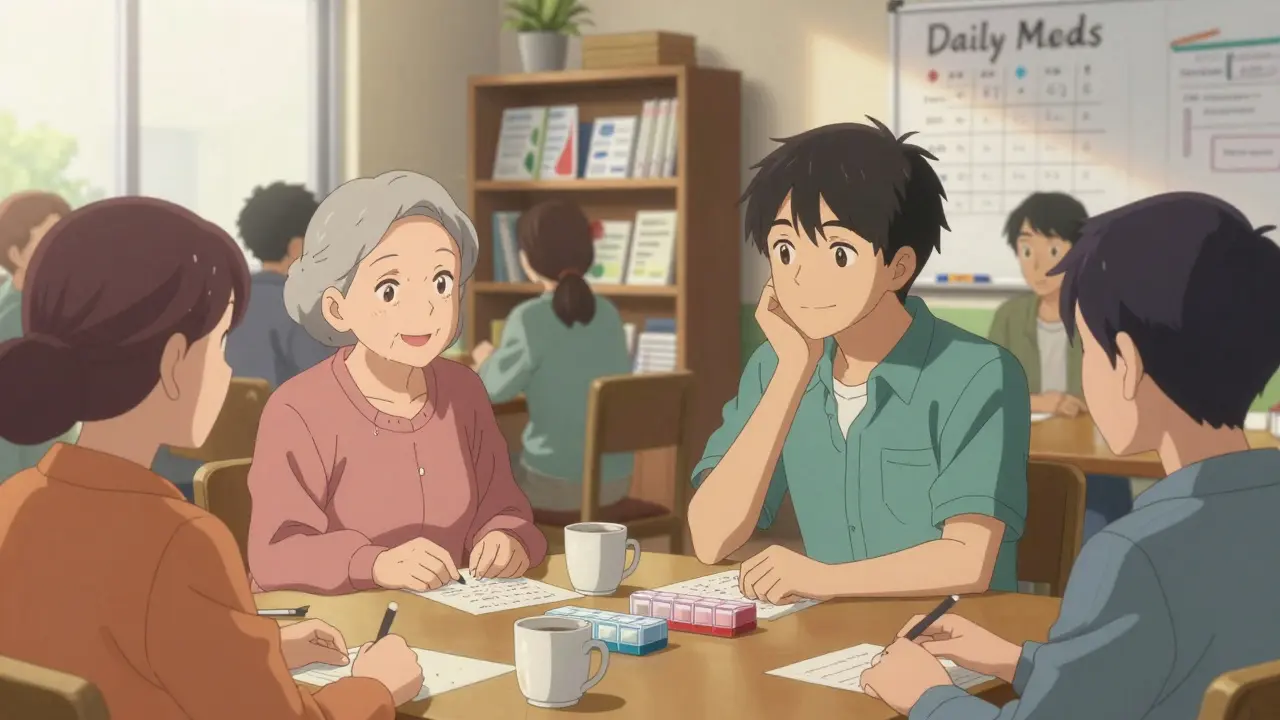
Not all support groups are the same. There are three main types that have proven effective:- Face-to-face peer groups: Usually meet once or twice a week in clinics, libraries, or community centers. Groups are small-8 to 12 people-with a trained facilitator who’s been through the same condition. These aren’t therapy sessions. They’re practical. Someone shares how they organized their pillbox. Another talks about dealing with insurance denials. You leave with real tools, not just advice.
- Home visits by community health workers: Especially helpful for older adults or people with mobility issues. A trained worker comes to your home every few weeks for 3 to 6 months. They check your meds, help you set reminders, and even call your pharmacy if refills are delayed. This isn’t charity-it’s care built into the system.
- Digital peer platforms: Apps and online forums where people with the same condition connect 24/7. Think Reddit’s r/ChronicIllness or PatientsLikeMe. These are great for quick questions and late-night anxiety. But here’s the catch: they work best when paired with human contact. A 2023 study in Frontiers in Pharmacology found people who used both a mobile app and weekly in-person meetings were 34% more likely to stick with their meds than those using either alone.
Who Runs These Programs-and How Do They Stay Effective?
The best programs aren’t run by volunteers with good intentions. They’re run by people with real training. A 2021 survey by the National Council for Mental Wellbeing found that 92% of successful programs require facilitators to have at least 40 hours of certified training. That means learning active listening, how to spot depression, how to talk about stigma, and how to handle a group when tensions rise. Pharmacists are key too. A Cochrane Review showed pharmacist-led groups improved adherence by 23% more than doctor-led ones. Why? Because pharmacists know your meds better than anyone. They can explain why your diabetes pill needs to be taken with food. They know which generics are safe swaps. They can help you cut your daily pills from four times to two-something that improved adherence by 18% in one diabetes study. And it’s not just about the group. The most effective programs use at least four behavior-change techniques: setting daily reminders, problem-solving barriers, tracking progress, and peer modeling. Programs that only hand out flyers? They don’t move the needle.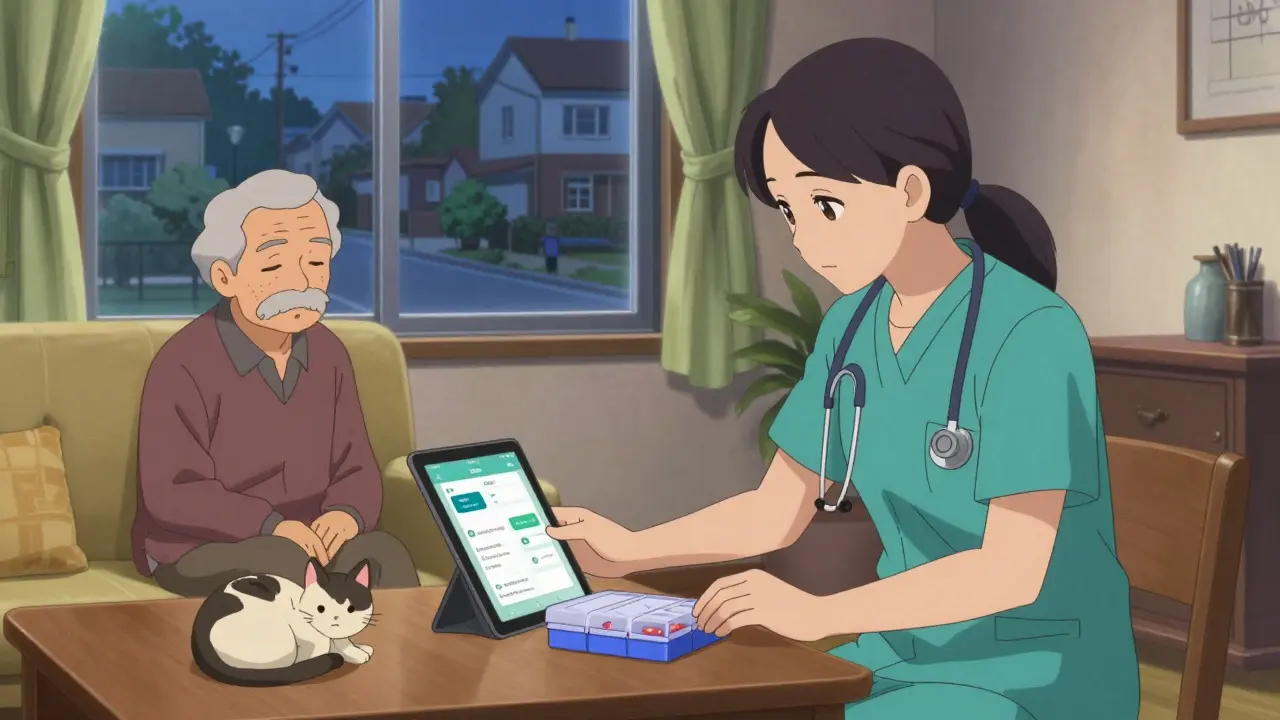
Real Stories: What People Actually Say
On Reddit, a user named DiabetesWarrior87 wrote: “I was missing 3-4 doses a week. My A1c was 8.5%. After six months of weekly support group meetings, I’m down to less than one missed dose. My A1c is 6.9%.” That’s not luck. That’s structure. That’s community. A 2022 survey of over 12,000 users on PatientsLikeMe found that 78% felt their medication adherence improved because of their group. But the top reason? “Hearing how others manage side effects.” Not the doctor’s pamphlet. Not the app notification. It was another person saying, “Yeah, I got dizzy too. I started taking mine at night instead of morning. It helped.” But it’s not perfect. Some people hate group settings. 29% of participants in a 2021 NAMI survey said they felt uncomfortable sharing in a room. Others couldn’t make the meetings-42% cited scheduling conflicts. And for rural communities? Access is a huge barrier. A 2022 study in Rural and Remote Health found rural areas had 32% fewer programs and 32% lower participation. If you’re 50 miles from the nearest town, a weekly group meeting might as well be on the moon.What Makes a Program Work for Everyone?
One size doesn’t fit all. A 2022 study in BMC Health Services Research found African American participants in hypertension groups had 35% higher satisfaction when the group was led by someone from their own cultural background. Language matters too. Only 22% of U.S. programs offer non-English support-even though 25% of the population has limited English proficiency. Cultural matching isn’t just nice to have. It’s essential. If you’re a Latino woman with diabetes and your group is all white and English-only, you’re less likely to speak up. You’re less likely to trust the advice. You’re more likely to quit. The same goes for age. A 70-year-old with heart failure needs different tools than a 25-year-old with bipolar disorder. One needs help with pill organizers and family coordination. The other needs help with stigma, sleep disruption, and avoiding triggers. Good programs tailor their approach-not just their content.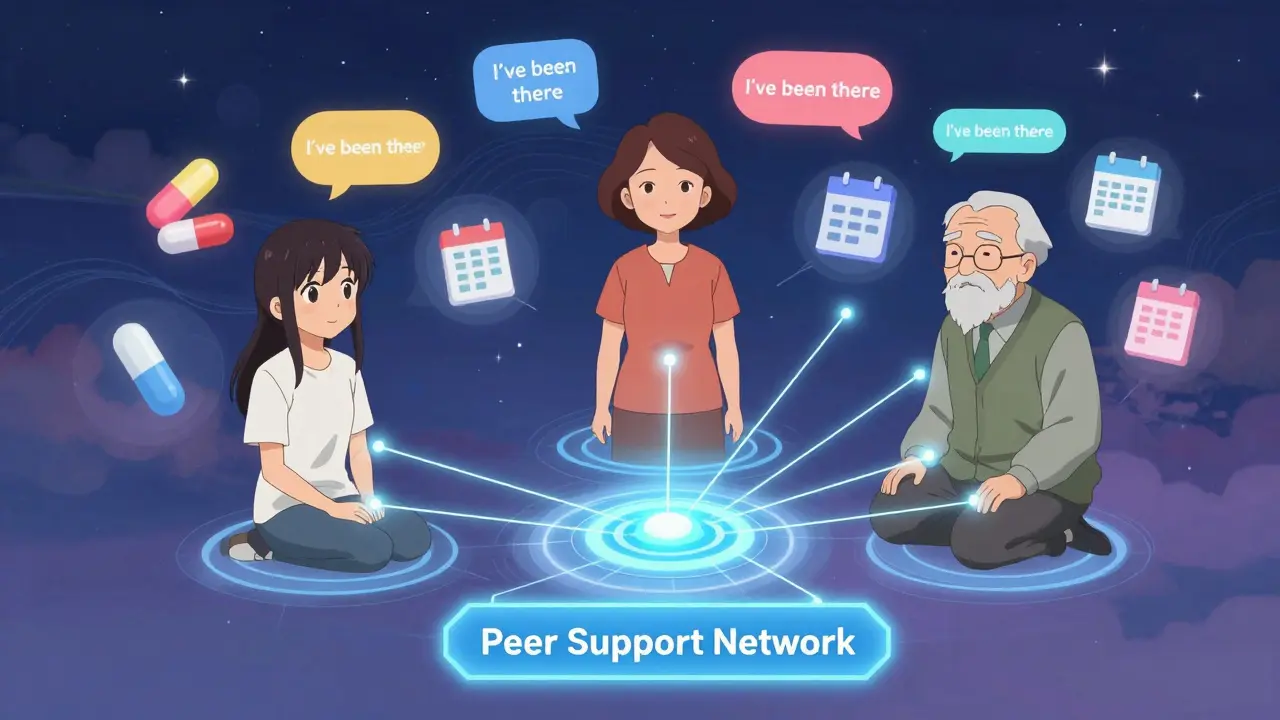
Costs, Funding, and Why This Isn’t Just a “Nice-to-Have”
You might think these programs are expensive. They’re not. A hospital-based peer support program costs $200 to $500 per patient per year. That’s less than one emergency room visit. And the return? A 2022 JAMA Network Open study showed a diabetes support program cut hospitalizations by 27% over a year. That’s an 18-to-1 return on investment. Medicare Advantage plans now include adherence support in 63% of their 2023 offerings. The CDC, VA, and Kaiser Permanente all run large-scale programs. The Veterans Health Administration alone serves 250,000 veterans annually through peer support. Why? Because it saves money and saves lives. But funding is shaky. 41% of nonprofit programs reported financial instability in 2023. Most rely on grants that last 1-2 years. When the money runs out, the group shuts down. That’s why sustainable payment models are the next big frontier. CMS launched a $50 million program in 2023 to pay community health workers to help dual-eligible patients stay on their meds. That’s a step forward.What You Can Do Right Now
If you’re struggling to take your meds:- Ask your doctor or pharmacist: “Are there any support groups for my condition?”
- Check if your insurance covers peer support. Many Medicare Advantage and Medicaid plans do.
- Try a digital group like PatientsLikeMe or HealthUnlocked if you can’t make in-person meetings.
- Bring a family member. Studies show family involvement boosts adherence more than general social support.
- If you’re in a rural area, ask about home visits. Many programs offer them-even if they’re not advertised.
- Don’t just hand out brochures. Train facilitators. Require 40+ hours of certification.
- Partner with pharmacists. They’re your secret weapon.
- Use validated tools like the Morisky Scale to track progress-not just guess.
- Offer flexible times: evenings, weekends, virtual options.
- Make sure your group reflects the community. Language, culture, age, and disability matter.
What’s Next?
The future of medication compliance isn’t in a new pill. It’s in a new kind of care. One that doesn’t treat patients like problems to be fixed, but like people to be supported. Digital tools will keep growing. AI reminders will get smarter. But nothing replaces the power of someone saying, “I’ve been there. Let me help you.” We’re moving toward a system where taking your meds isn’t a chore you do alone-it’s a habit you build with others. And that’s how you change outcomes. Not with pressure. Not with guilt. With connection.Do support groups really help people take their meds?
Yes, and the evidence is strong. Studies show peer-led support groups improve medication adherence by 30-40% compared to education-only approaches. People in these groups are more likely to stick with their meds long-term because they get practical tips, emotional support, and accountability from others who’ve been through the same challenges.
What’s the difference between a support group and a therapy group?
Support groups focus on practical, day-to-day challenges-like remembering to take pills, managing side effects, or dealing with insurance. They’re led by trained peers or health workers, not therapists. Therapy groups dive into emotional trauma or mental health patterns. Support groups don’t replace therapy-they complement it by giving you tools to manage your condition in real life.
Are these programs free?
Many are. Community-based peer groups funded by nonprofits or grants are usually free to join. Hospital-based programs may be covered by insurance or Medicare Advantage plans. Some digital platforms offer free access too. Always ask-many people don’t realize they’re eligible because they’re not told.
Can family members join these groups?
Absolutely-and they should. Research shows family involvement improves adherence more than general social support. Many programs now offer family sessions or encourage bringing a loved one. A spouse who helps with pillboxes or reminds you to take your meds can make a bigger difference than any app.
Why don’t more doctors recommend these programs?
Many don’t know they exist-or how to refer patients. Others think they’re “soft” interventions. But as value-based care grows, hospitals are being paid to keep patients out of the ER, not just treat them. Support groups cut hospital visits by 15-30%. As more systems adopt these models, doctors will be trained to refer patients as routinely as they prescribe meds.
What if I’m in a rural area with no local groups?
You still have options. Many programs offer home visits by community health workers. Others provide phone-based peer coaching. Digital platforms like PatientsLikeMe or the VA’s peer network offer 24/7 access. Ask your pharmacist or local health department-they may have mobile outreach or partnerships with telehealth services.



Comments (15)