

Every time someone takes a medicine, there’s a quiet system working behind the scenes to make sure it’s still safe. This isn’t just about checking for obvious side effects. It’s about catching rare, delayed, or unexpected reactions that only show up after thousands or millions of people have used a drug. That’s where international drug safety monitoring comes in - a global network designed to protect public health by spotting problems before they become epidemics.
How the Global System Started
The foundation for today’s international drug safety system was laid in 1963, when the World Health Assembly called for a global way to track harmful reactions to medicines. At the time, most countries didn’t have any formal way to collect this data. The response? The WHO Programme for International Drug Monitoring (PIDM), launched in 1968. Its mission was simple: gather reports of bad reactions from every corner of the world and look for patterns no single country could see on its own. The Uppsala Monitoring Centre (UMC) in Sweden was named the hub. Today, it runs VigiBase - the world’s largest database of individual case safety reports (ICSRs). As of mid-2023, it held over 35 million reports from more than 170 countries. That’s a sevenfold jump from just 11 years earlier. This growth didn’t happen by accident. It’s the result of decades of building trust, standardizing formats, and making it easier for doctors, pharmacists, and even patients to report problems.How Reports Travel Around the World
It’s not enough to just collect reports. They need to be structured the same way everywhere. That’s where standards come in. Every report submitted to VigiBase follows the E2B(R3) electronic format - a technical rulebook that ensures a reaction reported in Brazil looks the same as one from Japan. The drugs involved are coded using WHODrug Global, a dictionary with over 300,000 medicine names. Symptoms? They’re translated into MedDRA, a medical language with 78,000+ standardized terms. National centers in each country act as the first point of contact. In the UK, it’s the MHRA’s Yellow Card Scheme. In the US, it’s the FDA’s FAERS. In the EU, it’s EudraVigilance. These systems collect reports from hospitals, pharmacies, and even direct from patients. Then, they send anonymized versions to UMC. The system doesn’t just store data - it actively searches for signals. For example, if a rare liver injury starts popping up in reports from multiple countries after a new antibiotic is released, the system flags it. That’s how dangerous side effects are found before regulators pull a drug off the market.Europe vs. the World: Two Different Models
The European Union doesn’t just collect reports - it forces companies to report. Under EU law, drugmakers must submit adverse event data within 15 days of becoming aware of it. That’s legally binding. In contrast, the WHO system relies on voluntary reporting from member countries. While this gives the WHO broader global coverage, it also means delays and gaps. EudraVigilance handles about 1.2 million new reports every year. Ninety-eight percent come in electronically, and most are submitted within a week. The EU’s Pharmacovigilance Risk Assessment Committee (PRAC) reviews high-priority signals within 60 days - and 92% of signals are assessed in under 75 days. That speed saves lives. The WHO system, on the other hand, has a wider net. It includes countries like Nigeria, Indonesia, and Peru - places where most drug reactions would never be recorded without this network. That’s how the dengue vaccine Dengvaxia’s risk in people who’d never had dengue before was spotted - not in the US or Europe, but in the Philippines. Without global reporting, that signal might have been missed entirely.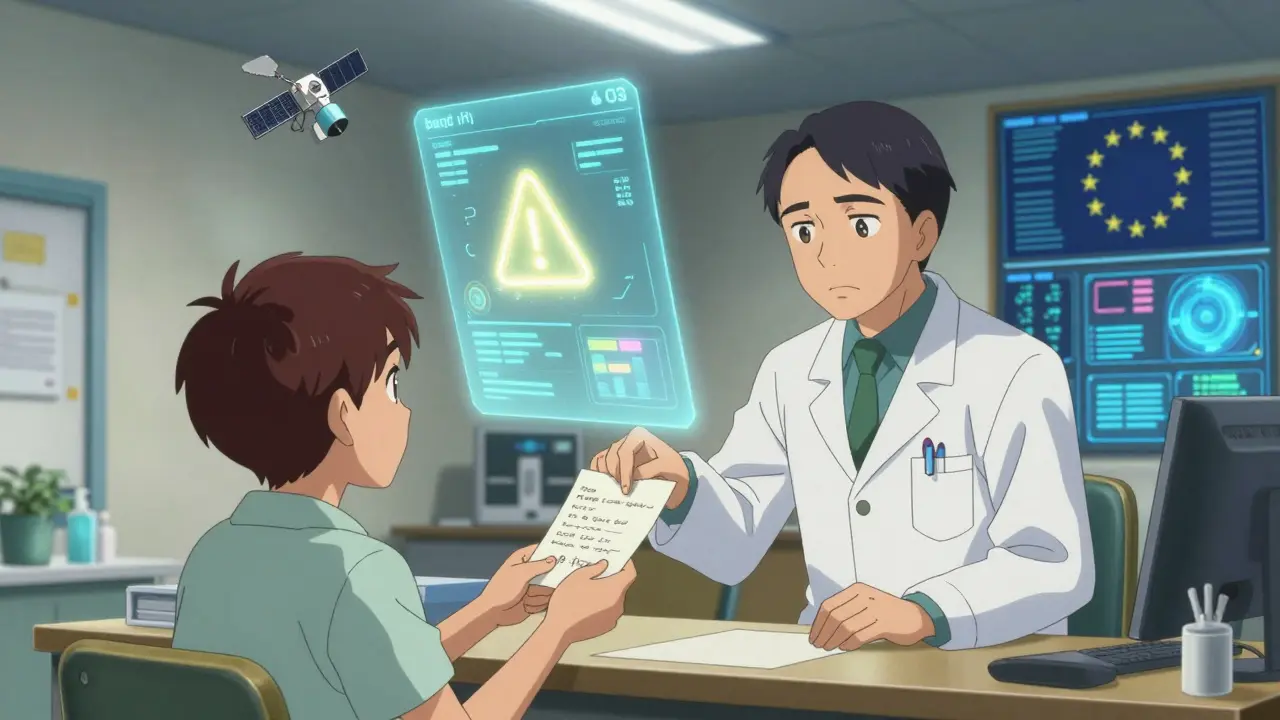
The Big Problem: Who Reports and Who Doesn’t
Here’s the uncomfortable truth: the global system is lopsided. Countries with high incomes - just 16% of the world’s population - send 85% of all reports to VigiBase. Sweden reports 1,200 adverse events per 100,000 people each year. Nigeria? About 2.3. That’s not because Swedes get more side effects. It’s because they have better systems, trained staff, and digital tools. In many low-income countries, pharmacovigilance doesn’t even exist as a formal function. A WHO review of 50 African nations found only 18 had proper systems. The average spending per person on drug safety in those countries? Two cents a year. In high-income nations, it’s $1.20. That’s a 60-fold difference. Even when systems exist, they struggle. Ethiopia cut its reporting time from 90 days to 14 after adopting a digital tool called PViMS. But only 35% of health facilities there send regular reports - mostly because of poor internet and lack of training. In Southeast Asia, two out of three pharmacovigilance officers have had less than 15 hours of formal training. WHO recommends 40.How Technology Is Changing the Game
The old way of spotting problems - waiting for reports to pile up and then manually looking for patterns - is too slow. Now, artificial intelligence is helping. UMC’s AI tools scan VigiBase for unusual clusters. In 2023, one study showed AI cut false alarms by 28% compared to older methods. That means real signals get noticed faster. The EU’s active surveillance systems - which pull data directly from electronic health records of 150 million patients - have improved signal detection by 37%. That’s huge. Instead of waiting for a doctor to notice a reaction and fill out a form, the system automatically flags unusual patterns in blood tests, hospital visits, or prescriptions. Meanwhile, public access has improved. VigiAccess, launched in 2015, lets anyone - researchers, doctors, even patients - search anonymized data from VigiBase. Over 12 million people have used it since then. That transparency builds trust.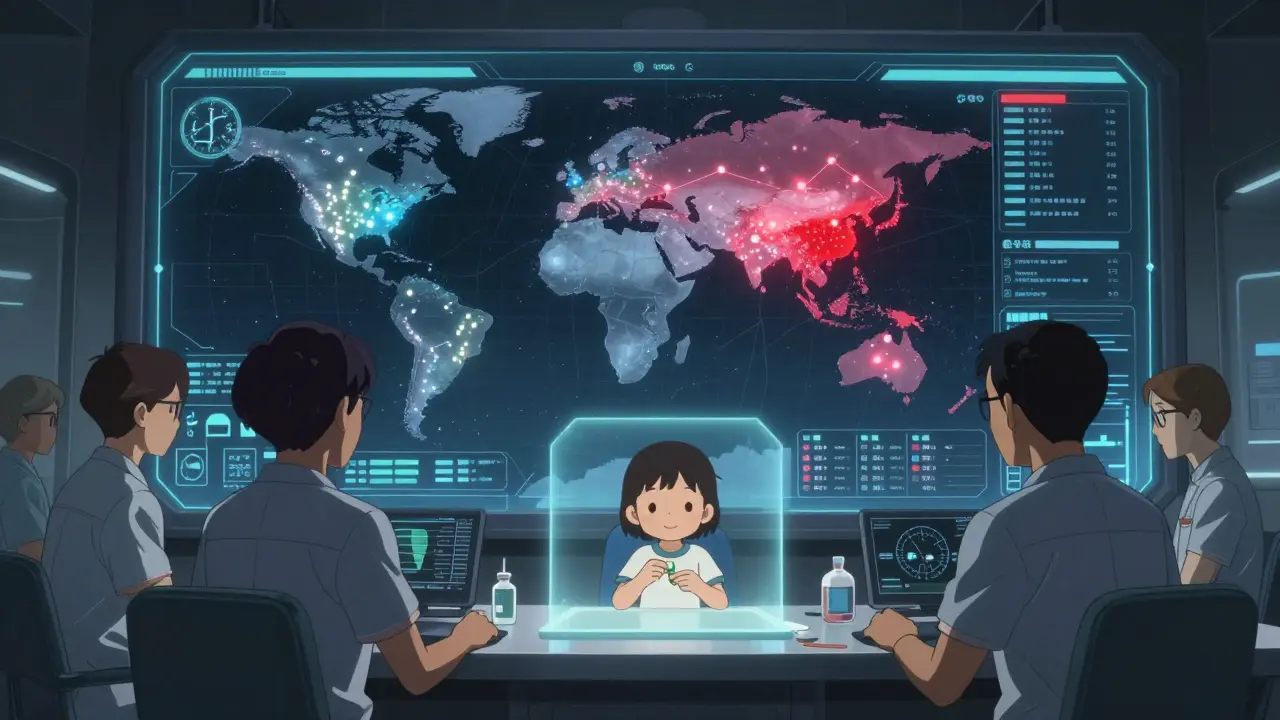
What’s Coming Next
By 2025, a new global standard called ISO IDMP will roll out. It will standardize how every medicine is identified - down to its chemical structure, manufacturer, and packaging. Right now, a drug called “Metformin” might be listed 12 different ways in different countries. That makes it hard to tell if a reaction is tied to the same product. IDMP will fix that. Experts say it could improve cross-border data matching by 40%. More countries are joining. Zanzibar signed on in early 2024. Ukraine restarted its national center in March 2023 after the war disrupted it. Yemen joined in late 2022. These aren’t just bureaucratic updates - they’re lifelines for people in places with little access to safe medicines. The global pharmacovigilance market is growing fast - from $5.4 billion in 2022 to an expected $13.2 billion by 2030. Why? Because regulators are demanding more. The top 50 drug companies now have teams of 250 people just to monitor safety - up from 150 in 2018. That’s not because they’re being overly cautious. It’s because the stakes are higher than ever.Why This Matters to You
You might think drug safety is just for regulators and scientists. But it’s not. Every time you take a new prescription, refill a chronic medication, or get a vaccine, you’re part of this system. Your doctor’s report - even if it’s just a note in a chart - might be the one that catches a dangerous interaction. Your own report through a patient app could be the clue that saves someone else’s life. The system isn’t perfect. It’s uneven. It’s slow in places. It’s underfunded in others. But it’s the only thing standing between a rare side effect and a global health crisis. And it’s getting better - slowly, but surely.What is the main purpose of international drug safety monitoring?
The main purpose is to detect, assess, and prevent harmful side effects of medicines after they’re used by large populations. It helps regulators and health agencies understand if a drug’s benefits still outweigh its risks over time, ensuring patient safety and supporting public health decisions.
How does VigiBase work?
VigiBase is the WHO’s global database for adverse drug reaction reports. National centers collect reports from doctors, patients, and pharmacies, then send anonymized data using standardized formats like E2B(R3). UMC in Sweden manages the database and uses software to detect unusual patterns - called signals - that may indicate new safety risks. These signals trigger reviews by health authorities.
Why do high-income countries report more adverse reactions?
They don’t necessarily have more reactions - they have better systems. High-income countries have trained staff, digital reporting tools, public awareness campaigns, and legal requirements for reporting. Low-income countries often lack funding, internet access, or even basic pharmacovigilance infrastructure, so many reactions go unreported.
What’s the difference between WHO’s system and the EU’s EudraVigilance?
The WHO system is voluntary and global, covering 170+ countries but relying on country-level efforts. EudraVigilance is mandatory within the EU, with strict legal deadlines for drug companies to report. It’s faster, more detailed, and uses active surveillance from electronic health records - but only covers 30 countries. The WHO system catches region-specific risks the EU might miss.
Can patients report adverse drug reactions themselves?
Yes. In many countries, patients can report directly through online portals, mobile apps, or phone lines. The UK’s Yellow Card Scheme, for example, allows patients to submit reports via an app. These reports are just as valuable as those from doctors - sometimes more so, because patients notice symptoms doctors might overlook.
What is MedDRA and why is it important?
MedDRA is the international medical terminology used to code adverse events consistently across countries. Instead of saying “stomach ache,” a report might say “abdominal pain.” This standardization lets systems compare reactions globally. Without MedDRA, it would be impossible to know if reports from Japan and Brazil are describing the same symptom.
What’s the future of drug safety monitoring?
The future lies in automation, AI, and better data sharing. New standards like ISO IDMP will help match drug records across borders. AI will detect signals faster. Active surveillance using real-world health data will replace slow, paper-based reporting. The goal is to move from reactive monitoring to proactive prediction - catching risks before they harm large numbers of people.
Drug safety isn’t a one-time check. It’s a lifelong watch. And it only works if the world works together.




Comments (13)