When you pick up a prescription, you might see two options: the brand-name drug you’ve heard of, or a cheaper generic version with a different name and color. If you’ve ever wondered why the generic costs 80-85% less, the answer isn’t about quality-it’s about cost structure, law, and competition.
Same Medicine, Different Price Tag
Generic drugs aren’t cheap because they’re inferior. They’re the exact same medicine as the brand-name version. The FDA requires them to have the same active ingredient, strength, dosage form, and route of administration. They work the same way. They’re absorbed into your bloodstream at the same rate. They’re held to the same manufacturing standards. The only differences? The shape, color, flavor, and inactive ingredients like fillers or dyes-things that don’t affect how the drug works.Why Brand-Name Drugs Cost So Much
Brand-name drugs start as a chemical idea. Turning that idea into a pill you can buy takes 8 to 12 years. Companies spend an average of $2.6 billion on research, testing, and clinical trials before the FDA even considers approving it. That’s not just lab work-it’s thousands of patients enrolled in trials, years of safety monitoring, and massive legal and administrative overhead. Once approved, the drug gets 20 years of patent protection. That’s not from when it hits the shelf-it’s from when the patent was first filed, often years before the drug even reaches patients. During that time, only the original company can sell it. They set the price high to recoup their investment and make a profit. There’s no competition. No pressure to lower prices. That’s why a drug like Lipitor (atorvastatin) could cost $500 a month before generics came out.How Generics Skip the Costly Part
Generic manufacturers don’t need to repeat those 8-12 years of trials. Thanks to the Hatch-Waxman Act of 1984, they only need to prove their version is bioequivalent-meaning it delivers the same amount of active ingredient into your blood at the same speed as the brand-name drug. That’s done with a few dozen healthy volunteers, not thousands of patients over years. This cuts development costs from billions to just $1-5 million per drug. The timeline drops from over a decade to about 1-3 years. No need to pay for expensive clinical trials. No need to spend millions on marketing to convince doctors and patients. No patent monopoly to protect.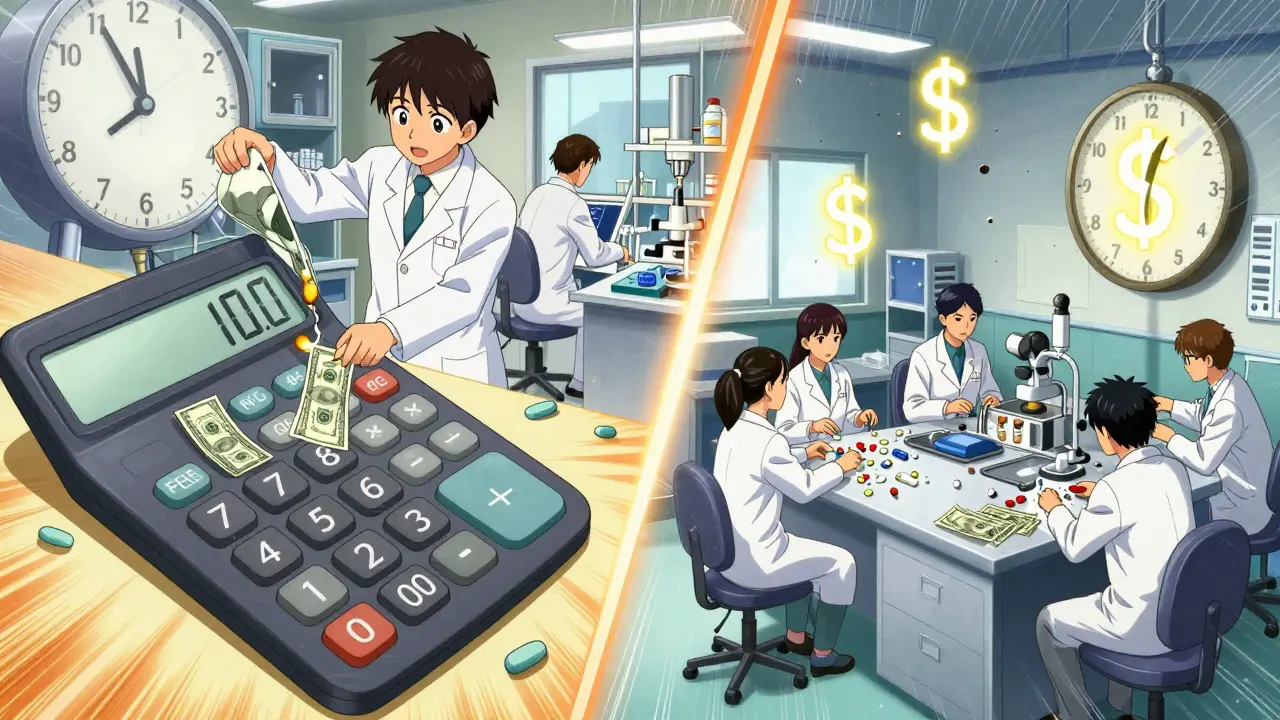
Competition Drives Prices Down
Once a patent expires, multiple generic companies can enter the market. The FDA approved over 1,000 generic drugs in 2022 alone. For popular drugs like omeprazole (Prilosec), you might see 15 or more generic makers competing. They don’t need to advertise. They don’t need fancy packaging. They just need to make the pill and sell it cheaper than the next guy. That competition pushes prices down fast. Within a year of a generic hitting the market, prices often drop 80-90%. By the time five or six companies are selling the same drug, you’re looking at $4 a month instead of $500. Tebra’s 2023 survey found that generic atorvastatin costs 79% less than Lipitor. Generic levothyroxine? Around $6 a month versus $300 for Synthroid.Generics Are the Backbone of U.S. Prescriptions
Even though generics make up 90.5% of all prescriptions filled in the U.S., they account for only 18% of total drug spending. Brand-name drugs, which make up less than 10% of prescriptions, account for 82% of the cost. That’s not a mistake. That’s the result of how the system works. In 2022, generic drugs saved the U.S. healthcare system $293 billion. From 2007 to 2016, they saved over $1.67 trillion. Those numbers aren’t theoretical. They’re real money saved by patients, insurers, and Medicare.Why Some People Still Don’t Trust Generics
Despite the science, many people still believe brand-name drugs are better. Tebra’s survey showed 62% of Americans trust brand-name drugs more-even though 84% admit generics are just as effective. Why? Appearance changes. A pill that was once blue and oval becomes white and round. You notice. Your brain assumes something’s different. Some patients report side effects or reduced effectiveness after switching. In rare cases, that’s real. For drugs with a narrow therapeutic index-like warfarin, levothyroxine, or phenytoin-tiny changes in blood levels can matter. But the FDA says all approved generics meet the same standards. If you feel different after switching, talk to your doctor. It’s not always the drug-it could be stress, diet, or another medication.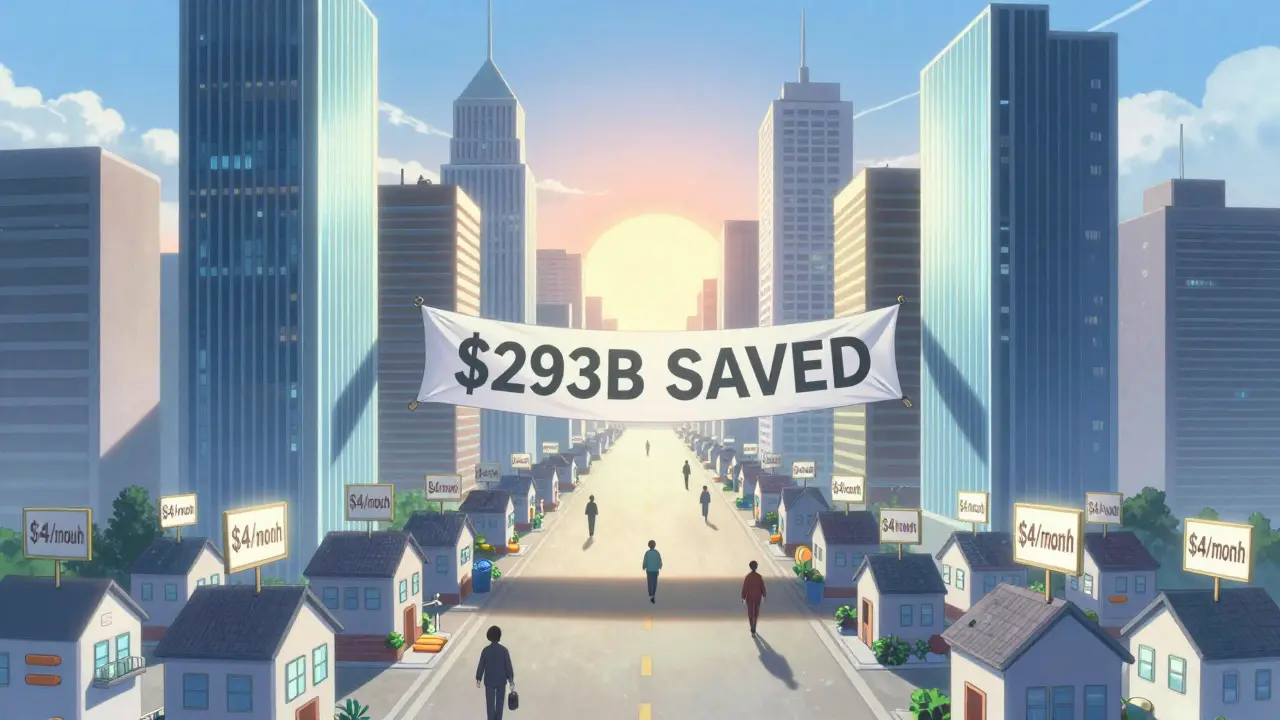
What You Can Do
Most insurance plans push you toward generics. Tier 1 formularies often have $0-$15 copays for generics, while brand-name drugs cost $25-$50 or more. If your doctor prescribes a brand-name drug, ask: “Is there a generic?” Pharmacists are trained to substitute generics automatically in 49 states. But if you ask for the brand-name version, they might need your doctor to approve it. Don’t be afraid to ask for the cheaper option. You’re not compromising your health-you’re saving money without sacrificing results.The Bigger Picture
The generic drug industry is a $130 billion market. Five companies-Teva, Viatris, Sandoz, Amneal, and Aurobindo-control nearly half of it. Most of the active ingredients are made in China and India, which raises concerns about supply chains, especially after pandemic-related shortages hit 287 generic medications between 2020 and 2022. The FDA is working to fix that. Their new GDUFA III program is investing $1.1 billion to speed up reviews. The Biden administration is pushing to make complex generics-like inhalers and topical creams-easier and faster to approve. And the FTC is cracking down on “pay-for-delay” deals, where brand-name companies pay generics to stay off the market.Bottom Line
Generic drugs cost 80-85% less because they don’t carry the weight of R&D, marketing, and patent protection. They’re not cheaper because they’re worse. They’re cheaper because they’re smarter. They use the same science, skip the expensive parts, and let competition do the rest. If you’ve been avoiding generics because you think they’re inferior, it’s time to reconsider. For 9 out of 10 prescriptions, they’re the same drug. Same effect. Same safety. Just a fraction of the price.Are generic drugs as safe as brand-name drugs?
Yes. The FDA requires generic drugs to meet the same strict standards for safety, quality, and effectiveness as brand-name drugs. They must contain the same active ingredient, work the same way, and be absorbed into the body at the same rate. Generic manufacturers are inspected just as often as brand-name companies-over 12,000 inspections per year worldwide.
Why do generic drugs look different?
By law, generic drugs can’t look exactly like the brand-name version because of trademark rules. That means the color, shape, size, or flavor might be different. But those changes are only in inactive ingredients-things like dyes or fillers-that don’t affect how the drug works. The active ingredient is identical.
Can switching to a generic cause side effects?
For most people, no. But for drugs with a narrow therapeutic index-like warfarin, levothyroxine, or seizure medications-tiny changes in blood levels can matter. Some patients report feeling different after switching, even when the FDA confirms bioequivalence. If you notice changes in how you feel, talk to your doctor. It’s rare, but not impossible. Your provider can help determine if it’s the drug or something else.
Why are some generics more expensive than others?
Price differences between generic manufacturers happen because of supply, demand, and manufacturing costs. If only one company makes a generic, it might charge more. When multiple companies enter the market, prices drop fast. Sometimes, a shortage of an active ingredient or a manufacturing issue can cause temporary price spikes. Always check with your pharmacist if you see a sudden change in cost.
Do insurance plans prefer generics?
Yes. Most insurance plans have a tiered system where generics are in Tier 1 with the lowest copay-often $0 to $15. Brand-name drugs are usually Tier 2 or 3, costing $25-$50 or more. Some plans won’t cover the brand-name version unless your doctor proves you need it. Always ask your pharmacist if a generic is available-it could save you hundreds a month.